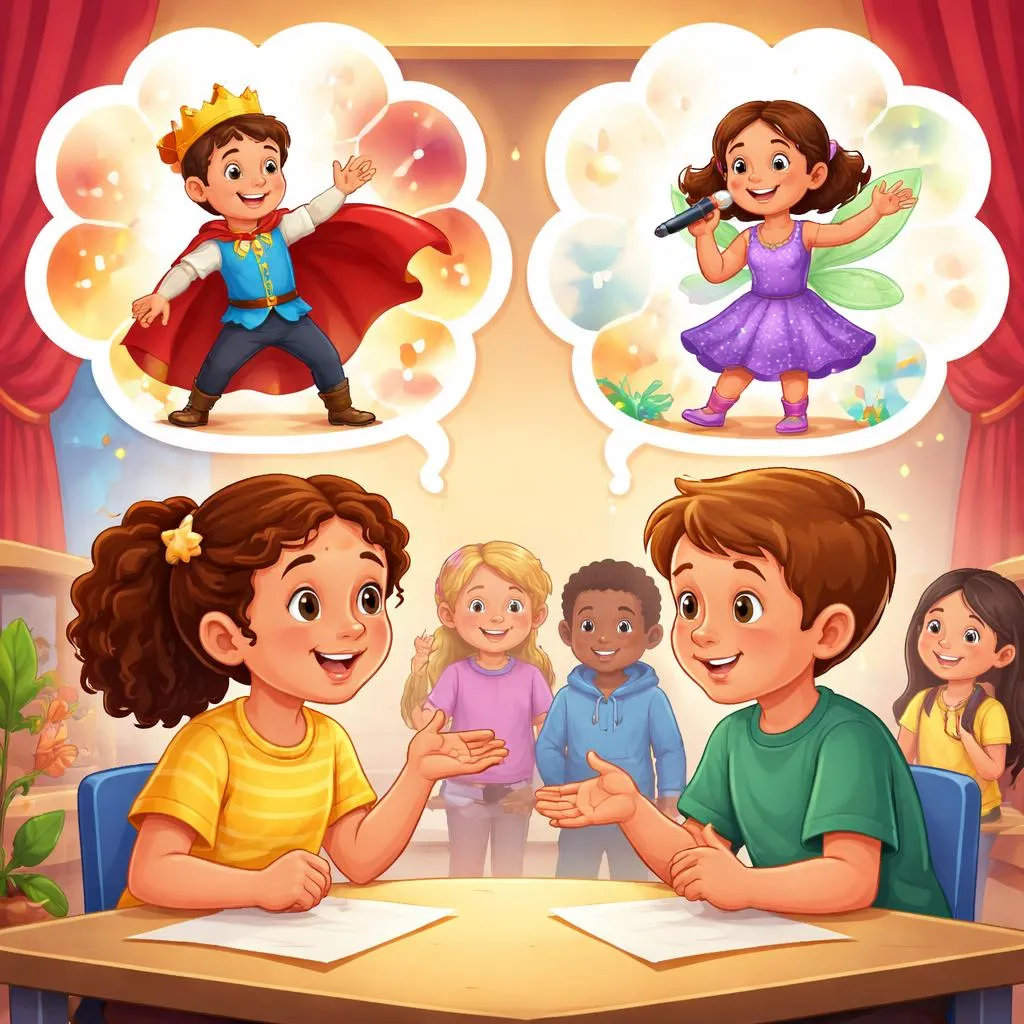

What Do These Expressions Mean? “An actor” and “a performer” both mean a person who entertains an audience by portraying a character. They tell a child that this person pretends to be someone else on stage or screen. Children hear these words at school plays, in movies, or during dramatic play. Both describe stage and screen artists.
“An actor” is the specific word for a person who acts in a play, movie, or TV show. A child says it when saying “The actor in that movie was funny.” It focuses on the art of acting.
“A performer” is a broader word. It includes actors, singers, dancers, and musicians. A child says it for anyone who performs in front of an audience. It is a general term.
These expressions seem similar. Both mean “a person on stage or screen.” Both describe entertainment. But one is specific to acting while one is general to all performing arts.
What's the Difference? One is specific to acting. One is general to all performing arts. “Actor” is only for people who act. They say lines. They play characters. It is a specific job.
“Performer” is for anyone who entertains an audience. A singer is a performer. A dancer is a performer. A comedian is a performer. It is a big umbrella.
Think of a child in a school play. “She is an actor” is right if she plays a character. “She is a performer” is also true, but less specific. One is precise. One is general.
One is for the art of acting. The other is for all stage arts. “Actor” for the person who plays a character. “Performer” for anyone on stage. Use the first for specific. Use the second for general.
Also, “performer” can include circus acts, magicians, and puppeteers. “Actor” is only for dramatic or comedic role-playing.
When Do We Use Each One? Use “actor” for someone who acts in plays, movies, or TV. Use it for characters who speak lines and tell stories. Use it as the specific word. It fits acting talk.
Examples at home: “An actor learns lines.” “My cousin is an actor in a TV show.” “I want to be an actor when I grow up.”
Use “performer” for anyone on stage. Use it for singers, dancers, actors, or comedians. Use it as the general word. It fits all stage talk.
Examples for general: “The performer bowed after the song.” “There were ten performers in the variety show.” “I want to be a performer in a circus.”
Children can use both. “Actor” for specific. “Performer” for general. Both shine on stage.
Example Sentences for Kids An actor: “An actor pretends to be someone else.” “The actor cried real tears.” “I am an actor in the school play.”
A performer: “A performer shares their talent.” “The performer juggled and danced.” “The performers took a group bow.”
Notice “actor” is specific to acting. “Performer” is general for any stage art. Children learn both. One for acting. One for everything.
Parents can use both. School play: “actor.” Talent show: “performer.” Children learn different stage words.
Common Mistakes to Avoid Some children call every performer an actor. That is not accurate. A singer is a performer, not an actor unless they are also acting. Use the specific word when you know it.
Wrong: “The singer is an actor.” (if they only sing) Right: “The singer is a performer.”
Another mistake: thinking an actor is not a performer. All actors are performers when they are on stage. Teach that actor is one type of performer.
Wrong: “An actor is not a performer.” Right: “An actor is a type of performer.”
Some learners think “performer” only means professional. Anyone on a stage in front of an audience is a performer. A child in a school play is a performer. Celebrate every stage.
Also avoid saying “actor” for someone who only dances or sings. Use the correct word.
Easy Memory Tips Think of “actor” as a mask. Pretending to be someone else. For the art of acting.
Think of “performer” as a spotlight on a stage. Light on anyone who entertains. For all stage arts.
Another trick: remember the scope. “Actor” = one type of performer (the one who acts). “Performer” = many types (actor, singer, dancer). One type gets “actor.” Many types get “performer.”
Parents can say: “Actor for a role. Performer for a soul.”
Practice at home. Movie star: “actor.” Variety show: “performer.”
Quick Practice Time Let us try a small exercise. Choose the better phrase for each situation.
A child watches a dramatic movie with a hero who speaks lines. a) “The performer was sad.” b) “The actor was sad.”
A child watches a circus show with clowns, acrobats, and a magician. a) “The actors were amazing.” b) “The performers were amazing.”
Answers: 1 – a or b. Both work. “Actor” is more specific and accurate for a dramatic movie. 2 – b. A circus with many acts fits the general “performers.”
Fill in the blank: “When I talk about someone who plays a character in a movie, I say they are an ______.” (“Actor” is the specific, role-playing, dialogue-based choice.)
One more: “When I talk about everyone in a school talent show, I say they are ______.” (“Performers” fits the general, inclusive, all-arts description.)
The stage welcomes all talents. “Actor” is for the character player. “Performer” is for the entertainer. Teach your child both. A child who learns both can name their art and celebrate the arts of others.