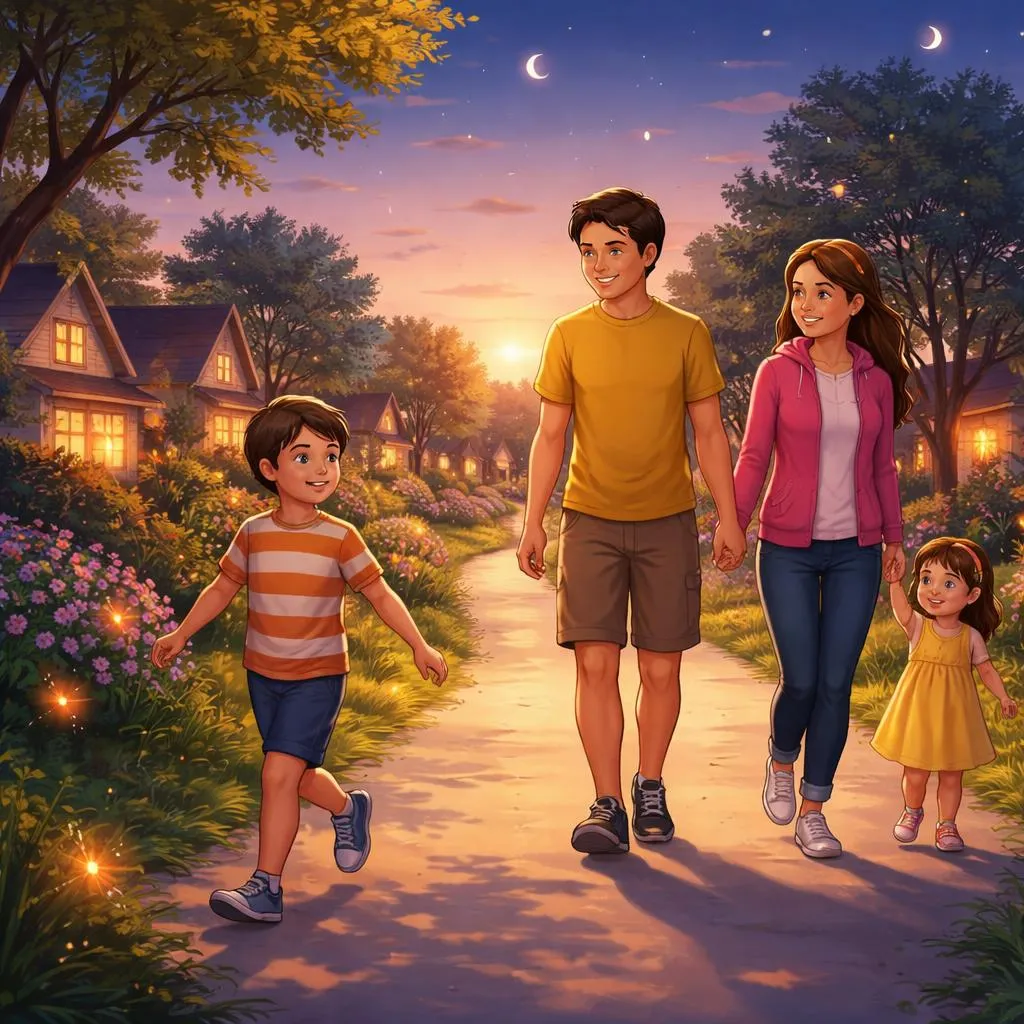

Welcome to our neighborhood explorer club. Today we meet Mia and Leo. They love walking with family. Last Thursday, the sun began to set. Mia and Leo walked home from school. Mia marched quickly. She said, "I am walking to get home before dark." Leo lagged behind. He stopped to watch a butterfly. He said, "I am strolling to enjoy the flowers." Mia reached the door. Leo smelled roses. Both felt happy. See the difference? One moved with purpose. The other moved with joy. Let us explore why.
Understanding Walking To And Strolling To
Walking To Means Moving With A Clear Purpose And Steady Pace
Imagine a line of ants carrying food. They march straight to the nest. This is walking to march. Steps stay even.
Think of a student walking to class. Backpack bounces slightly. This is walking to attend. Focus stays sharp.
Picture yourself walking to the bus stop. Eyes watch the road. This is walking to commute. Time matters most.
Strolling To Means Moving Slowly To Enjoy The Surroundings
Now imagine a cat wandering through a garden. Tail flicks lazily. This is strolling to wander. No rush exists.
Think of a grandparent strolling in the park. Hands clasped behind back. This is strolling to relax. Smile stays soft.
Consider a friend strolling to look at stars. Head tilts upward. This is strolling to admire. Wonder fills eyes.
How To Tell Them Apart Fast
Walking to is purposeful and direct. Strolling to is relaxed and wandering. Ask yourself: Do I have a destination? If yes, it is walking to. Am I enjoying the view? If yes, it is strolling to.
Walking to feels like a mission. Strolling to feels like a treat. One is serious. The other is playful.
Remember the speed. Walking to keeps a steady beat. Strolling to drifts like a cloud. Look at your feet.
Three Real Life Scenarios
Scene one happens after school. Mia walks quickly home. She says, "I am walking to finish my homework." Leo walks beside her. He stops to pet a dog. He says, "I am strolling to meet new friends." Mia opens the door. Leo pats the dog.
Scene two happens at the park. Mom takes Mia and Leo for a walk. Mia walks fast to the playground. She says, "I am walking to swing high." Leo holds Mom's hand. He strolls slowly. He says, "I am strolling to see the ducks." Mia swings. Leo feeds ducks.
Scene three happens during errands. Dad asks Mia to walk to the store. She walks briskly. She says, "I am walking to buy milk." Leo follows Dad outside. He strolls to look at cars. He says, "I am strolling to spot red trucks." Mia returns with milk. Leo points at a truck.
Notice the shift. Purposeful movement first. Relaxed wandering second. Choose your phrase based on your goal.
Common Mistakes And How To Fix Them
Mistake one: Saying "I strolled to catch the bus." Why it is wrong: Buses need walking. Strolling is too slow. Correct alternative: "I walked to catch the bus." Memory trick: Walk for buses; stroll for parks.
Mistake two: Saying "I walked to smell the roses." Why it is wrong: Roses need strolling. Walking is too fast. Correct alternative: "I strolled to smell the roses." Memory trick: Stroll for flowers; walk for tasks.
Mistake three: Saying "She strolled to school late." Why it is wrong: School needs walking. Strolling causes lateness. Correct alternative: "She walked to school quickly." Memory trick: Walk to be on time; stroll to be late.
Mistake four: Saying "He walked to watch the sunset." Why it is wrong: Sunsets need strolling. Walking misses beauty. Correct alternative: "He strolled to watch the sunset." Memory trick: Stroll for sunsets; walk for destinations.
Memory trick: Think of a delivery person. Walking to is carrying packages fast. Strolling to is delivering flowers slowly. Your brain knows the difference.
Fun Activities To Master These Words
Activity one is a motion game. I say a word. You act it out. Walking to? March in place with purpose. Strolling to? Wander slowly with a smile. We laugh together.
Activity two is a story chain. Start with "I walked to the store when..." The next person adds "Then I strolled because..." Use silly verbs. Giggle at the images.
Activity three is a drawing race. Draw someone walking to school. Draw someone strolling in a garden. Show your partner. Guess which is which.
Activity four is a show-and-tell. Bring a photo of you walking. Say, "I used walking to for this." Bring a photo of you strolling. Say, "I used strolling to for this." Demonstrate the feeling.
These games train your brain. You will pick the right word naturally. Play them with friends today.
Easy Rhyme To Remember Forever
March with purpose, that is walking.
Wander slowly, that is strolling.
Straight line, walk with aim.
Twist and turn, stroll with fame.
Bus stop dash, walk with speed.
Flower patch, stroll indeed.
Homework done, walk with might.
Sunset glow, stroll at night.
Clap and chant this rhyme. Soon it lives in your memory. No more mix-ups.
Your Homework Assignment This Week
Choose one task below. Write or draw your answer. Share it tomorrow.
Task one: Walk journal. Prepare a small notebook. Draw three pictures. First: Walking to school. Second: Strolling in the park. Third: Both smiling. Write a sentence under each. Example: "I walked to learn. I strolled to dream. Both felt good."
Task two: Role-play version. With parents, play "Evening Walk." You say, "I will walk to check the mailbox." Parents say, "I will stroll to look at stars." Switch roles. Practice using phrases correctly.
Task three: Sharing version. Tomorrow in class, tell your deskmate: "I walked to the library. I strolled to the pond. What about you?" Listen to their examples.
Bring your work to class. We will hang the best drawings. Everyone shares their sentences.
Life Practice Weekly Challenge
Complete one challenge. Show proof to your teacher or parent.
Challenge A: Morning routine. Walk to the kitchen. Stroll to the window. Say, "I walked to eat. I strolled to see." Feel the difference. Take a photo of you strolling.
Challenge B: Playtime hero. Walk to the slide. Stroll to the sandbox. Place them side by side. Label them correctly. Show your friend.
Challenge C: Reading nook. Walk through an easy book. Stroll through a picture book. Use them during story time. Tell your version to a sibling.
Challenge D: Art fun. Walk to paint a straight road. Stroll to draw a winding path. Create a picture. Hang it on the fridge.
Do at least one challenge. Smile when you use the right phrase. You are growing smarter every day. Keep exploring words. Great job today.