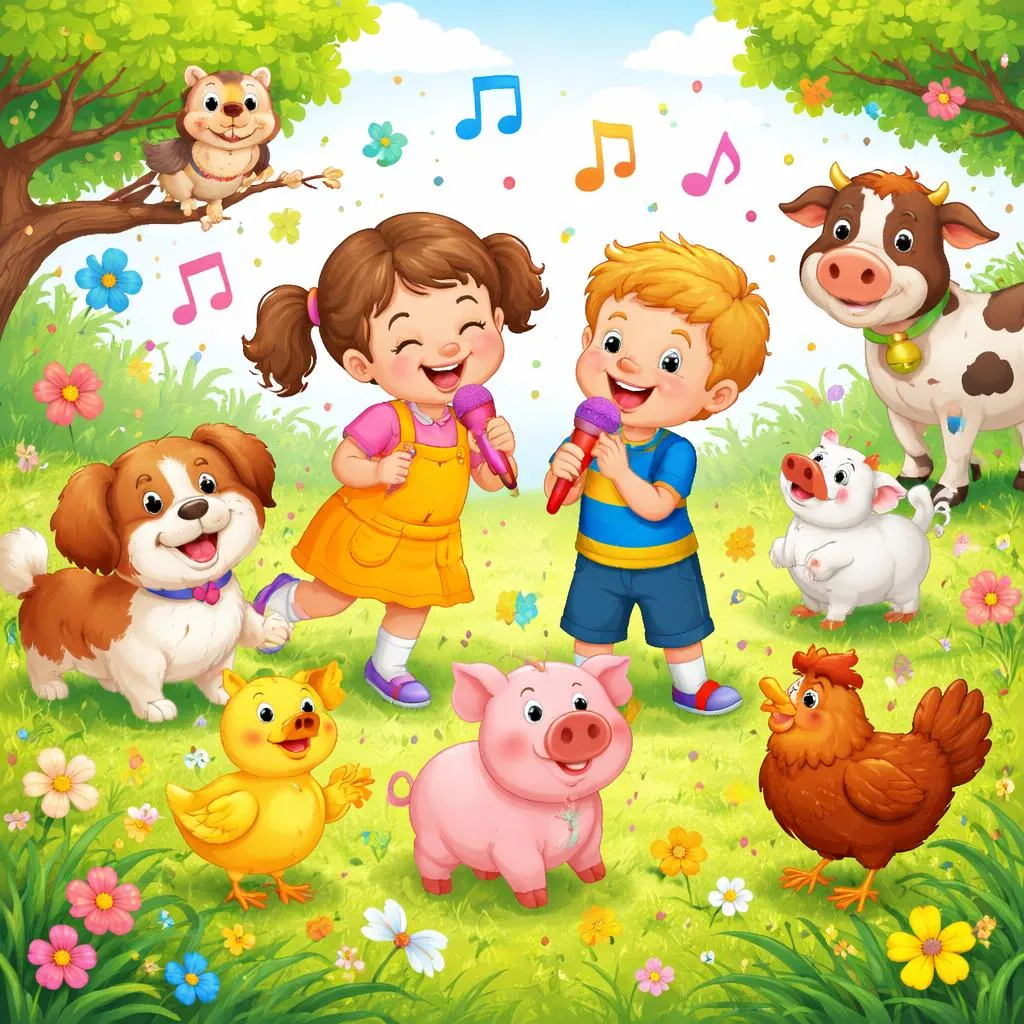

What is the Animal Sounds Song? The animal sounds song is a lively nursery rhyme. It teaches children the sounds that different animals make. The song has been sung by children in homes and schools for generations. It helps connect animal names with their corresponding sounds. The melody is catchy and easy to follow. Children quickly join in singing and mimicking animal sounds.
The song is popular in early learning centers and playgroups. Teachers use it to introduce basic animal vocabulary. It combines listening, speaking, and movement. Repetition in the song makes words easier to remember. The rhyme encourages interaction through gestures and sounds.
Animal Sounds Song Lyrics The lyrics are simple and repetitive. They include animals like cows, dogs, cats, ducks, and more. For example, “Old MacDonald had a farm, E-I-E-I-O.” The song repeats each animal with its unique sound. Children sing lines like, “With a moo moo here, and a moo moo there.” Singing the lyrics connects words with actions and sounds.
The lyrics introduce onomatopoeia. Words like “moo,” “quack,” “baa,” and “oink” imitate real animal sounds. Singing these words improves listening and pronunciation skills. Children often act out the animals while singing. Pointing or moving like the animals makes the experience interactive. Repeating the song multiple times keeps children engaged and happy.
Vocabulary Learning The song teaches animal names and sounds. Animals like cow, pig, duck, cat, dog, and horse become familiar. Children learn verbs like “moos,” “quacks,” “barks,” and “oinks.” Adjectives may describe the animals, like “big,” “small,” or “furry.” Vocabulary learning combines visual, auditory, and kinesthetic methods.
Visual aids enhance understanding. Teachers and parents can show pictures or toys of animals. Children match animal names with their sounds and images. Songs provide context for new words in an engaging way. Vocabulary becomes meaningful through music, action, and repetition. The song supports listening, speaking, and recognition skills.
Phonics Points The animal sounds song supports phonics learning. Repetition of consonants and vowels helps children recognize patterns. For example, “moo” emphasizes the long “oo” sound. “Quack” highlights the “qu” sound combination. Children practice blending sounds and noticing rhymes.
Phonics activities can follow the song. Clapping for each syllable improves rhythm and sound awareness. Children can imitate animal sounds while practicing pronunciation. Recognizing sounds in words builds early reading skills. The song combines fun with phonics in a natural way.
Grammar Patterns The song introduces simple sentence structures. For example, “With a moo moo here, and a moo moo there” uses repetition and location words. Children learn how words fit together to form phrases. Verbs describe actions of animals, reinforcing present tense. Adjectives describe size, color, or behavior of animals.
The song encourages simple conversation skills. Children ask and answer questions about animals and sounds. Sentences are short, clear, and easy to repeat. Repetition helps internalize grammar patterns in an enjoyable way. Songs act as an introduction to basic sentence construction.
Learning Activities The animal sounds song can be used in many activities. Children can point to pictures of animals while singing. Using animal toys or puppets makes the song interactive. Children can imitate animal movements and sounds. Arts and crafts activities can accompany the rhyme, like making paper masks.
Games increase engagement and retention. For example, “Animal Parade” has children move like the animals. Children can play “Guess the Sound” while singing the song. Interactive apps may provide animated animals to follow along. Group singing promotes listening, cooperation, and memory. Learning becomes multi-sensory, combining music, movement, and words.
Printable Materials Printable flashcards support learning from the song. Cards can show animal names, pictures, and corresponding sounds. Children can match cards with the correct animal sound. Worksheets may include coloring pages with animals and tracing exercises.
Printable lyric sheets let children follow along. Highlighting key vocabulary improves reading and recognition. Worksheets may also include matching sounds with animals. Printable materials offer a hands-on approach to learning. They can be reused for practice and reinforcement.
Educational Games Games reinforce knowledge from the animal sounds song. Memory games with animal cards improve recall. Puzzle games match animals with their sounds or names. Interactive apps provide challenges, rewards, and animation for engagement.
Movement games make learning active. Children jump, stomp, or clap along with each animal sound. “Animal Bingo” is a fun game to reinforce vocabulary and sounds. Group activities encourage teamwork, listening, and social skills. Games make learning playful while supporting English development.
Singing with peers or family adds a social and fun element. Children learn by listening to others and imitating sounds. Group activities build confidence and communication skills. The song becomes a joyful experience combining music, language, and play.
The animal sounds song introduces children to animals and their sounds. It combines melody, vocabulary, phonics, and grammar in one engaging activity. Visuals, games, and interactive materials enhance learning. Music, movement, and repetition support memory, pronunciation, and language development.
The song also inspires creativity. Children can invent new verses or create their own animal combinations. Learning becomes playful, memorable, and meaningful. Vocabulary, sentence structure, and phonics skills grow naturally. The rhyme remains a joyful tool for early literacy and animal learning.