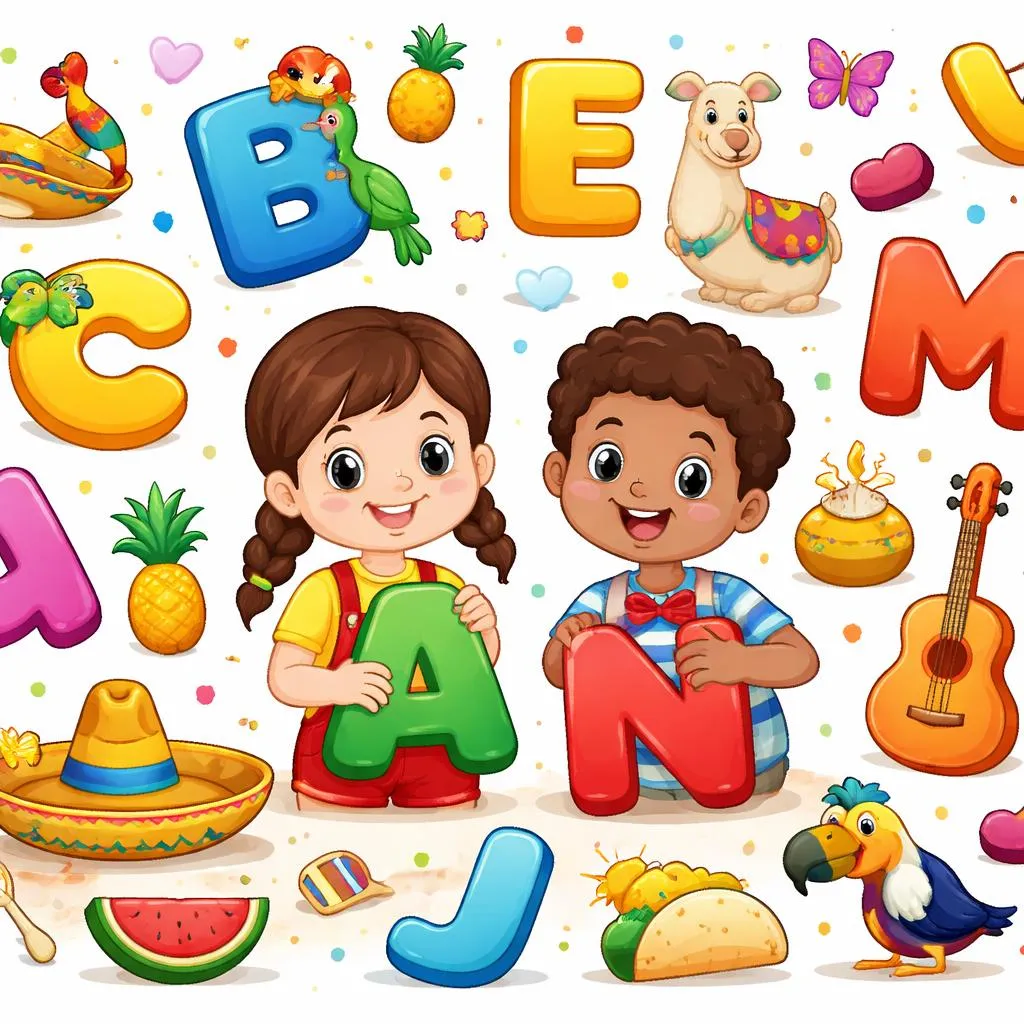

What is the Spanish Alphabet? The Spanish alphabet is made up of 27 letters. It has the same letters as the English alphabet, plus one extra letter. This extra letter is “ñ.”
The Spanish alphabet has 27 letters.
The 27 Letters of the Spanish Alphabet Here are the 27 letters of the Spanish alphabet: A, B, C, D, E, F, G, H, I, J, K, L, M, N, Ñ, O, P, Q, R, S, T, U, V, W, X, Y, Z.
The alphabet has 27 letters in total.
How to Pronounce Spanish Letters The pronunciation of letters in Spanish is mostly consistent. Each letter usually sounds the same, no matter where it appears in a word. For example, the letter “A” sounds like “ah.”
Spanish letters have clear pronunciations.
Vowels in the Spanish Alphabet There are five vowels in the Spanish alphabet: A, E, I, O, U. These vowels are very important in forming words.
Vowels are key to pronunciation.
The Special Letter “Ñ” The letter “Ñ” is unique to the Spanish alphabet. It sounds like the “ny” in “canyon.” For example, “niño” means “child” in Spanish.
“Ñ” is an important letter in Spanish.
Pronouncing Spanish Consonants Spanish consonants often sound similar to their English counterparts. For example, “B” in Spanish sounds the same as in English. However, some letters, like “J” and “G,” sound different in Spanish.
Consonants may have unique sounds in Spanish.
The Letter “C” in Spanish The letter “C” has two different sounds in Spanish. When it comes before “e” or “i,” it sounds like “th” in “think” (in Spain) or “s” in “sea” (in Latin America). For example, “cielo” (sky) has a “s” sound.
“C” changes depending on the following letter.
The Letter “G” in Spanish The letter “G” also has two different sounds. When it is followed by “e” or “i,” it sounds like an English “h.” For example, “gente” (people) has an “h” sound at the beginning.
“G” can be soft or hard in Spanish.
The Letter “J” in Spanish The letter “J” sounds like an English “h.” For example, “jugar” (to play) sounds like “hoo-gar.”
“J” is a unique sound in Spanish.
The Letter “V” in Spanish In Spanish, the letter “V” sounds very similar to the letter “B.” For example, “verde” (green) sounds like “ber-deh.”
“V” and “B” can sound the same.
The Letter “Y” in Spanish The letter “Y” can sound like the English letter “Y” or the sound “ee.” For example, “yo” (I) sounds like “yo,” but “rey” (king) sounds like “ray.”
“Y” is versatile in Spanish.
The Letter “Z” in Spanish The letter “Z” in Spanish is pronounced like “s” in most places. For example, “zapato” (shoe) sounds like “sah-pah-toh.”
“Z” is like an “s” in Spanish.
The Sounds of Spanish Letters Spanish letters are often pronounced clearly and consistently. There are fewer silent letters than in English. For example, “h” in Spanish is always silent.
Spanish pronunciation is more consistent than in English.
Learning the Spanish Alphabet Song One fun way to learn the Spanish alphabet is by singing the alphabet song. It’s similar to the English alphabet song, but with Spanish letters. Sing it every day to remember the letters.
Songs help with remembering the alphabet.
Writing the Spanish Alphabet To write the Spanish alphabet, practice each letter. Start with the capital letters, then practice the small letters. For example, “A” is written as “A” and “a.”
Practice writing both uppercase and lowercase letters.
Spanish Alphabet and Reading Once you know the Spanish alphabet, you can start reading. Start with simple words like “hola” (hello) and “amigo” (friend). Reading will be easier when you know the letters.
Reading starts with knowing the alphabet.
The Importance of Knowing the Alphabet Knowing the Spanish alphabet helps with reading and writing. It’s the first step in learning the language. Once you know the alphabet, you can begin forming words.
The alphabet is the foundation of learning Spanish.
The Spanish Alphabet in Your Daily Life You see the Spanish alphabet everywhere! It’s in books, signs, and advertisements. Look for words you know in Spanish, and try to read them.
The alphabet is everywhere in Spanish.
Fun Activities with the Spanish Alphabet You can practice the Spanish alphabet in fun ways. Try writing the letters in different colors or drawing them with chalk. You can also play games like matching letters to pictures.
Learning can be fun with the alphabet.
Practice Writing Letters in Spanish Practice writing the Spanish letters neatly. Try writing your name in both uppercase and lowercase letters. It will help you become familiar with the alphabet.
Writing letters helps with learning.
Spanish Alphabet in Everyday Life Learning the Spanish alphabet helps you in everyday life. It allows you to read signs, menus, and other things in Spanish. It also helps you communicate better in Spanish.
Knowing the alphabet makes Spanish easier.
: Mastering the Spanish Alphabet Learning the Spanish alphabet is the first step to learning Spanish. Practice writing, reading, and recognizing the letters every day. Soon, you will be able to read and write in Spanish easily.
Mastering the Spanish alphabet opens the door to the language.
Recognizing Spanish Letters in Words Once you know the Spanish alphabet, you can start recognizing the letters in words. For example, in the word “gato” (cat), you will see the letters G, A, T, and O. Recognizing letters in words is an important skill.
Recognition helps with reading.
Learning the Spanish Alphabet with Flashcards You can use flashcards to learn the Spanish alphabet. On one side, write the letter, and on the other side, write a word that starts with that letter. For example, “A” for “animal” and “B” for “bicicleta.”
Flashcards are a fun way to practice.
The Importance of Correct Pronunciation Correct pronunciation is very important when learning the Spanish alphabet. Each letter has its own sound, and saying it correctly helps with reading and speaking. For example, the letter “R” in Spanish is rolled, which is different from English.
Pronouncing letters correctly is key to learning.
Writing the Alphabet in Different Ways You can practice writing the Spanish alphabet in different styles. For example, write it in cursive, block letters, or even with different colors. This makes learning more fun and helps you remember the letters.
Writing in different ways makes learning exciting.
Understanding the Spanish “Double Letters” In Spanish, there are two letters that are always written together. “Ch” is one of them, as in “chico” (boy). “Ll” is another, as in “llama” (flame).
Double letters are important in Spanish words.
How to Learn the Alphabet with Songs Songs help children remember the alphabet. You can find Spanish alphabet songs on YouTube or music apps. Singing the alphabet will help you remember the letters in order.
Songs make learning easy.
Reading Simple Words in Spanish Once you know the letters, you can start reading simple words in Spanish. For example, “sol” (sun) or “pan” (bread). Reading short words will help you get familiar with the alphabet.
Start with easy words when learning to read.
Spanish Alphabet and Culture The Spanish alphabet is connected to the culture. The letter “Ñ” is especially important in Spanish-speaking countries. It represents a sound that’s not found in English.
The alphabet is part of Spanish culture.
Spanish Alphabet in Different Regions Different regions might pronounce some letters slightly differently. For example, in Spain, “C” before “e” is pronounced like “th,” while in Latin America, it’s pronounced like “s.” This is a part of the regional differences in the Spanish language.
Regional pronunciation differences make Spanish fun.
Using the Spanish Alphabet in Writing Once you know the alphabet, you can use it to write short sentences in Spanish. Start by writing simple sentences like “Yo soy estudiante” (I am a student). Writing will help you improve your language skills.
Writing sentences helps you use the alphabet.
The Spanish Alphabet in Everyday Life You will see the Spanish alphabet in many everyday situations. For example, on signs, menus, and books. Recognizing the letters in these situations will help you with learning Spanish.
The alphabet is everywhere around you.
: Master the Spanish Alphabet The Spanish alphabet is the foundation of learning the language. With practice, you can easily read and write in Spanish. Keep practicing the letters, and you’ll soon be able to use them in conversation and reading.
Mastering the Spanish alphabet is your first step to becoming fluent in Spanish.