
What is the rhyme?
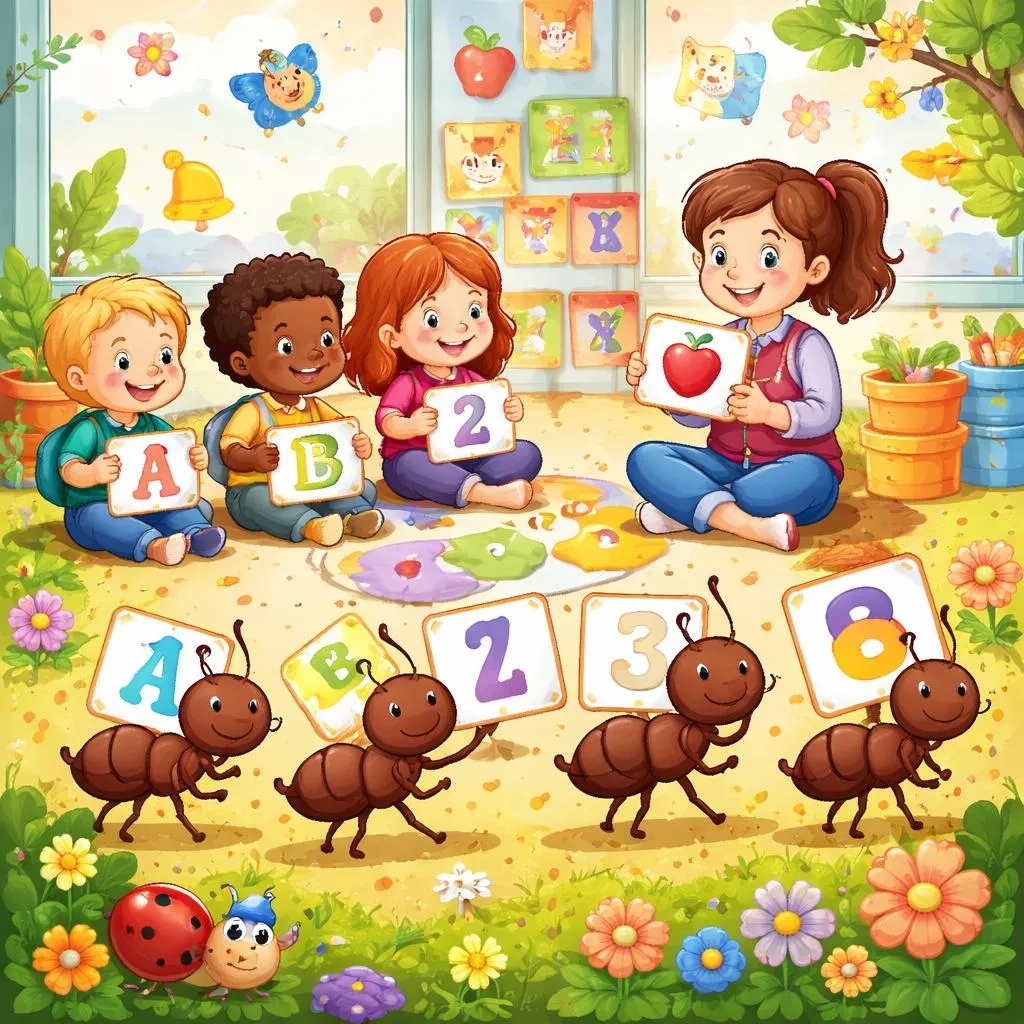
“The Ants Go Marching” is a traditional English nursery rhyme and action song. Teachers often use this song to teach numbers, verbs, and rhythm.
The song has repetitive lines and predictable structure. This pattern supports early reading and listening skills.
The marching actions make it ideal for movement-based learning. Movement strengthens memory and supports kinesthetic learners.
In class, this rhyme works well for circle time, phonics lessons, and number practice. It also supports social language through group singing.
The lyrics of nursery rhymes
The full song has many verses. Each verse changes the action of the little ant.
A common classroom version of the ants go marching lyrics includes:
The ants go marching one by one, hurrah, hurrah. The ants go marching one by one, hurrah, hurrah. The ants go marching one by one, The little one stops to suck his thumb, And they all go marching down to the ground to get out of the rain.
Teachers often add verses with two, three, four, and more. Each verse includes a new action such as tying a shoe or climbing a tree.
The repeated chorus supports fluency and pronunciation practice. The predictable rhythm helps learners follow the structure.
Vocabulary learning
This rhyme introduces concrete nouns, verbs, and numbers. Teachers can highlight each word during guided reading.
Key vocabulary includes ants, marching, ground, rain, thumb, shoe, tree, door, line. Number words such as one, two, three, four appear naturally in the verses.
Action verbs include march, stop, suck, tie, climb, shut, open, look. These verbs connect to daily classroom routines.
Teachers can connect ants to nature science topics. This creates cross-curricular learning with biology and environment lessons.
Prepositions such as down and out appear in the chorus. These words support spatial awareness and sentence building.
Teachers can extend vocabulary with adjectives like little, big, and busy. These words support descriptive language.
Phonics points
“The Ants Go Marching” provides strong phonics teaching opportunities.
The word ants supports short vowel /a/ and consonant blend /nts/. The word march supports the /ar/ vowel sound.
Rain supports the long vowel /ai/. Ground supports the /ou/ vowel sound.
Teachers can isolate sounds and model blending. For example, /m/ + /ar/ + /ch/ makes march.
Syllable practice works well with marching actions. March-ing has two syllables. Ants has one syllable.
Rhyming patterns help phonemic awareness. Rain rhymes with train and plane.
Teachers can add rhyming word practice after singing. This strengthens decoding skills.
Grammar patterns
The rhyme models present continuous tense. “The ants go marching” shows ongoing action.
Teachers can explain that go + verb-ing shows something happening now. For example, “The ants are marching.”
Imperative sentences appear in action-based verses. For example, “Tie your shoe.”
Simple past tense can be introduced through storytelling. “The ant climbed the tree.”
Sentence patterns follow subject + verb + object. “The ants go marching.” “The little one stops.”
Teachers can guide learners to build similar sentences. This supports early writing and speaking.
Learning activities
Action singing works well with this rhyme. Teachers lead marching movements around the classroom.
Counting activities integrate math skills. Count the ants in each verse and use fingers to show numbers.
Role play adds engagement. One learner becomes the little ant. Others act as the marching ants.
Picture sequencing helps comprehension. Teachers show pictures of actions and learners put them in order.
Sentence building tasks reinforce grammar. For example, “The ant is climbing.” “The ant is tying a shoe.”
Listening comprehension questions can follow the song. “What does the ant do in verse three?”
Creative drawing tasks connect language with art. Learners draw ants and label actions.
Printable materials
Printable lyric sheets support reading practice. Teachers highlight key words for decoding.
Flashcards with actions and numbers support vocabulary drills. Each card shows one verse action.
Mini books help learners retell the song. Each page shows one verse with a simple sentence.
Cut-and-paste worksheets support sequencing skills. Learners place actions in the correct order.
Phonics worksheets focus on short and long vowel sounds. Teachers include words like ant, rain, and march.
Number tracing worksheets integrate math and language learning. Learners trace one to ten while singing.
Educational games
Marching freeze game works well with music. When the music stops, learners freeze and say the action word.
Phonics bingo includes words from the song. Teachers call out sounds and learners match words.
Action charades encourage speaking. One learner acts a verse and others guess the sentence.
Sentence dice games help grammar practice. Roll dice to create “The ant is climbing the tree.”
Memory card games support vocabulary recall. Match pictures of ants with action words.
Rhythm clapping games support fluency. Clap on stressed syllables in march-ing and lit-tle.
The Ants Go Marching lyrics provide a complete teaching unit for early English learners. The song integrates movement, counting, phonics, and sentence structure. Teachers can reuse the rhyme across multiple lessons and skill areas. With structured activities and printables, this classic song supports joyful and effective English learning in every early classroom setting.