
What is this topic about?
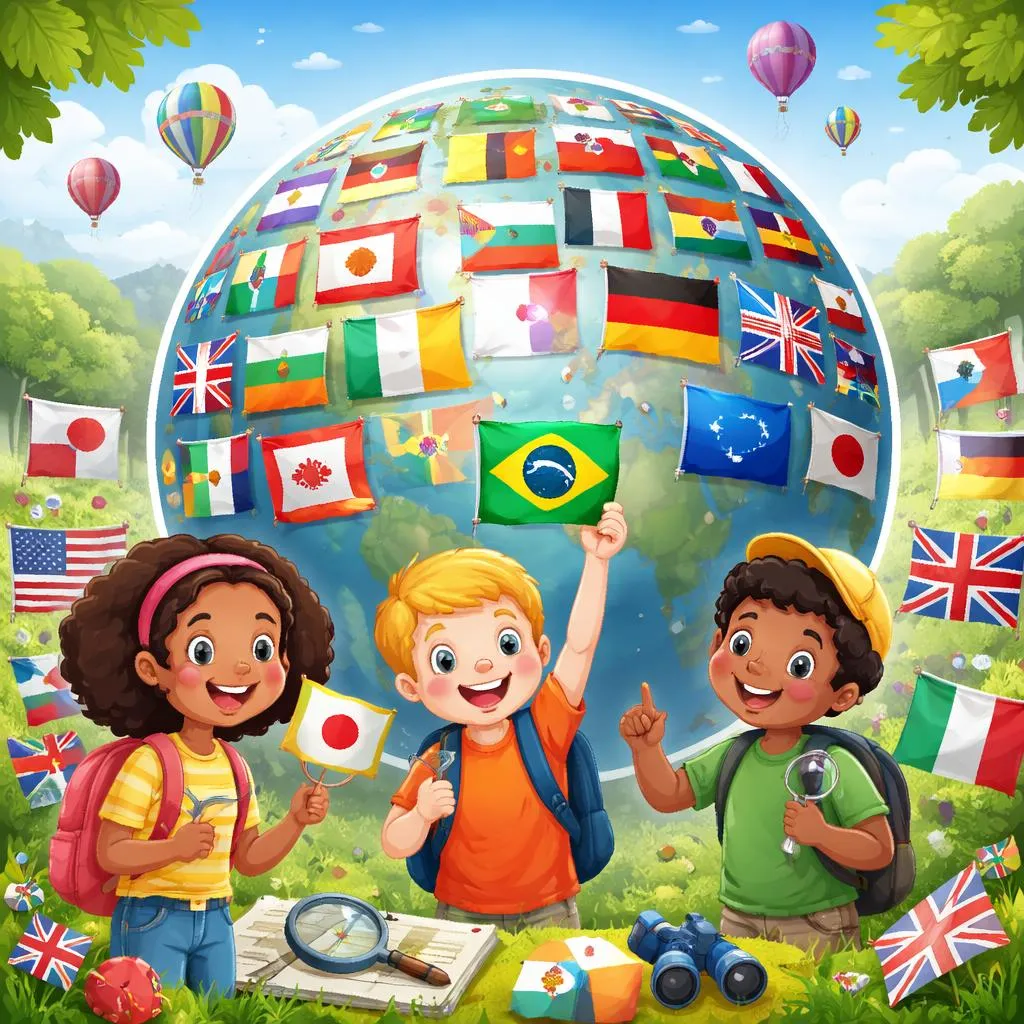
Welcome, explorers! Today, we embark on a colorful journey around the world. We are going to learn about banderas de todos los paises. That’s Spanish for “flags of all countries.” A flag is much more than just a piece of colored cloth. It is a symbol. It tells a story about a country’s history, its people, and its values.
Studying banderas de todos los paises is like reading a visual language. Each color, shape, and symbol has a meaning. This topic opens a window to global geography and cultures. It helps us appreciate our wonderful and diverse world. Let’s discover how we can learn about these flags in an engaging and memorable way.
Meaning and explanation
Why do countries have flags? Flags serve as an identity. Long ago, armies used them on battlefields to identify friends and foes. Today, a flag represents a nation everywhere. You see them flying at embassies, during the Olympic Games, and at international events. They are a source of pride and unity for citizens.
When we study banderas de todos los paises, we look for common themes. Many flags use colors like red, blue, white, and green. Stars, stripes, crosses, and coats of arms are common symbols. For example, the sun often represents a new beginning. A star can symbolize unity or a guiding light. Understanding these elements helps us “read” the story each flag tells.
Categories or lists
With nearly 200 countries, looking at all flags at once can feel overwhelming. A great strategy is to sort them into friendly categories. We can group banderas de todos los paises by common colors. Let’s find all the flags with red, white, and blue, like the United States, the United Kingdom, and France.
We can also group them by continent. The flags of Asia might include Japan’s simple red circle and India’s colorful tricolor. African flags often feature green, yellow, and red, like Ghana’s. Another way is by common symbols. We can find flags with stars, like China, the United States, and Australia. We can look for flags with crosses, like Sweden and Switzerland. Sorting makes the task organized and fun.
Daily life examples
We can find banderas de todos los paises in many places around us. The most exciting example is international sports. Watch the opening ceremony of the Olympic Games. Athletes parade behind their national flag. During the FIFA World Cup, fans wave their country’s flag with pride.
Look at products in a supermarket. A “Made in” label often comes with a little flag icon. When you visit an airport, you might see a row of flags representing different airlines or destination countries. Even in movies or news reports about other countries, the flag is usually shown. Pointing out these connections makes learning about flags relevant and exciting.
Printable flashcards
Printable flashcards are a perfect tool for this visual topic. You can create a beautiful set of flashcards for banderas de todos los paises. One side of the card shows a clear, colorful image of the flag. The other side lists the country name in English and Spanish, the capital city, and one simple fact.
For instance, the front shows Italy’s green, white, and red vertical stripes. The back says: “Italy / Italia. Capital: Rome. The flag is inspired by the French flag.” Start with a manageable set of 20 cards. Focus on well-known countries or ones from a specific continent. Use these cards for daily review, matching games, or simple “Guess the Flag” quizzes.
Learning activities and games
Learning comes alive with games and activities! Here are some engaging ways to explore banderas de todos los paises.
First, try “Flag Detective.” Choose one flag, like South Africa’s. Don’t show the name. Present the flag and ask questions. “What colors do you see?” “Are there any shapes or symbols?” “What do you think the ‘Y’ shape might mean?” Then, reveal the meaning: the colors represent different peoples and the land, and the shape symbolizes convergence. This activity develops observation and critical thinking.
A creative art project is “Design Your Own Flag.” First, discuss common elements. What do colors mean to you? What symbol represents your family or your dreams? Then, using paper, markers, or fabric, create a personal or classroom flag. This activity reinforces the concept that flags have intentional design and symbolism. It’s a wonderful way to personalize the learning about banderas de todos los paises.
For a physical game, organize a “World Flag Scavenger Hunt.” Print and hide small pictures of flags around the room or house. Provide a checklist with country names. The mission is to find each flag and check off its country. To make it harder, provide the checklist with only capital cities or continents, and the hunter must identify the correct flag.
Another excellent game is “Continental Bingo.” Create Bingo cards. Instead of numbers, each square has a picture of a flag from a specific continent, like Europe or South America. Call out country names or facts. Players mark the corresponding flag on their card. This is fantastic for associating the flag’s visual design with the country’s name and location.
Technology can help too. Use interactive websites or apps that feature world flag quizzes. Many offer different difficulty levels, from simple identification to matching flags to their continents. This provides immediate feedback and makes practicing banderas de todos los paises feel like a fun challenge.
Remember, the goal is curiosity, not memorization of every detail. Celebrate each new flag recognized and each new fact learned. By exploring banderas de todos los paises through play, art, and discovery, we build more than just knowledge of flags. We foster a sense of global citizenship, respect for diversity, and a lifelong interest in the stories our world has to tell. Every flag is an invitation to learn more about the people and places it represents. That is a wonderful journey to begin.