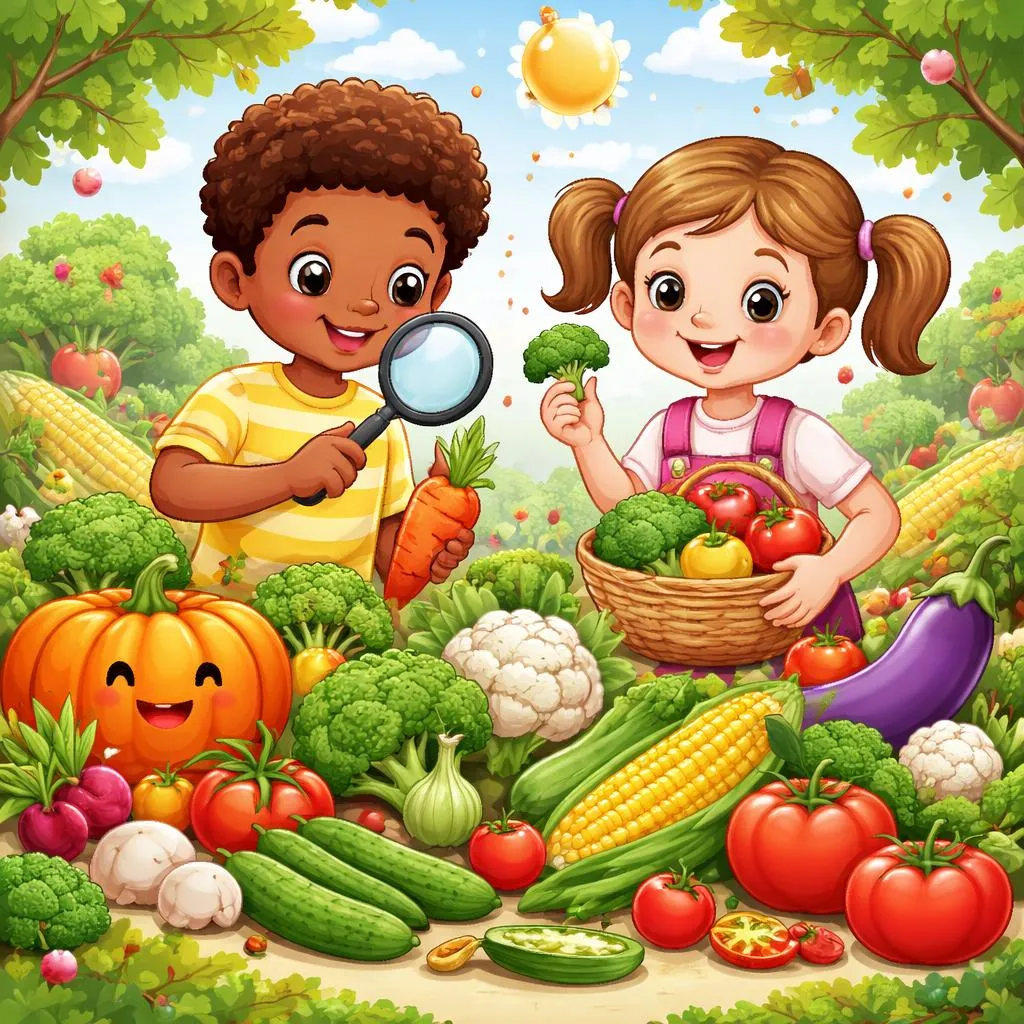

What is this topic about?
Welcome to a colorful and crunchy world of learning! Today, we're going to explore vegetales — the Spanish word that opens the door to the wonderful English topic of vegetables. Learning the names of vegetables is about more than just memorizing words. It's a journey into nutrition, colors, science, and daily life.
When we study vegetales, we connect a familiar Spanish concept to new English vocabulary. This bilingual approach builds confidence and reinforces meaning. We can touch, see, and sometimes even taste our way through this lesson, making it a lively, sensory experience. Understanding vegetales helps young learners talk about food, health, and the world around them in a new language.
Meaning and explanation
The word vegetales translates directly to vegetables in English. Vegetables are parts of plants that we can eat. They come from different parts of the plant, like the roots, stems, leaves, flowers, or even the seeds. They are packed with vitamins and minerals that help our bodies grow strong and stay healthy.
Learning about vegetales is important because it builds essential life vocabulary. It allows children to express their food preferences, understand grocery shopping, and participate in family meals with more confidence in English. By exploring vegetales, we don't just learn nouns; we learn about categories, colors, textures, and the importance of a balanced diet.
Categories or lists
We can organize vegetales (vegetables) into friendly groups to make learning easier. One way is by the color of the vegetable. We have Red and Orange Vegetables like carrots, tomatoes, and red peppers. We have Green Vegetables like broccoli, spinach, peas, and lettuce. We have White and Brown Vegetables like potatoes, onions, and mushrooms.
Another way to categorize is by the part of the plant we eat. Root Vegetables grow underground, like carrots and potatoes. Leafy Greens are the leaves, like spinach and kale. Flower Vegetables include broccoli and cauliflower. We can also group them as Common Favorites (carrots, peas, corn) and Maybe-New-to-You Vegetables (zucchini, asparagus, eggplant). Sorting them makes the long list of names manageable and fun.
Daily life examples
We find vegetales all around us every single day. The most obvious place is in the kitchen and at the dinner table. We see carrots in soup, lettuce in a salad, and potatoes being mashed. We can point them out: "Look, these are green beans. They are vegetales."
At the grocery store or market, we see entire sections dedicated to fresh, frozen, and canned vegetables. This is a perfect place to practice names. During meals, we can use simple English phrases: "I like corn." "Do you want more peas?" Even in gardens or parks, we might see vegetables growing. Connecting the English words to these real, tangible objects makes the vocabulary stick.
Printable flashcards
Printable flashcards are a perfect tool for learning vegetales. Create a vibrant set where one side shows a clear, colorful photo of a vegetable, like a shiny red tomato or a bunch of bright orange carrots. The other side should have the word in large, clear print: "TOMATO" or "CARROT."
For a bilingual boost, you can include "tomato / el tomate" on the same card. Use these cards for games like "Guess the Vegetable" (show the picture side first) or "Match the Word" (lay out all picture cards and word cards separately). You can also sort the flashcards into the color or plant-part categories we discussed. This visual and tactile practice is key for memory.
Learning activities and games
Learning comes alive with play! Here are some engaging vegetales activities.
First, try "Vegetable Stamping." This combines art and vocabulary. Cut sturdy vegetables like potatoes, bell peppers, or celery stalks in half. Dip the flat surface in washable paint and stamp it onto paper. As you stamp, say the vegetable's name: "This is a potato print!" You can also carve simple shapes into the potato before stamping. This sensory activity links the word to a fun, creative action.
A classic and effective game is "The Mystery Bag." Place a real vegetable (like a zucchini, a potato, or a cucumber) inside a cloth bag. Without looking, a child reaches in, feels it, and describes it in English. "It's long. It's smooth. It's hard." Then they guess, "Is it a cucumber?" This activity builds descriptive language and connects vocabulary to touch and shape.
For a more active game, play "Vegetable Market." Set up a play market with toy vegetables or printed pictures. Give children simple shopping lists with pictures and words: "3 carrots," "1 broccoli," "2 tomatoes." They must go to the "market," find the items, and say the names as they "buy" them. This role-play uses vocabulary in a realistic, fun context.
Another great activity is "Color Sorting Basket." Provide a basket of mixed vegetable toy foods or pictures. Place three colored pieces of paper on the floor: red, green, and orange. Children pick a vegetable from the basket, say its name and color ("A green pepper"), and place it on the correct colored paper. This reinforces both color words and vegetable names.
To integrate simple math, try "Vegetable Counting." Use small toy vegetables or laminated pictures. Give instructions like, "Put 5 carrots on the table." or "Give me 2 red vegetables and 3 green vegetables." This combines number practice with vocabulary review in a hands-on way.
Singing is always powerful. Learn a simple song like "Vegetable Soup" or adapt the tune of "The Wheels on the Bus": "The carrots in the soup go chop, chop, chop..." or "The peas in the pot go round and round." Acting out the song with movements makes it unforgettable.
The goal of learning about vegetales is to build a positive, familiar relationship with both the food and the English words. By using games, art, and pretend play, we remove pressure and add joy. Children learn best when they are having fun and using their hands and minds together. Soon, words like broccoli, spinach, and cucumber will be as easy and natural to say as their Spanish counterparts. This knowledge is a gift that nourishes both language skills and healthy habits for life. So, let's explore, play, and taste our way through the wonderful world of vegetables