
Meaning
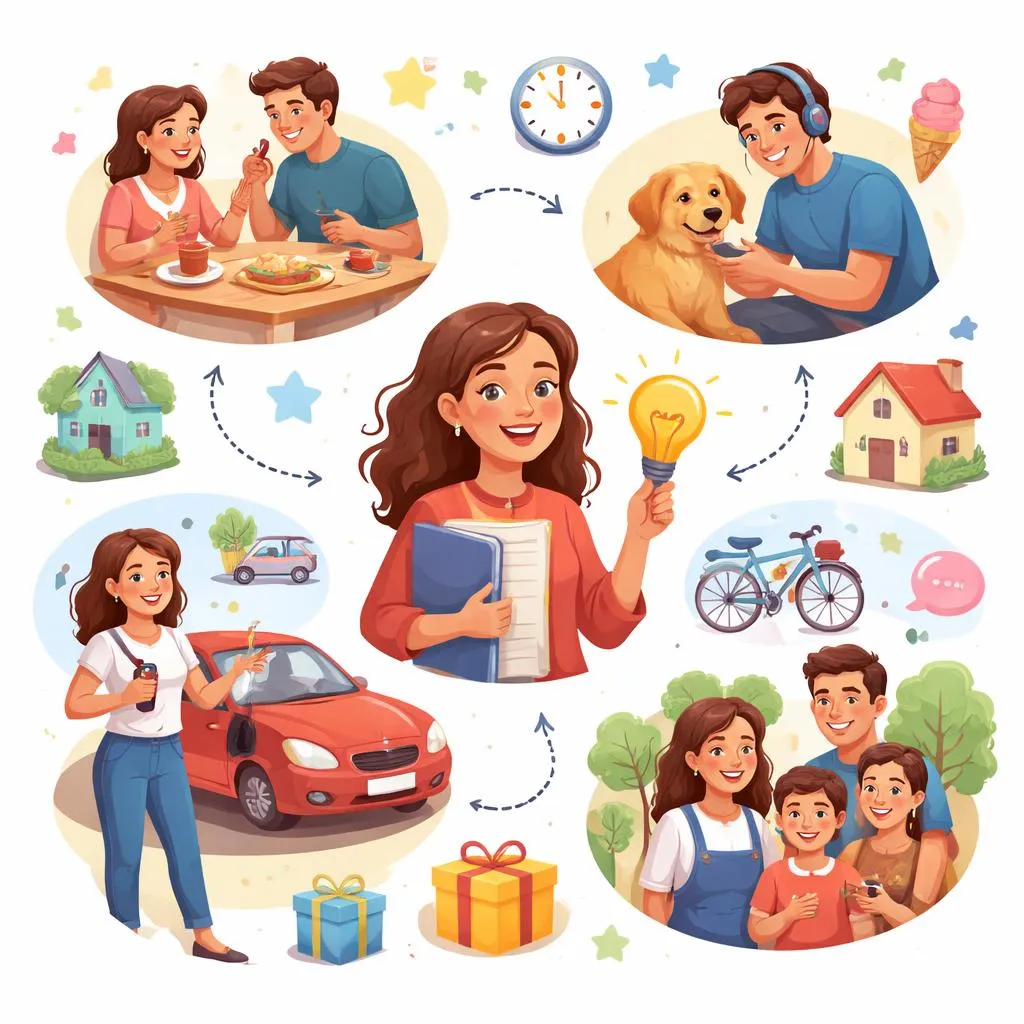
Let's explore one of the most important verbs in English. The verbo have is a key action word that often shows possession or ownership. It tells us that someone owns, holds, or experiences something. For example, "I have a book" means the book belongs to me or is with me.
But the verbo have does much more. It can also show relationships ("I have a sister"), describe features ("You have blue eyes"), or talk about experiences ("We have fun"). Understanding this verb opens the door to talking about our world, our belongings, and our lives in English. It is a fundamental building block for communication.
Conjugation
The verbo have changes its form depending on the subject. This change is called conjugation. In the present tense, it has two main forms. With the pronouns I, you, we, and they, we use have. With he, she, and it, we use has.
Look at these examples: "I have a ball." "You have a friend." "She has a cat." "It has a long tail." This rule is very important. The past tense form for all subjects is had. For example: "Yesterday, I had lunch." "She had a red dress." The future tense often uses will have. "Tomorrow, I will have a test."
Present tense
We use the present tense of the verbo have to talk about things we own or experience now. It describes current situations. For possession: "He has a new bicycle." For family: "They have two children." For characteristics: "This room has a big window."
We also use it for scheduled events: "We have English class on Monday." The present tense is the most common way to use this verb. It helps us share information about our daily lives and surroundings. Remember the rule: he/she/it uses has, all others use have.
Past tense
The past tense of the verbo have is had. We use it for all subjects. This tense talks about possession or experiences that existed in the past but may not be true now. For example: "I had a dog when I was little." (I don't have it now.) "We had pizza for dinner last night." (The eating is finished.)
We also use it in stories: "The princess had long, golden hair." Using the past tense helps us tell stories about our childhood, describe past events, and share memories. It's a simple but powerful way to connect the present to past experiences.
Future tense
To talk about future possession or experiences, we often use will have. This form stays the same for all subjects. We use it for predictions or things we are sure about in the future. For example: "On my birthday, I will have a cake." "She will have a baby sister soon."
We can also use "going to have" for plans: "We are going to have a picnic." The future tense of the verbo have helps children express hopes, plans, and things they look forward to. It teaches them to think ahead and use English to talk about tomorrow.
Questions
Making questions with the verbo have is easy. For most present tense questions, we use do or does as helpers. With I, you, we, they: "Do you have a pencil?" With he, she, it: "Does she have a brother?" The answer can be short: "Yes, I do." or "No, she doesn't."
For past tense questions, we use did: "Did you have fun at the park?" "Did it have wheels?" The verb have returns to its base form in these questions. This structure is very common, so practicing it builds confidence in everyday conversation.
Other uses
The verbo have has some special jobs. One important use is in the present perfect tense. Here, have or has works as a helper verb with a past participle. Example: "I have finished my work." This connects past action to the present.
Another common phrase is have to, which means must. "I have to go home." It expresses necessity. Also, have is used in many everyday expressions: "have breakfast," "have a good time," "have a problem." Learning these phrases helps sound more natural in English.
Learning tips
A great way to learn the verbo have is to start with what you know. Make lists: "Things I Have." Practice sentences: "I have two hands. I have ten fingers." Use toys: "The doll has a dress. The car has four wheels."
Play the "I Spy" game using "have": "I spy someone who has glasses." Or "I spy something that has wheels." This makes practice fun and observational. Remember the simple rule: has for he/she/it, have for the others in the present. For past, always use had.
Educational games
Play "Have You Got It?" This is a guessing game. Hide a small object in your hand. Ask: "Do I have a coin in my hand?" Children guess yes or no. Then let a child hide an object and ask the class: "Do I have a toy car?" They practice the question form.
For a more active game, try "Find Someone Who Has..." Create a bingo sheet with pictures: someone who has a pet, someone who has a red shirt, someone who has a brother. Children mingle and ask questions: "Do you have a dog?" When they find someone, they write the name in the square. This encourages speaking and listening practice.
Mastering the verbo have gives learners a tool for countless everyday sentences. It helps them talk about what they own, what they see, and what they experience. By starting with simple possessions and moving to expressions and tenses, we build a strong foundation. With practice through games, personal examples, and repetition, using "have" and "has" becomes a natural part of speaking English. This verb is a small key that unlocks a big part of the language, helping young learners share their world with confidence.