
What Is This Animal?
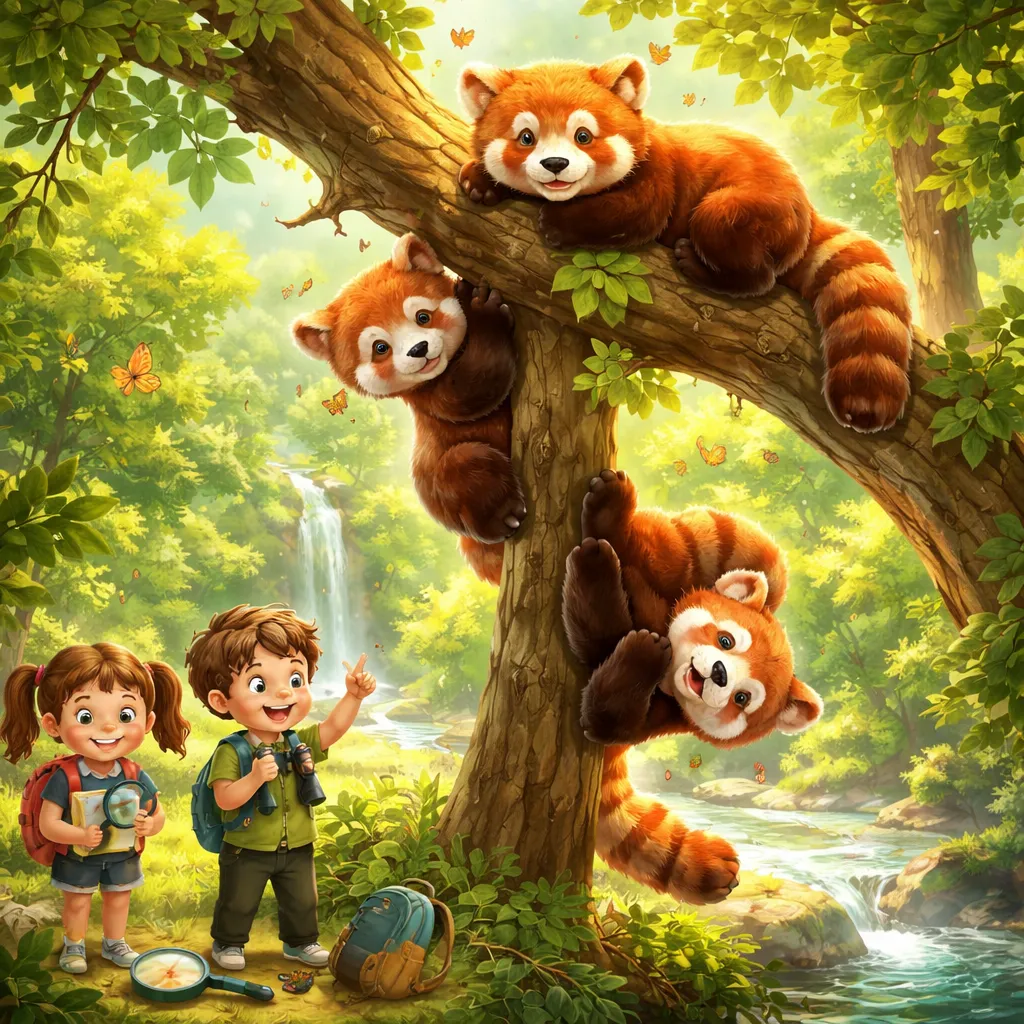
A red panda is a small mammal with reddish-brown fur and a long, bushy tail. Its face is white with dark markings around the eyes. Its tail has light and dark rings. Red pandas look like a mix between a raccoon, a bear, and a cat. They are often called “firefox” because of their color.
Red pandas are not related to giant pandas. They have their own animal family. They are the only living member of their family. They live in trees. Their ankles can rotate to climb down headfirst. They spend most of their time in the branches.
These animals live in the eastern Himalayas and southwestern China. They live in temperate forests with bamboo. They live at high elevations. Their habitat is cool, misty, and full of trees.
For children, red pandas are irresistible. Their fluffy tails and gentle faces make them favorites. Learning about red pandas teaches children about unique animals, forest habitats, and the importance of protecting endangered species.
English Learning About This Animal
Let us learn the English words red panda. We say it like this: /rɛd ˈpændə/. Red sounds like “red.” Panda sounds like “pan-duh.” Put them together: red panda. Say it three times. Red panda. Red panda. Red panda.
Now let us learn words about a red panda’s body. The fur is reddish-brown on the back and black on the belly. The tail is long and bushy with rings. The face has white markings and dark tear tracks. The paws have a special wrist bone that acts like a thumb. The cubs are baby red pandas.
There is a charming saying about red pandas. People who study them say, “The red panda does one thing at a time, and does it well.” This reflects their calm nature. Another saying is, “A red panda in a tree is a picture of peace.” This captures their gentle presence.
These English words help children understand red panda anatomy. When they say thumb, they learn about the special wrist bone. When they say tail, they understand how they balance. Parents can practice these words while looking at pictures. Point to the parts. Say the words together.
Animal Facts and Science Knowledge
Red pandas belong to the family Ailuridae. They are the only living member of this family. Their scientific name means “shining cat.” They were discovered before giant pandas. They are more closely related to raccoons and weasels than to bears.
Red pandas live in temperate forests with bamboo. They are found in Nepal, India, Bhutan, China, and Myanmar. They live at elevations between 7,000 and 12,000 feet. They need cool temperatures and dense bamboo.
Red pandas eat mostly bamboo. They eat leaves and shoots. They also eat fruit, acorns, eggs, and insects. They have a wrist bone that acts like a thumb. This helps them grip bamboo stems. They spend most of their day eating.
Red pandas have special abilities. They are excellent climbers. They can climb down trees headfirst. Their ankles rotate to allow this. Their bushy tail helps them balance. It also wraps around them for warmth in cold weather. They are mostly active at dawn and dusk.
Red pandas are endangered. There are fewer than 10,000 left in the wild. Threats include habitat loss, poaching, and climate change. Their forest homes are being cut down. Conservation groups work to protect their habitat. Zoos also have breeding programs.
How to Interact With This Animal Safely
Red pandas are wild animals. They are endangered. The best way to interact is to support their protection. Teach children about red pandas. Learn about conservation groups that help them. Share what you learn with others.
If you ever travel to red panda habitat, stay on trails. Do not approach wild animals. Red pandas are shy. They hide in trees. They are not dangerous to people, but they need their space. Watching from a distance is best.
In zoos, red pandas are in protected habitats. Follow all rules. Stay behind barriers. Do not tap on glass. Do not try to feed them. Watch them climb, eat bamboo, and nap. Zoo visits help people learn about these special animals.
Teach children never to try to touch or feed wild animals. Wild animals need to stay wild. Feeding them can make them sick. It can also make them dependent on people. Respecting their wildness helps them survive.
Red pandas need our help. Their numbers are small. Learning about them is the first step. Supporting conservation helps protect their forest homes. Even small actions, like sharing what you know, make a difference.
What Can We Learn From This Animal
Red pandas teach us about being unique. They are the only one in their family. Children learn that being different is special. Each person has unique qualities. Celebrating what makes us different is important.
Red pandas teach us about balance. Their tail helps them balance on branches. Children learn that balance helps us in life. Balancing play and work, activity and rest, and giving and receiving all help us thrive.
Red pandas teach us about calm. They move slowly. They nap in trees. Children learn that being calm is a strength. Taking time to rest, moving at our own pace, and finding peaceful moments are valuable.
Red pandas teach us about conservation. They need our help to survive. Children learn that we can protect animals. Learning, sharing, and caring for nature all help. Every person can make a difference.
Fun Learning Activities
Let us make learning about red panda fun. One activity is the red panda climb game. Ask your child to climb on pillows or soft furniture. Use a scarf as a long tail for balance. Climb down carefully. Say “red panda climbs” and “red panda balances with its tail.”
Another activity is drawing a red panda. Look at pictures of red pandas. Notice the reddish fur, ringed tail, and white face markings. Draw a red panda in a bamboo tree. Add the rings on the tail. Label the parts. Say the words aloud.
Create a story about a red panda’s day. Ask your child what the red panda does. Does it eat bamboo? Does it nap in a tree? Does it wash its face? Write a few sentences together. Let your child draw pictures. Read the story aloud.
Make a red panda craft. Use orange and brown paper for the fur. Add a long tail with rings. Add a white face with dark eye markings. Add ears. Move the craft red panda. Practice saying “red panda eats bamboo” and “red panda wraps its tail.”
Learn about bamboo forests. Talk about why bamboo is important for red pandas. Compare red pandas to giant pandas. Notice the differences in size, color, and behavior. Use words like “bamboo,” “endangered,” and “conservation.”
Learn about conservation. Find a red panda conservation group online. Read about what they do. Make a poster about red pandas to share. Use words like “protect,” “habitat,” and “wildlife.”
These simple activities bring learning to life. Children build English vocabulary while playing. They learn science through understanding unique animals. They develop conservation awareness through learning about endangered species. Learning about red panda becomes a journey into misty mountain forests. Each moment spent together strengthens language, curiosity, and a growing appreciation for the fluffy, ring-tailed creatures that nap in bamboo trees, teaching us that being gentle, calm, and a little different is a wonderful way to be.