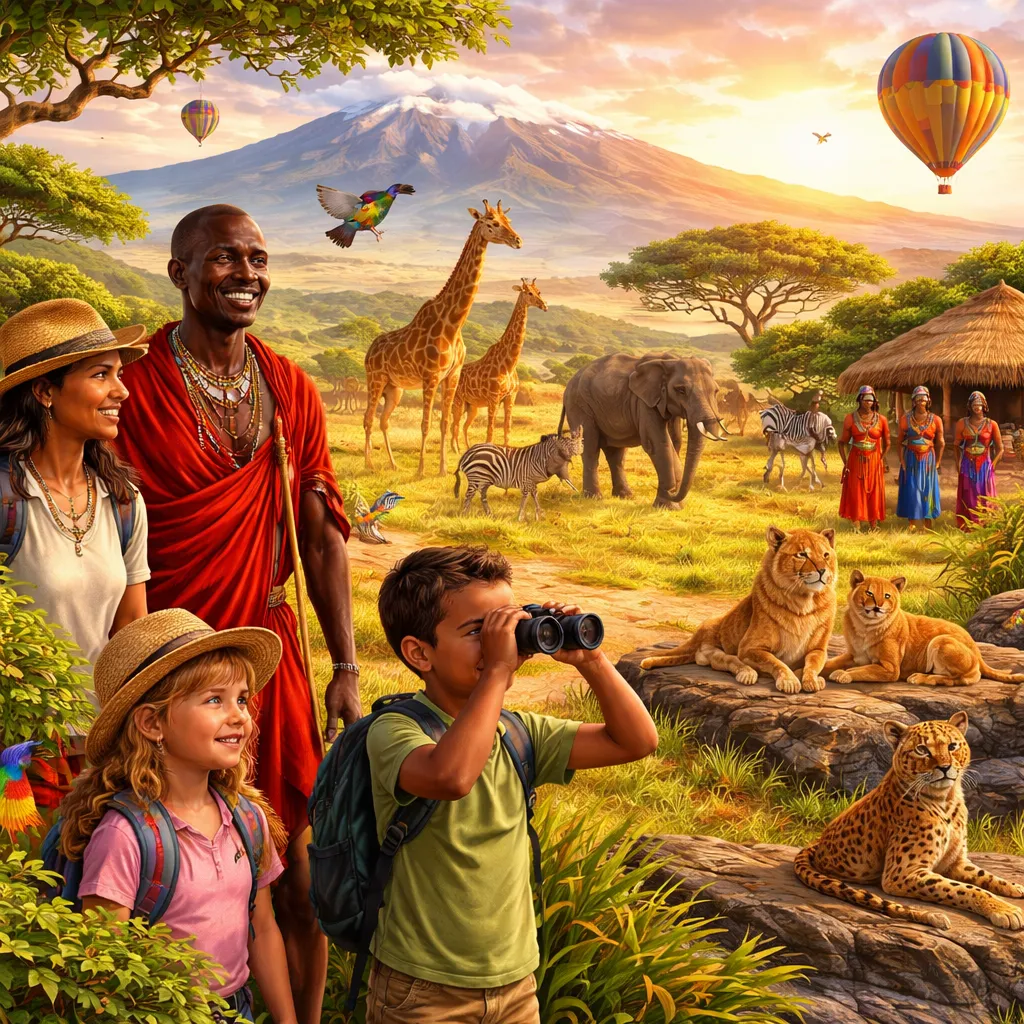

A Friendly Hello and First Impressions
Jambo! (JAHM-boh). This is a friendly "Hello" in Swahili. Asante! (ah-SAHN-teh). This is a warm "Thank you". People say it with a smile. Learning reading about Kenya starts with these musical, welcoming words.
Kenya is a country in East Africa. Its shape looks like a tilted, bumpy shield. The shield faces the Indian Ocean. The country is in Africa. Ethiopia, Tanzania, and Uganda are its neighbors. The Indian Ocean is to the southeast. The land is a stunning mix of coast, savanna, and mountains. It is a country of incredible wildlife and vibrant culture.
People call it the "Cradle of Humanity". The oldest human fossils were found here. Another nickname is the "Safari Capital of the World". Many people come to see the amazing animals. Are you ready to go on a wild adventure?
Deep Dive into Culture and Stories
Echoes of History
A great father of the nation is very important. His name was Jomo Kenyatta. He was the first president. He led Kenya to independence in 1963. He was a teacher and a leader. He helped unite the many different ethnic groups. His story is a key part of learning reading about Kenya. It is a story of freedom and building a nation.
Another important group is the Maasai people. They are famous nomadic herders. They have kept their traditions for centuries. They are known for their bright red clothes and beadwork. They are a symbol of Kenya's rich culture.
A World of Champions and Conservation
Kenya gives the world a model of athletic excellence. Kenyan long-distance runners are the best. They win many Olympic medals. The country also leads in wildlife conservation. It protects its national parks. This helps save elephants, rhinos, and lions. This commitment is a gift to the planet. It is a key part of learning reading about Kenya.
A Land of Valleys and Plains
Kenya's geography is dramatic. The Great Rift Valley cuts through the center. The coast has white sand beaches. The central highlands are green and fertile. The north is hot and dry. The landscape changes from snowy mountains to dry deserts.
The climate varies with altitude. The coast is hot and humid. The highlands are cooler. The environment shapes life. People grow tea, coffee, and flowers. They also grow maize and beans. Traditional Maasai houses are made of mud, grass, and cow dung. They are called "manyattas". The main exports are tea, cut flowers, and coffee.
A special animal is the Maasai giraffe. It has jagged, star-like spots. The national animal is the lion. It is strong and majestic. The national bird is the lilac-breasted roller. It is very colorful. The national tree is the acacia. It has a flat top. The orchid is the national flower.
Landmarks of Ice and Migration
Visit Mount Kenya. It is the second highest mountain in Africa. It is an ancient volcano. It has glaciers near the equator! A local legend says the mountain is the home of Ngai. Ngai is the supreme god. The mountain is a UNESCO site. It is beautiful and challenging.
See the Maasai Mara National Reserve. It is a vast savanna. It is famous for the Great Migration. Every year, millions of wildebeest and zebras move. They cross the Mara River. Crocodiles wait for them. A fun story says the animals follow the rain. The reserve is a wildlife paradise.
Another wonder is Lamu Old Town. It is on an island. It is a UNESCO World Heritage site. The town has narrow streets. There are no cars, only donkeys. The buildings have beautiful carved doors. The town is a living example of Swahili culture.
Festivals of Freedom and Culture
The biggest national holiday is Jamhuri Day. It means "Republic Day". It is on December 12th. It marks independence from Britain in 1963. There is a big parade in Nairobi. The president gives a speech. The military marches. Cultural groups perform dances.
People wear traditional clothes. They eat special foods like nyama choma. The national flag is everywhere. The colors are black, red, green, and white. A shield and spears are in the center. The day is about freedom and national pride.
Another important festival is the Lamu Cultural Festival. It happens in November. It celebrates Swahili culture. There are dhow boat races. Dhows are traditional sailing boats. There are also donkey races and poetry competitions. The festival is colorful and fun.
Food and Flavors
The national dish is Ugali. It is a stiff porridge. It is made from white maize flour. People eat it with their hands. They use it to scoop up stews. Families eat it every day. It is filling and neutral in taste. It is the staple food.
You must try Nyama Choma. It means "grilled meat". It is usually goat or beef. The meat is roasted over charcoal. It is served with a spicy sauce. People eat it at social gatherings. The meat is smoky, savory, and delicious. It is a meal for sharing.
A Culture of Story and Innovation
Storytelling is a big tradition. Grandparents tell stories to children. These stories teach lessons. They are about animals and clever people. This love for stories is a joyful part of learning reading about Kenya.
Kenya is a leader in technology in Africa. It created M-Pesa. This is a mobile phone money service. It lets people send money and pay bills. This innovation has changed many lives. It shows Kenyan creativity.
Tips for Young Explorers
Cultural Manners Matter
Kenyans are generally polite and respectful. Greetings are important. A handshake is common. Say "Jambo" or "Habari?" (How are you?). Use titles like "Mzee" for an elder man. This shows respect. Do not rush the greeting.
Always use your right hand. Give gifts, eat food, and shake hands with your right hand. The left hand is considered unclean. This rule is very important. Wash your hands before eating.
Dress modestly, especially outside tourist areas. Cover your shoulders and knees. This shows respect. In Muslim areas like the coast, women should cover their head.
A Note on Staying Safe
Kenya is generally safe for tourists. But be careful in big cities. Watch for pickpockets in crowded markets. Do not walk alone at night. Use common sense. In wildlife areas, always listen to your guide. Stay in the vehicle. Do not get out.
The sun is very strong. Use a high SPF sunscreen. Wear a hat. The equatorial sun can burn you quickly. Drink lots of bottled water. Stay hydrated.
Malaria is a risk in many areas. Take anti-malaria medicine if your doctor says. Use strong insect repellent. Wear long sleeves in the evening. Sleep under a mosquito net.
A Tasty Stop
Look for "mandazi" from a street vendor. Mandazi are sweet, fried doughnuts. They are often triangle-shaped. They are soft and fluffy. Eat them with tea. The mandazi are sweet, soft, and delicious. They are a popular snack.
Healthy and Happy Travels
Drink only bottled or boiled water. This is the most important rule. Do not drink tap water. Avoid ice in drinks. Brush your teeth with bottled water. This keeps your stomach happy.
Wash your hands often. Carry hand sanitizer. This helps prevent getting sick. Be careful with street food. Eat at busy places where the food is cooked fresh.
Wear comfortable, sturdy shoes. You will walk on dusty paths and in game reserves. Good shoes protect your feet. They let you explore safely.
Your Invitation to Explore
Start your journey with a story. Read a traditional African folktale. Imagine the clever hare or the wise tortoise. Or, watch a video of the Great Migration. See the thousands of animals. This is a wonderful way of learning reading about Kenya.
Visit a market. Look for Kenyan tea or Maasai beadwork. Taste the strong tea. See the colorful beads. Imagine the hands that made them. You can also try drawing your favorite African animal. Use bright colors. Let it roam on your page.
The world is a big, open book. Each country is a different chapter. Kenya's chapter is about wild safaris, running champions, and warm welcomes. Open it with curiosity. Read about its history, heroes, and huge skies. Your curiosity is your guide.
Kenyan families share a meal of nyama choma. Friends run together at dawn. Children listen to stories from their grandparents. We all know these scenes. We love sharing meals. We enjoy sports with friends. We learn from our elders. Learning about Kenya shows us this. Our global family shares the same joys of community and nature. Keep exploring, one page, one country, at a time. Your adventure has just begun.