
What Is This Animal?
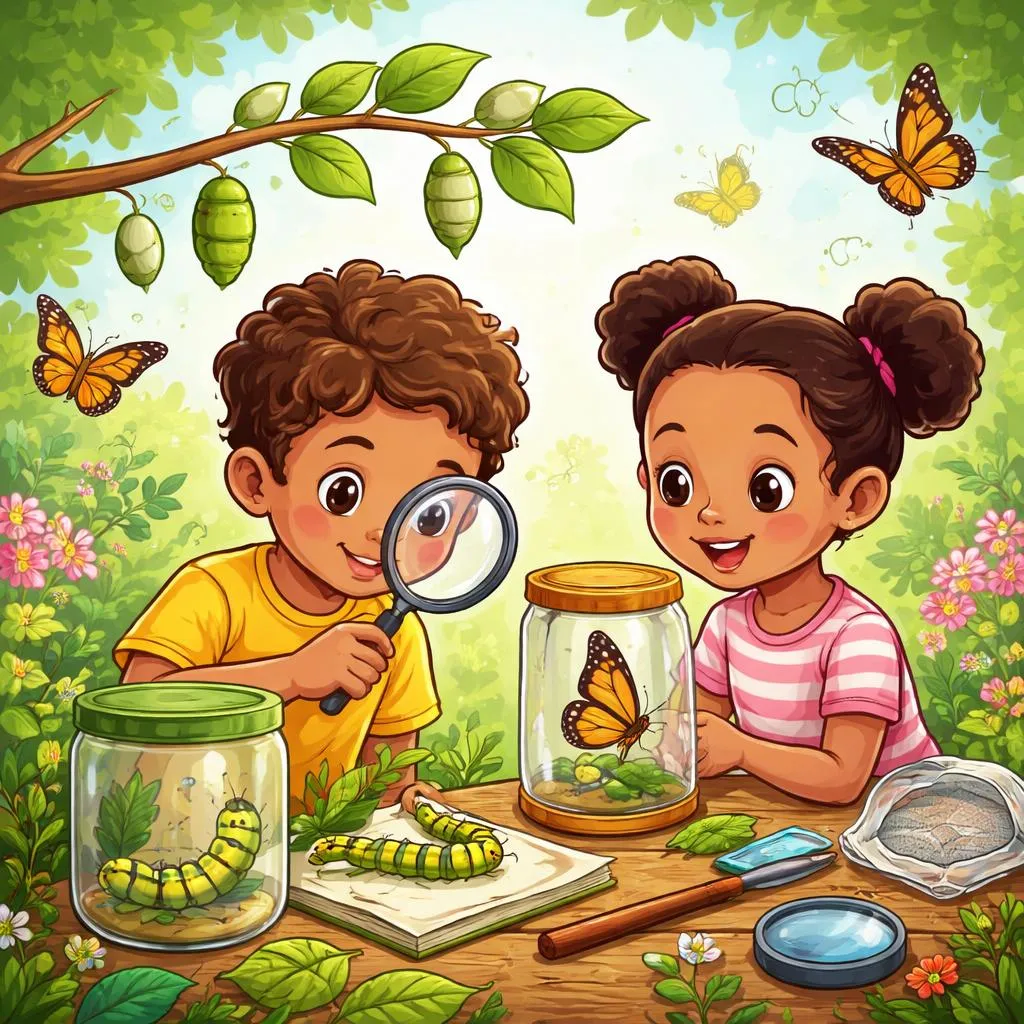
A caterpillar is the young stage of a butterfly or moth. It has a long, soft body divided into segments. It has six true legs at the front. It has additional fleshy prolegs along the rest of the body. Caterpillars spend most of their time eating.
Caterpillars come in many colors and patterns. Some are smooth. Others have hairs or spikes. The colors help them hide from predators. Some caterpillars look like leaves or twigs. Others have bright colors that warn birds to stay away.
These creatures live on plants. You find them on leaves, stems, and branches. They eat constantly. They grow very fast. A caterpillar can increase its size many times in just a few weeks.
For children, caterpillars are fascinating. They are easy to find in gardens. Their slow movement lets children watch closely. The transformation from caterpillar to butterfly is one of nature’s most amazing changes.
English Learning About This Animal
Let us learn the English word caterpillar. We say it like this: /ˈkætərpɪlər/. The word has four parts. Cat sounds like “kat.” Er sounds like “er.” Pill sounds like “pil.” Ar sounds like “ar.” Put them together: caterpillar. Say it three times. Caterpillar. Caterpillar. Caterpillar.
Now let us learn words about a caterpillar’s body. The head holds the mouth and simple eyes. The thorax is the front part with the true legs. The abdomen is the long back part with prolegs. The prolegs are the fleshy legs along the abdomen. The mandibles are the strong jaws for chewing leaves. The spiracles are tiny breathing holes along the sides.
There is a famous quote about caterpillars. It says, “What the caterpillar calls the end, the rest of the world calls a butterfly.” This reminds us that endings can be beginnings. Another gentle saying is, “The caterpillar does not rush. It knows its time will come.” This teaches us to trust the process of growth.
These English words help children understand caterpillar anatomy. When they say prolegs, they learn about the special legs. When they say spiracles, they know how caterpillars breathe. Parents can practice these words while watching a caterpillar in the garden. Point to the parts. Say the words together.
Animal Facts and Science Knowledge
Caterpillars are the larval stage of butterflies and moths. They belong to the insect order Lepidoptera. This name means “scaly wings.” Caterpillars are insects. They have six true legs. They have up to ten prolegs. Their bodies are designed for eating and growing.
Caterpillars live on host plants. Each butterfly species prefers certain plants. Monarch caterpillars eat only milkweed. Swallowtail caterpillars eat parsley or dill. The mother butterfly lays eggs on the correct plant. When the caterpillar hatches, its food is right there.
Caterpillars eat constantly. They eat leaves, flowers, and sometimes other caterpillars. Their mandibles chew leaves into small pieces. A caterpillar can eat many times its body weight each day. Most of the food becomes energy for growth. The rest becomes waste called frass.
Caterpillars have special abilities. They can spin silk from their mouths. They use silk to attach to leaves. Some caterpillars make silk tents. Others use silk to hang upside down when forming a chrysalis. Some caterpillars can produce bad smells or toxins to scare predators.
Caterpillars grow by shedding their skin. They outgrow their skin many times. Each time they shed, they reveal a larger skin underneath. This process is called molting. A caterpillar molts five or six times before it is ready to change into a pupa.
How to Interact With This Animal Safely
Caterpillars are gentle wild creatures. Most are safe to observe and hold gently. Some caterpillars have hairs that can irritate skin. Teach children to look first. If a caterpillar looks fuzzy or hairy, watch without touching. Smooth caterpillars are usually safe to hold.
If your child wants to hold a caterpillar, show them how. Place a leaf near the caterpillar. Let it crawl onto the leaf. Then let the child hold the leaf. Watch the caterpillar move. Look at its legs and prolegs. Then place the caterpillar back on its plant.
Teach children to be gentle. Caterpillars have soft bodies. Their legs are delicate. Do not squeeze them. Do not pull them off leaves. Let them move on their own. Wash hands after touching caterpillars.
Never take a caterpillar away from its host plant. Caterpillars need the specific plant they were eating. If you move them to a different plant, they may not eat. They could starve. If your family wants to watch a caterpillar transform, find a safe way to observe it on its plant.
Teach children to protect caterpillar homes. Avoid using pesticides on plants. Leave some leaves untouched. Caterpillars need plants to survive. When we care for plants, we care for caterpillars. Watching them grow into butterflies becomes a gift of patience.
What Can We Learn From This Animal
Caterpillars teach us about patience. They eat and grow. They wait. They do not rush to become butterflies. Children learn that growth takes time. Learning to read, learning to swim, or learning any new skill takes many small steps.
Caterpillars teach us about transformation. They change completely. Their bodies rearrange. They become something new. Children learn that change is natural. Moving to a new grade, growing taller, or learning new things are all transformations.
Caterpillars teach us to eat well. They eat what their bodies need. Children learn that food gives energy to grow. Eating healthy foods helps them run, play, and learn. Good food fuels good growth.
Caterpillars teach us that rest is part of growth. Inside the chrysalis, the caterpillar rests while it changes. Children learn that rest helps them grow too. Sleep, quiet time, and taking breaks make us stronger for the next stage.
Fun Learning Activities
Let us make learning about caterpillar fun. One activity is the caterpillar crawl game. Ask your child to lie on the floor. Move by stretching the body long and then pulling the back forward. Make tiny steps with hands. Say “caterpillar crawls” and “caterpillar eats leaves.”
Another activity is finding caterpillars in the garden. Go outside together. Look under leaves. Check plants like milkweed, parsley, and dill. Count how many caterpillars you find. Notice their colors and patterns. Draw what you see.
Draw a caterpillar and label its parts. Draw the head, true legs, prolegs, spiracles, and mandibles. Write the words next to each part. Say them aloud. For younger children, draw the caterpillar first. Let them point to the parts as you say the words.
Create a story about a caterpillar’s journey. Ask your child where the caterpillar goes. Does it climb a stem? Does it eat a big leaf? Does it find a safe place to change? Write a few sentences together. Let your child draw pictures. Read the story aloud.
Make a caterpillar from craft materials. Use an egg carton cut into a strip. Paint it green or brown. Add pipe cleaner legs. Draw eyes on the front. Move the craft caterpillar across leaves. Practice saying “caterpillar munches” and “caterpillar grows.”
Observe a caterpillar transform. If you find a caterpillar on a plant, visit it each day. Notice how it grows. Watch it shed its skin. If it forms a chrysalis, check on it. Wait for the butterfly to emerge. This long observation teaches patience and wonder.
These simple activities bring learning to life. Children build English vocabulary while playing. They learn science through observation. They connect with nature in meaningful ways. Learning about caterpillar becomes a lesson in patience, growth, and the magic of change. Each moment spent together strengthens language, curiosity, and a lasting appreciation for the hungry little crawlers that one day unfold into winged wonders.