
What Is This Animal?
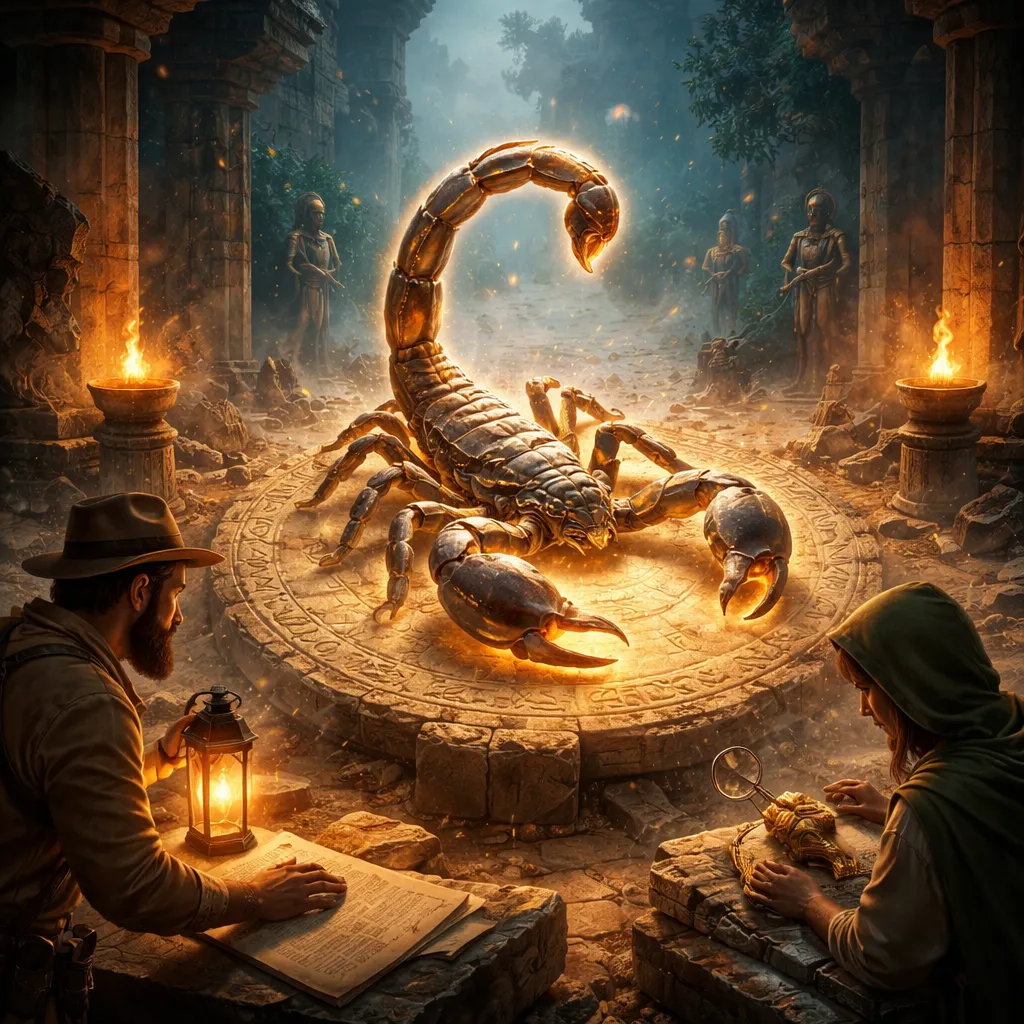
A scorpion is an arachnid with eight legs and a long, segmented tail. The tail curls forward over its back. At the end of the tail sits a curved stinger. Scorpions use this stinger for defense and to catch food. They look like tiny armored creatures.
Scorpions have two large pincers in front. They use these pincers to grab and hold prey. Their bodies have a hard outer shell. This shell protects them from danger. Many scorpions glow under ultraviolet light. Their bodies produce a natural glow.
These creatures live in warm places around the world. They prefer deserts, grasslands, and forests. Some live in rocky areas. Others hide under logs or stones. Scorpions come out at night. They rest during the day to stay cool.
For children, scorpions are fascinating but require respect. They are wild animals. Most scorpions are not dangerous. But some can sting. Learning about scorpions teaches children to observe from a safe distance and appreciate creatures that look different from familiar insects.
English Learning About This Animal
Let us learn the English word scorpion. We say it like this: /ˈskɔːrpiən/. The word has two parts. Scor sounds like “skor.” Pion sounds like “pee-on.” Put them together: scorpion. Say it three times. Scorpion. Scorpion. Scorpion.
Now let us learn words about a scorpion’s body. The cephalothorax is the front body part. It holds the eyes and legs. The abdomen is the long back part. The tail has five segments and ends with the stinger. The pedipalps are the large pincers in front. The legs are eight jointed limbs for walking.
There is an ancient saying about scorpions. In some cultures, people say, “The scorpion stings not out of malice, but out of fear.” This means the scorpion only uses its stinger when it feels threatened. Another proverb is, “A scorpion does not change its nature.” This reminds us that every creature has its own way of surviving.
These English words help children understand scorpion anatomy. When they say pedipalps, they learn the scientific name for the pincers. When they say cephalothorax, they recognize the fused body part. Parents can practice these words while looking at pictures in books. Point to the parts. Say the words together.
Animal Facts and Science Knowledge
Scorpions belong to the class Arachnida. They are related to spiders and ticks. Scorpions are not insects. They have eight legs. They have no wings. They have been on Earth for over four hundred million years. Ancient scorpions lived in the sea.
Scorpions live on every continent except Antarctica. They prefer warm, dry climates. Many live in deserts. Some live in tropical forests. Others live in mountains. Scorpions hide under rocks, in burrows, or under bark during the day. They come out at night to hunt.
Scorpions eat insects, spiders, and small animals. They use their pincers to grab prey. If the prey is small, the pincers crush it. If the prey is large, the scorpion uses its stinger. The stinger injects venom. The venom paralyzes the prey. Then the scorpion eats.
Scorpions have special abilities. They glow under ultraviolet light. Scientists do not know exactly why. The glow may help them find each other. Scorpions can survive without food for many months. They slow down their bodies to save energy. Some scorpions live up to twenty-five years.
Scorpions give birth to live young. The mother carries the babies on her back. The babies ride on her for several weeks. They cannot sting until they shed their skin. Young scorpions look like tiny versions of adults. They grow by shedding their skin several times.
How to Interact With This Animal Safely
Scorpions are wild animals. They are not pets for children to handle. The best way to interact with a scorpion is to watch it from a safe distance. Do not touch it. Do not try to catch it. Respect the space it needs.
Teach children to look but not touch. If you see a scorpion outdoors, point it out. Notice its pincers and curled tail. Observe how it moves. Then walk away. Leave the scorpion to continue its night hunt.
In areas where scorpions live, take precautions. Wear shoes when walking outside at night. Shake out shoes and clothing before putting them on. Check dark corners before reaching in. Scorpions hide in small spaces. These simple habits keep everyone safe.
If a scorpion comes inside the house, do not panic. Use a cup and a piece of paper to move it outside. Place the cup over the scorpion. Slide the paper underneath. Carry it gently to a garden or rocky area. Release it away from the house.
Teach children that scorpions are not enemies. They help control insect populations. They are part of nature. Respecting them means giving them space. When we stay calm and careful, we can share the world with scorpions safely.
What Can We Learn From This Animal
Scorpions teach us about protection. They have armor, pincers, and a stinger. They know how to stay safe. Children learn that protecting themselves is important. Saying no, walking away from danger, and asking for help are ways to stay safe.
Scorpions teach us about patience. They wait for prey to come close. They do not waste energy chasing. Children learn that waiting can be wise. Waiting for the right moment, listening before speaking, and thinking before acting all show patience.
Scorpions teach us about adaptation. They survive in harsh deserts. They find ways to live in tough places. Children learn that they can adapt too. Moving to a new school, facing a challenge, or trying something unfamiliar are chances to adapt and grow.
Scorpions teach us about using what we have. Their pincers, stinger, and hard shell all serve a purpose. Children learn that they have their own strengths. Kindness, creativity, courage, and curiosity are tools they can use every day.
Fun Learning Activities
Let us make learning about scorpion fun. One activity is the scorpion movement game. Ask your child to walk on hands and knees. Hold one arm up like a curled tail. Move slowly. Practice moving forward and sideways. Say “scorpion crawls” and “scorpion hides.”
Another activity is drawing a scorpion. Look at pictures of scorpions. Notice the pincers and the curled tail. Count the legs. Draw the segments of the tail. Label the parts. Say the words aloud as you write them.
Create a story about a scorpion’s night. Ask your child where the scorpion hunts. Does it find a beetle? Does it hide from an owl? Does it carry babies on its back? Write a few sentences together. Let your child draw pictures. Read the story aloud.
Make a glow experiment. Talk about how scorpions glow under UV light. If available, use a black light to look at a picture of a scorpion. Discuss why this glow might help scorpions survive. This introduces the wonder of bioluminescence.
Build a desert diorama. Use sand, rocks, and small sticks. Add a toy scorpion. Talk about where scorpions live and how they stay cool during the day. Use words like “desert,” “hide,” and “nocturnal.”
These simple activities bring learning to life. Children build English vocabulary while playing. They learn science through observation and discussion. They connect with nature in thoughtful ways. Learning about scorpion becomes a journey of respect and wonder. Each moment spent together strengthens language, curiosity, and a deeper understanding of creatures that have walked the Earth since ancient times.