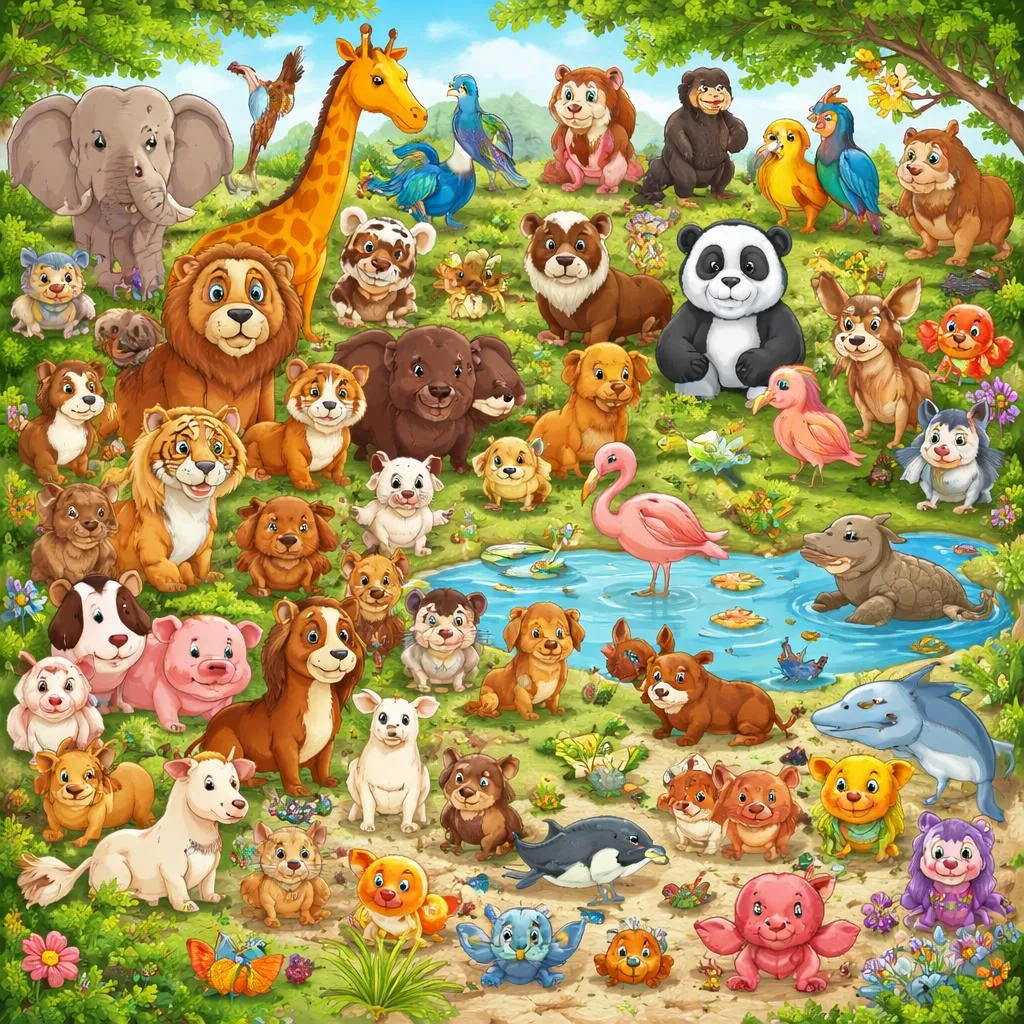

Learning animal names in English is fun and useful because animals appear in stories, science lessons, daily conversations, and even idioms. When students build strong animal vocabulary, they can describe nature more clearly and understand books and conversations more easily. Below is a well-organized list of 100 animal names, grouped by type to make learning easier and more structured.
Mammals
Mammals are animals that usually have hair or fur and feed milk to their babies. Many mammals live on land, although some live in water.
Lion
Tiger
Elephant
Giraffe
Zebra
Monkey
Gorilla
Bear
Wolf
Fox
Deer
Rabbit
Kangaroo
Panda
Leopard
Cheetah
Hippopotamus
Rhinoceros
Horse
Donkey
Cow
Pig
Sheep
Goat
Camel
Llama
Buffalo
Bison
Squirrel
Hedgehog
Otter
Raccoon
Skunk
Beaver
Bat
Mouse
Rat
Hamster
Chimpanzee
Koala
Sloth
Armadillo
Meerkat
Hyena
Coyote
Alpaca
Yak
Walrus
Seal
Mole
Birds
Birds have feathers and most of them can fly, although some cannot. They lay eggs and often build nests.
Eagle
Hawk
Owl
Parrot
Penguin
Flamingo
Peacock
Swan
Duck
Goose
Chicken
Turkey
Crow
Sparrow
Pigeon
Woodpecker
Ostrich
Falcon
Seagull
Hummingbird
Reptiles and Amphibians
Reptiles usually have scales and lay eggs, while amphibians can live both on land and in water.
Crocodile
Alligator
Snake
Lizard
Turtle
Tortoise
Iguana
Frog
Toad
Salamander
Sea Animals
Sea animals live in oceans, rivers, or lakes. Some are mammals, and others are fish or invertebrates.
Shark
Dolphin
Whale
Octopus
Squid
Crab
Lobster
Jellyfish
Starfish
Seahorse
Insects and Small Creatures
Insects are small animals with six legs, and many have wings. Some small creatures, such as spiders, are not insects but are often grouped with them in simple vocabulary lists.
Ant
Bee
Butterfly
Spider
Grasshopper
Beetle
Ladybug
Mosquito
Dragonfly
Caterpillar
Why Learning 100 Animal Names Is Helpful
Knowing 100 animal names improves reading comprehension, especially when students read stories about nature, farms, jungles, or oceans. It also helps in science classes where animals are studied by habitat, diet, or biological group.
Instead of memorizing all 100 at once, learners can practice by category. For example, they can learn ten mammals one day, then move to birds the next day. Creating sentences such as “The lion lives in the savanna” or “The dolphin swims in the ocean” helps strengthen memory.
Building animal vocabulary step by step makes English learning both enjoyable and practical.
How to Practice 100 Animal Names Effectively
After learning 100 animal names, it is important to review them regularly so they move from short-term memory into long-term memory. One helpful method is to group animals by habitat, such as farm animals, jungle animals, ocean animals, and desert animals. When vocabulary is connected to a clear category, it becomes easier to remember and use correctly.
For example, farm animals include cow, pig, sheep, goat, and chicken. Jungle animals include tiger, monkey, gorilla, and leopard. Ocean animals include shark, whale, dolphin, octopus, and jellyfish. By organizing words in this way, students create mental connections instead of memorizing isolated terms.
Using Animal Names in Sentences
Memorizing a list is helpful, but using the words in sentences builds stronger language skills. Instead of only saying “lion,” try forming a complete sentence such as, “The lion is known as the king of the jungle.” When students practice full sentences, they improve grammar and vocabulary at the same time.
Here are more examples:
The elephant has a long trunk and large ears.
The penguin cannot fly, but it swims very well.
The butterfly has colorful wings.
The dolphin is a very intelligent sea animal.
Writing short paragraphs about favorite animals is another useful exercise because it encourages creativity and descriptive language.
Describing Animals with Adjectives
Animal vocabulary becomes richer when combined with adjectives. Instead of saying “tiger,” students can say “a strong tiger” or “a fast tiger.” Adding descriptive words improves speaking and writing skills.
For example:
The giraffe is tall and graceful.
The fox is clever and quiet.
The rabbit is small and quick.
The bear is large and powerful.
By practicing adjective + animal combinations, learners expand their expressive ability.
Learning Animal Categories in Science
In science lessons, animals are often divided into biological groups such as mammals, birds, reptiles, amphibians, and fish. Understanding these categories helps students connect vocabulary with academic knowledge.
Mammals usually give birth to live babies and produce milk.
Birds have feathers and lay eggs.
Reptiles have scales and are cold-blooded.
Amphibians can live both in water and on land.
When students learn both the animal name and its scientific group, they gain deeper understanding instead of simple memorization.
Games and Activities for Animal Vocabulary
Learning 100 animal names does not have to be boring. Teachers and parents can use games to make practice enjoyable. For example, students can play matching games where they connect animal names with pictures. Another activity is “Guess the Animal,” where one student describes an animal and others try to identify it.
Charades is also effective, because acting out animal movements helps memory through physical activity. When learning is interactive, vocabulary becomes more memorable.
Expanding Beyond 100 Animals
Once students are comfortable with 100 animal names, they can begin exploring more specific vocabulary such as baby animal names. For example:
A baby dog is called a puppy.
A baby cat is called a kitten.
A baby cow is called a calf.
A baby sheep is called a lamb.
Learning these additional terms increases vocabulary depth and accuracy.
Students can also explore animal habitats, diets, and behaviors, which introduces new words such as herbivore, carnivore, nocturnal, and endangered.
Why Animal Vocabulary Is Important
Animal names appear frequently in children’s books, science materials, documentaries, and everyday conversation. Many idioms also use animals, such as “busy as a bee” or “brave as a lion.” Understanding animal vocabulary therefore supports both literal and figurative language skills.
Building a strong foundation with 100 animal names creates confidence in reading, speaking, and writing. With regular practice, organized study, and creative activities, learners can master animal vocabulary in an engaging and meaningful way.