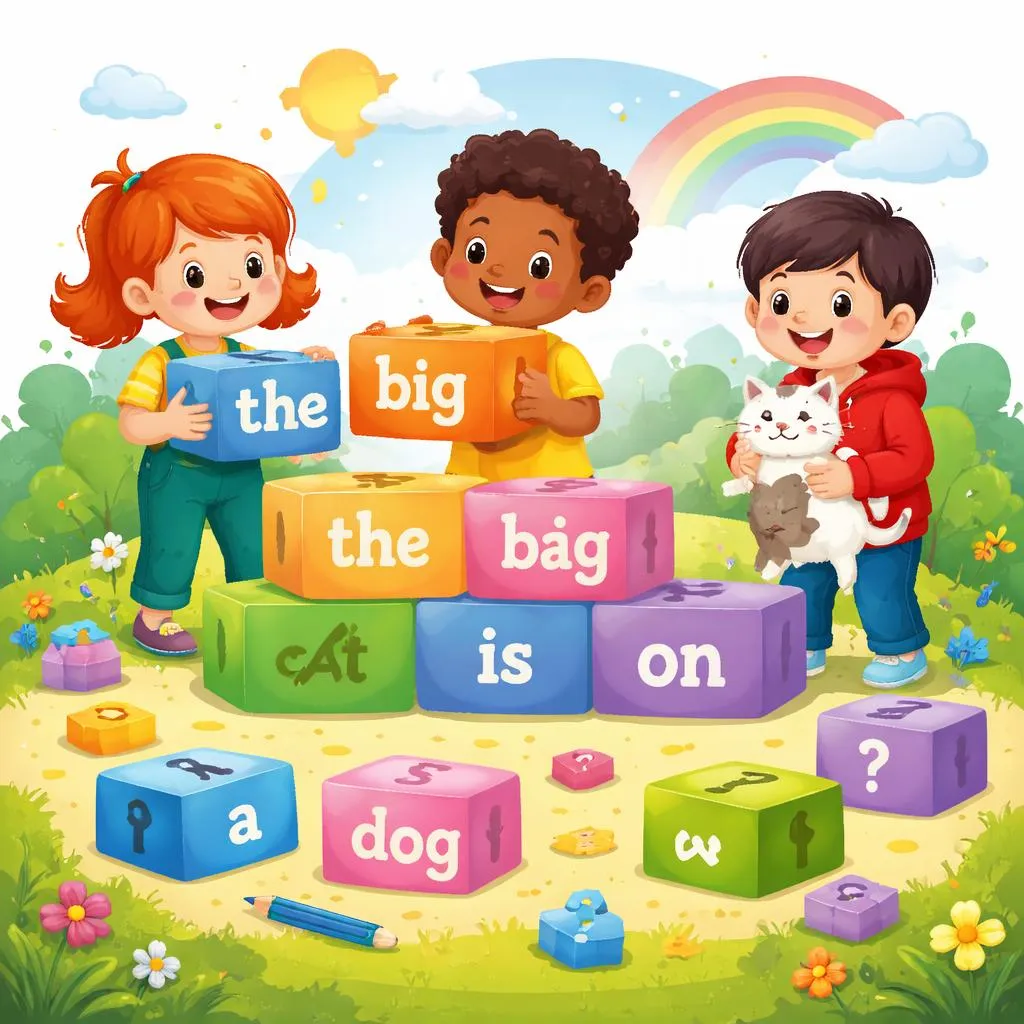

Hello, young language learners and dedicated teachers! Today we explore a special group of words. They are small but very important. They introduce nouns. They tell us which one or how many. These words are called determiners. In Spanish, they are "determinantes." Understanding determinantes helps children build clear sentences. They learn to specify which thing they mean. They learn to talk about quantity. Let us discover these useful words together. Let us see how they make language more precise.
What Are Determinantes? Determinantes are words that come before nouns. They introduce the noun. They give information about it. They might tell us which noun we mean. They might tell us how many. They might show who owns something.
Think about the word "apple." By itself, it is general. It could be any apple. Add a determiner, and it becomes specific. "The apple" means one particular apple. "My apple" means the apple belongs to me. "Three apples" tells us how many.
Determinantes are essential for clear communication. Without them, sentences would be confusing. We would not know which thing someone means. We would not know how many. Children learn to use determinantes naturally as they speak. Understanding them consciously helps even more.
Meaning and Explanation of Determinantes Determinantes have different jobs. Each type gives different information about the noun.
Articles are the most common determinantes. "A" and "an" are indefinite articles. They introduce a noun for the first time. They mean any one of that thing. "The" is the definite article. It means a specific noun that we already know about.
Demonstratives tell us where something is. "This" means near. "That" means farther away. "These" and "those" are the plural forms. They point to things in space or time.
Possessives show ownership. "My," "your," "his," "her," "its," "our," "their." They tell us who something belongs to.
Quantifiers tell us how many or how much. "Some," "many," "few," "several," "all." They give information about quantity.
Numbers are also determinantes. "One," "two," "three" tell exact quantity. "First," "second" tell order.
Each type helps make meaning clear. Together, they form an important part of English grammar.
Categories or Lists of Determinantes Let us organize determinantes into clear categories. This helps children understand the different types.
Articles: A, an, the
A dog barked. (any dog)
An elephant is big. (any elephant)
The dog I saw was brown. (a specific dog)
Demonstratives: This, that, these, those
This book is mine. (near)
That car is fast. (far)
These cookies are fresh. (near, plural)
Those houses are old. (far, plural)
Possessives: My, your, his, her, its, our, their
My mother is kind.
Your shoes are dirty.
His bike is new.
Her dress is pretty.
Its tail is fluffy.
Our house is blue.
Their garden is beautiful.
Quantifiers: Some, any, many, much, few, several, all, both, each, every
Some children like pizza.
Do you have any money?
Many people came.
Much time passed.
Few students were absent.
Several birds sang.
All children need love.
Numbers: One, two, three, first, second, third
One cat slept.
Two birds flew away.
The first day of school.
Daily Life Examples of Determinantes Determinantes appear everywhere in daily conversation. Pointing them out helps children notice them naturally.
At breakfast time, we use many determinantes. "Would you like some cereal?" "Pass me the milk." "I want this bowl." "My spoon is dirty." These small words make the conversation clear.
During play, determinantes appear constantly. "Look at that truck!" "Can I have your ball?" "These blocks are heavy." "All the toys need to be put away." Children use them without thinking.
While reading stories, determinantes are everywhere. "The little girl went into the forest. She saw a wolf. The wolf had big teeth." The articles help us follow the story. We know which wolf is being discussed.
At school, teachers use determinantes all day. "Open your books to page ten." "Those pencils go on that shelf." "Every student needs a pencil." These words organize the classroom.
Printable Flashcards for Determinantes Flashcards help children learn determinantes visually. They provide clear examples.
Article Flashcards: Create cards for a, an, and the. On each card, show the word and an example sentence. "A cat." "An apple." "The sun." Pictures help reinforce meaning.
Demonstrative Flashcards: Create cards for this, that, these, those. Use pictures showing distance. A flower close up for "this flower." A flower far away for "that flower." Multiple flowers close for "these flowers." Multiple flowers far for "those flowers."
Possessive Flashcards: Create cards for my, your, his, her, its, our, their. Show ownership clearly. A girl holding a toy for "her toy." A boy with a hat for "his hat." A family for "our house."
Quantifier Flashcards: Create cards for some, many, few, all. Use pictures with different quantities. A bowl with many apples for "many apples." A bowl with few apples for "few apples."
Use these cards for matching games. Match the word to the correct picture. Sort cards by type. Practice making sentences with each determiner.
Learning Activities or Games for Determinantes Games make learning determinantes fun and interactive.
Determinante Hunt: Read a story aloud. Ask children to raise their hand when they hear a determiner. Pause and discuss which one they heard. "Was it 'the' or 'a'?" This builds listening skills and awareness.
Fill in the Blank: Write sentences with missing determinantes. Read them aloud. Children shout the missing word. "I saw ___ elephant at ___ zoo." (an, the) This builds quick recall.
Determinante Sorting: Create cards with different determinantes. Also create cards with categories. Articles, possessives, demonstratives, quantifiers. Children sort the words into the correct category. This builds understanding of types.
Show and Tell with Possessives: During show and tell, focus on possessives. "This is MY toy." "That is HER book." "These are OUR crayons." This makes the grammar personal and meaningful.
I Spy with Demonstratives: Play I Spy using demonstratives. "I spy with my little eye, THIS red crayon." "I spy THAT blue backpack." This practices this and that naturally.
Shopping Game: Set up a pretend shop with items. Children take turns being shopkeeper and customer. They must use determinantes. "I want THOSE apples." "How much is THIS ball?" "I will buy THESE three pencils." This practices real conversation.
Through these activities, determinantes become familiar and natural. Children learn to specify which thing they mean. They learn to talk about quantity and ownership. Their sentences become clearer and more precise. The small words make a big difference in communication. Understanding determinantes helps children become confident, clear speakers and writers.