What Are False Cognates?
False cognates are words that look similar in two languages but have different meanings.
They can confuse learners.
They appear familiar.
They feel safe.
But the meaning is different.
A cognate usually means a word that shares origin and meaning across languages. A false cognate looks similar but does not share the same meaning.
Same form.
Different meaning.
Easy mistake.
Why Do False Cognates Happen?
Languages borrow words from each other.
Languages also develop separately.
Over time, meanings change.
Pronunciation may stay similar.
Spelling may stay similar.
Meaning may shift.
Historical development creates confusion.
False cognates often appear between English and Spanish, French, German, and other European languages.
Common False Cognates in English and Spanish
Many English learners notice similarities between English and Spanish. Some are helpful true cognates. Others are false cognates.
Actual in English means real.
Actual in Spanish (actual) means current.
Library in English means a place with books.
Librería in Spanish means bookstore.
Embarrassed in English means feeling shy or ashamed.
Embarazada in Spanish means pregnant.
These pairs look similar.
Meanings are different.
Careful attention is necessary.
False Cognates Between English and French
English and French share many words. Some are false cognates.
Chef in English means head cook.
Chef in French means boss or leader.
Eventually in English means finally.
Éventuellement in French means possibly.
Large in English means big.
Large in French means wide.
Visual similarity creates confusion.
Context solves misunderstanding.
False Cognates in Everyday Communication
False cognates can cause small mistakes in conversation.
A learner might say, “I am actually tired,” meaning “currently tired,” but in English it means “in fact.”
Another example:
To attend in English means to go to an event.
Atender in Spanish means to help or assist.
Wrong word choice changes meaning.
Meaning changes message.
Message affects clarity.
How to Avoid False Cognate Mistakes
Awareness is the first step.
Do not trust appearance alone.
Check meaning in a dictionary.
Read example sentences.
Compare usage in both languages.
Practice builds accuracy.
Accuracy builds confidence.
When learning new vocabulary, always confirm definition and context.
False Cognates and Language History
False cognates often appear because languages evolve differently. English borrowed heavily from French after the Norman Conquest in 1066. Over time, meanings shifted in each language.
For example, English developed independently in the United Kingdom, while French evolved in France.
Shared roots.
Different paths.
Different meanings.
Language change is natural.
Meaning shift is common.
Classroom Practice with False Cognates
Teachers often present false cognates in pairs.
Write the English word.
Write the similar foreign word.
Explain both meanings.
Create example sentences:
The library is open today.
The bookstore is next to the park.
Comparing sentences helps clarify meaning.
Clear contrast improves memory.
Why False Cognates Are Important in Vocabulary Learning
False cognates teach careful reading and listening. They remind learners that vocabulary must be understood in context.
Context matters.
Meaning depends on situation.
Assumptions cause mistakes.
Learning about false cognates strengthens vocabulary accuracy. It improves translation skills and prevents misunderstandings in speaking and writing.
Careful study leads to precise communication.
Precise communication builds strong English skills.
More Common False Cognates Between English and Spanish
False cognates often appear in academic vocabulary.
Sensible in English means practical or reasonable.
Sensible in Spanish means sensitive.
Assist in English means to help.
Asistir in Spanish means to attend.
Exit in English means way out.
Éxito in Spanish means success.
Deception in English means dishonesty.
Decepción in Spanish means disappointment.
The spelling looks familiar.
The meaning shifts completely.
Careful comparison prevents misunderstanding.
False Cognates Between English and Portuguese
English and Portuguese also share similar-looking words.
Pretend in English means to act as if something is true.
Pretender in Portuguese means to intend or plan.
Parents in English means mother and father.
Parentes in Portuguese means relatives.
Push in English means to move something forward.
Puxar in Portuguese means to pull.
Small spelling difference.
Big meaning difference.
Word awareness becomes essential.
False Cognates Between English and German
German and English share Germanic roots. Many words are true cognates. Some are false cognates.
Gift in English means present.
Gift in German means poison.
Chef in English means cook.
Chef in German means boss.
Rat in English means a small animal.
Rat in German means advice.
Same spelling.
Different idea.
Learners must not rely on visual similarity alone.
False Cognates in Academic Writing
False cognates can cause problems in essays and reports. A learner may choose a word that looks correct but carries the wrong meaning.
For example:
Eventually does not mean possibly.
Actually does not mean currently.
Sympathetic does not mean nice; it means showing understanding.
Academic English requires precision.
Precision requires checking.
Checking prevents error.
Using the wrong false cognate may confuse readers or change the message completely.
Semantic Shift and Meaning Change
False cognates often appear because of semantic shift. Semantic shift means that a word’s meaning changes over time.
Languages evolve differently.
Society influences vocabulary.
Cultural context shapes usage.
English developed separately in the United Kingdom and later in the United States. Meanwhile, Spanish evolved in Spain and spread across Latin America.
Shared Latin roots existed.
Meaning moved in different directions.
Over centuries, similar-looking words developed new definitions.
False Cognates and Pronunciation Differences
Sometimes false cognates also sound similar. Sometimes they do not.
Pronunciation may give clues.
But not always.
For example:
College in English refers to higher education.
Colegio in Spanish often refers to high school.
The words sound similar.
Educational level differs.
Listening carefully helps.
Understanding context helps more.
Strategies for Teaching False Cognates
Structured teaching reduces confusion.
Create comparison charts.
English word | Meaning | Similar foreign word | Meaning
Visual organization supports memory.
Highlight differences clearly.
Encourage sentence creation.
Write two sentences for each pair.
The chef prepared dinner.
The chef is the company leader. (German meaning)
Contrast strengthens retention.
Retention improves accuracy.
False Cognates in Translation Practice
Translation exercises reveal false cognates quickly. When translating directly, learners may choose the wrong word because of similarity.
For example:
“I am embarrassed” does not mean “Estoy embarazada.”
Translation requires attention to context.
Literal translation can mislead.
Context-based translation improves clarity.
Professional translators always verify meaning carefully.
Psychological Impact of False Cognates
False cognates create overconfidence. A word looks familiar, so the learner assumes the meaning is correct.
Assumption causes error.
Error affects communication.
Developing caution is beneficial.
Slow down.
Verify meaning.
Confirm usage with examples.
Critical thinking improves language learning.
False Friends in International Communication
False cognates are sometimes called “false friends.” The term describes words that appear friendly but create misunderstanding.
International business communication requires awareness of false friends.
Clear vocabulary prevents confusion.
Professional settings demand precision.
For example:
Actual results means real results.
Current results means present results.
Using “actual” incorrectly may confuse listeners.
Small difference.
Large effect.
Practice Activities for Mastering False Cognates
Effective practice strengthens recognition.
Activity one: Match each English word with its correct definition.
Activity two: Identify false cognates in a paragraph.
Activity three: Rewrite incorrect sentences.
Incorrect: I am actually living here. (meaning currently)
Correct: I am currently living here.
Repetition builds pattern recognition.
Pattern recognition reduces mistakes.
False Cognates and Multilingual Awareness
Studying false cognates improves overall linguistic awareness. It highlights how languages interact historically.
English borrowed words from French after 1066.
Spanish developed from Latin roots.
German preserved older Germanic structures.
Historical contact shaped vocabulary.
Understanding this history deepens comprehension.
Language is not random.
Language follows patterns.
Patterns explain differences.
Long-Term Benefits of Learning About False Cognates
Learning about false cognates strengthens vocabulary precision, reading comprehension, and translation skills. It also improves listening accuracy because learners become aware of subtle differences.
Careful vocabulary study builds advanced proficiency.
Advanced proficiency increases confidence.
Confidence supports fluent communication.
False cognates may appear confusing at first, but they offer valuable learning opportunities. Through comparison, contextual practice, and regular exposure, learners develop stronger word awareness and reduce misunderstanding in both spoken and written English.
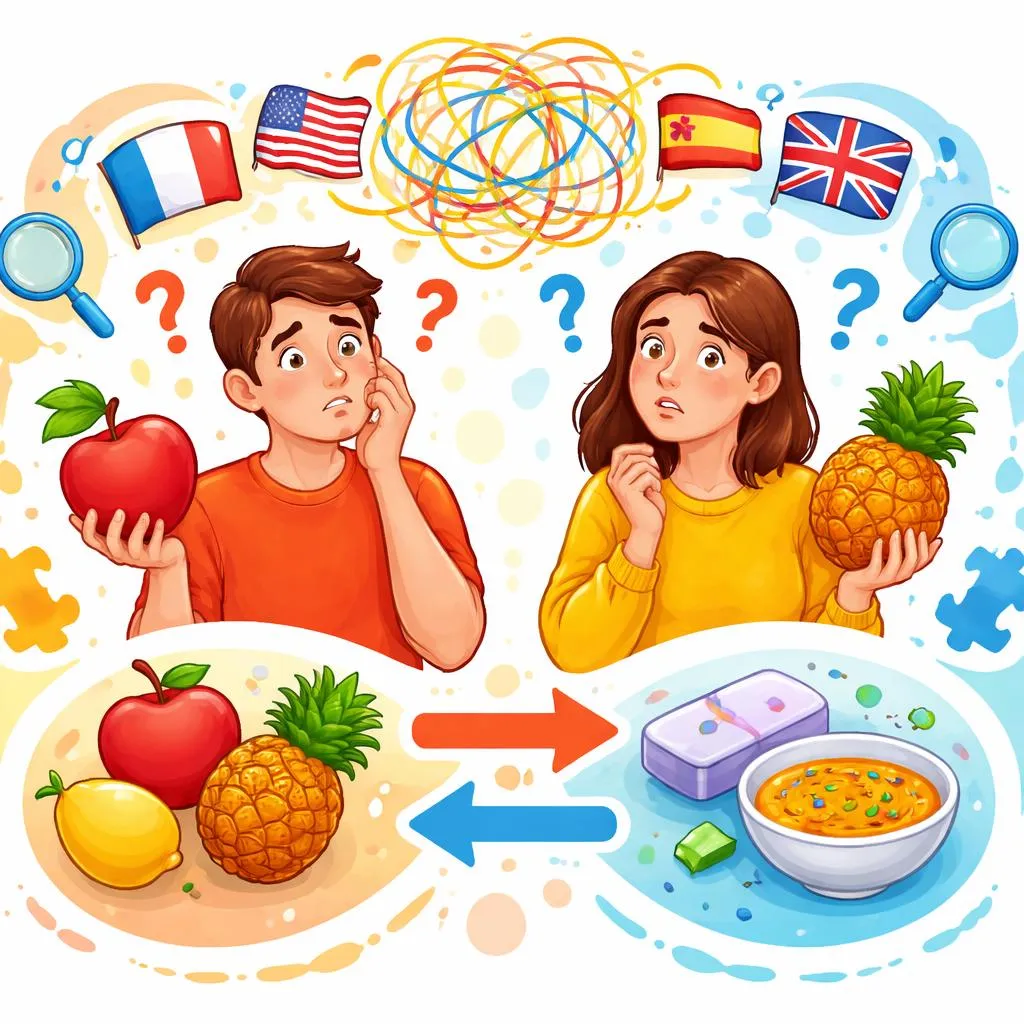
What Are False Cognates in English and Why Do They Cause Confusion?
