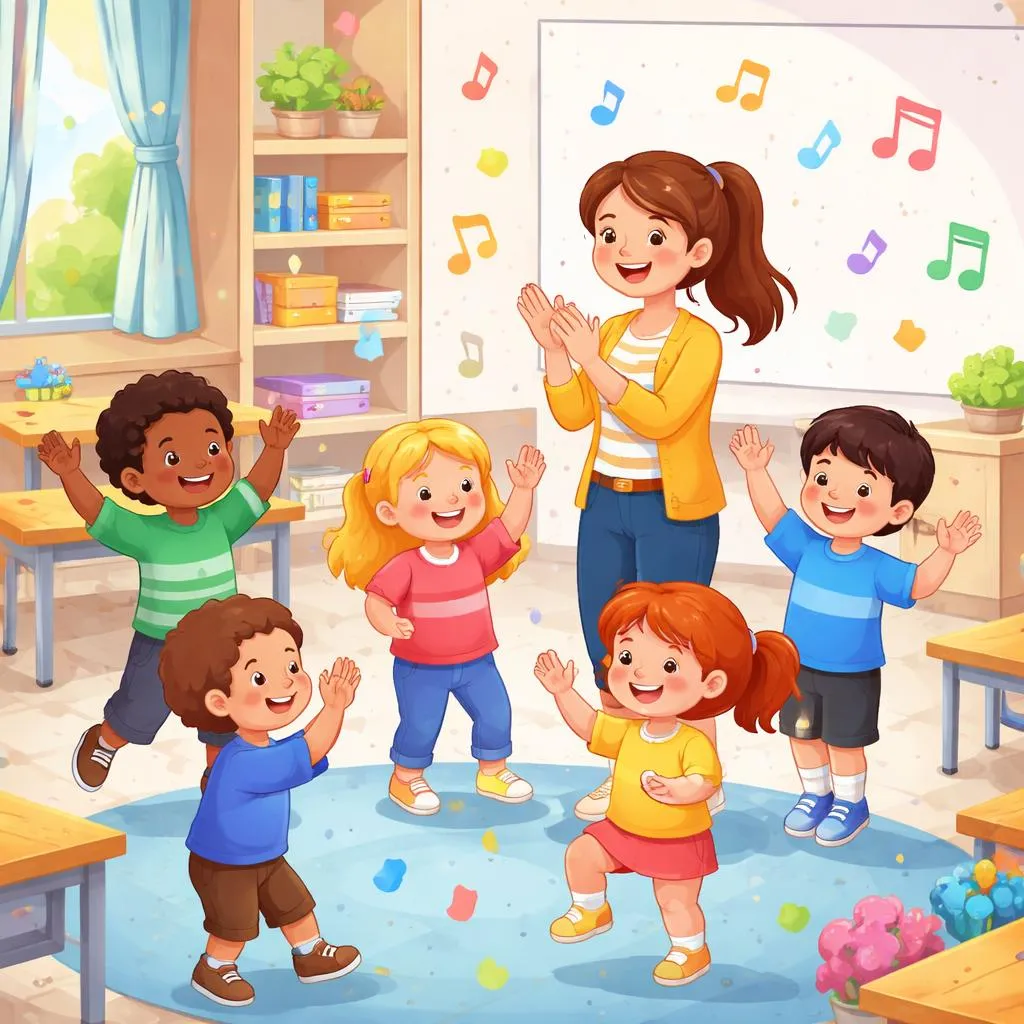

Hello, wonderful teaching friends! Today, we're focusing on a simple but powerful classroom ritual: the closing song. We'll explore the world of the good bye song. This is more than just a signal that class is over. A well-chosen good bye song provides structure, reinforces polite language, and sends learners off with a positive feeling. Let's look at how to use a good bye song to teach valuable social and language skills in a warm, memorable way.
What is the rhyme? A good bye song is a short, repetitive children's song used to mark the end of a session. It acts as a transition cue, helping learners move smoothly from one activity (like an English lesson) to the next (like going home or to lunch). Its primary purpose is social and emotional. It provides a predictable, friendly closure. The lyrics typically include farewell phrases, thank-yous, and well-wishes. The melody is usually calm and cheerful. This consistent routine builds a sense of safety and community. It turns a simple goodbye into a shared, positive experience.
The lyrics of nursery rhymes There are many wonderful good bye song options. Let's look at a classic, adaptable example perfect for teaching. Its simple structure allows for easy customization.
Goodbye, goodbye, it's time to go. Goodbye, goodbye, I'll miss you so. Thank you for the fun today, I'll see you all another day! Goodbye!
We can create variations to practice different vocabulary. A sunnier version: "Goodbye, friends, the sun is bright. Have a lovely day and night!" Or a simpler one: "Wave goodbye, it's time to say, 'See you later, have a nice day!'" The core of any effective good bye song is clear, polite language and a gentle, closing rhythm.
Vocabulary learning A good bye song is excellent for teaching essential social vocabulary. The key words are "goodbye," "thank you," "see you," and "friend." We can expand this to include time words like "today," "tomorrow," and "later." Phrases like "have a nice day" or "take care" introduce friendly well-wishes.
The song also reinforces first-person pronouns ("I'll miss you," "I'll see you") and the future tense ("I'll see you"). We can gently point out the contraction "I'll" for "I will." This introduces future intent in a natural context. The phrase "thank you for..." is a fundamental structure for expressing gratitude, which we can practice with different endings: "...for singing," "...for listening," "...for playing."
Phonics points The repetitive nature of a good bye song is great for sound repetition. The long /i:/ sound in "see," "me," and "be" often appears. The /d/ and /b/ sounds in "goodbye" are clear consonants to emphasize. The /eɪ/ diphthong in "day" is another common sound.
The song often features rhyming pairs that are easy to hear. In our example, go/so and day/say are clear rhymes. Chanting or singing slowly allows us to highlight these rhyming families, building phonemic awareness. The word "goodbye" itself can be broken into "good" and "bye," discussing the /g/ and /b/ sounds.
Grammar patterns A good bye song models polite imperative sentences. Phrases like "Have a nice day" or "Take care" are gentle commands or wishes. It also showcases the future tense with "will" in a contracted form: "I'll see you." This is a very common and useful grammatical structure.
The song often uses the preposition "for" to explain gratitude: "Thank you for the fun." This teaches how to give a reason after "thank you." Simple sentence structures like "It is time to go" are foundational. We can change the final verb to practice: "It is time to eat," "It is time to read."
Learning activities A "Wave and Sing" circle time is the core activity. Form a circle at the end of each lesson. Sing the good bye song together, making sure to wave to different friends around the circle. This combines the language with a physical gesture (waving), reinforcing the meaning of "goodbye."
Create a "Farewell Choice" chart. Have picture cards for different good bye song endings: a sun for "Have a sunny day!", a moon for "See you tomorrow!", a heart for "Take care!". Let a learner choose which verse to sing that day. This gives them ownership and practices different vocabulary.
Printable materials Design a "My Goodbye Book" printable. This can be a simple, folded mini-book. Each page can complete a sentence: "I say goodbye to my teacher." "I thank my friend for helping." "I will see you on Monday." Learners can draw pictures and fill in the blanks, personalizing the farewell language.
Create "Goodbye Phrase Flashcards." Each card has a friendly farewell phrase on one side and a matching icon on the other. Phrases can include: "See you later!", "Bye for now!", "Have a great weekend!", "Goodbye, everyone!" Use these cards to mix and match lines of a song or as prompts for role-play.
Educational games "Pass the Goodbye" is a gentle, calming game. Sit in a circle. Sing the good bye song. While singing, pass a small, soft toy around the circle. When the song ends, the person holding the toy says a special goodbye phrase to the person on their left. "Goodbye, Maya. See you tomorrow!" This practices individual address and eye contact.
"Emotion Goodbyes" is a fun way to practice feeling words. Use emotion cards (happy, sleepy, excited, silly). A learner picks a card, and the group sings the good bye song in that emotion's style. A "silly" goodbye might be sung in a funny voice; a "sleepy" goodbye might be sung slowly and softly. This connects language with emotional expression.
"Farewell Puppet Show" is a great role-play activity. Using simple finger puppets, learners can act out scenarios where characters say goodbye—after a playdate, leaving school, or ending a phone call. They can use phrases from the good bye song. This contextualizes the vocabulary in mini-stories.
Integrating a good bye song into your routine is a gift of predictability and warmth. It teaches more than words; it teaches rhythm, social grace, and the positive closure of a shared experience. When learners sing along, wave sincerely, and use these phrases independently, they are internalizing key social and linguistic skills. This simple ritual builds a classroom culture of respect and kindness, ending each lesson on a note of connection and anticipation for next time. So, choose a tune, start the tradition, and let the music frame your lessons with a happy, confident farewell.