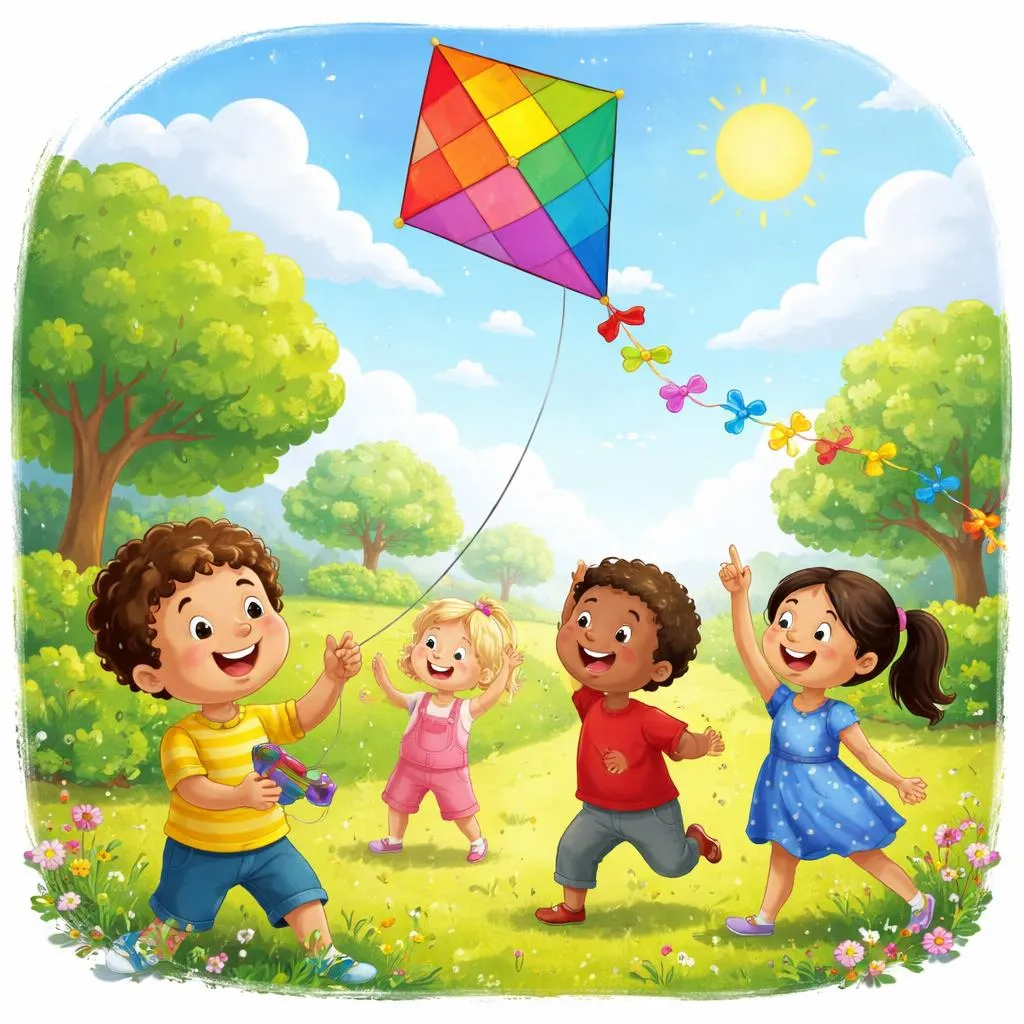

Hello, little kite flyer! Have you ever flown a kite? A kite is so pretty in the sky. But it cannot fly by itself. It needs a string and someone to hold it. A dependent clause is like a kite. It is a group of words that cannot fly alone. It has a subject and a verb, but it does not make a complete thought. It needs a string to connect to a stronger sentence. That string is often a word like "because" or "when". Today, we will fly forty wonderful word kites. Our guide is Kippy the Kite. Kippy is a happy kite who loves to fly, but only when connected! He will show us dependent clauses at home, the playground, school, and in the park. Let's get our string ready!
What Is a Dependent Clause?
A dependent clause is a word kite. It is a group of words that has a subject and a verb, but it is not a complete thought. It leaves you wondering, "What next?" It needs to be attached to an independent clause (a strong, complete sentence) to make sense. The "string" that starts a dependent clause is called a subordinating conjunction. Words like because, when, if, after, before, since, although. At home, you might say "because I am sleepy." This is a dependent clause. It has a subject "I" and a verb "am", but it is not complete. Why are you telling me? It needs a string to a main idea. At the playground, you say "when the bell rings." What happens then? At school, you say "if I finish my work." Then what? In nature, Kippy says "although the wind is strong." This is a dependent clause. "Kippy flies high when the wind is strong." The part "when the wind is strong" is the dependent clause. Learning these must-know dependent clauses helps you add important details to your sentences.
Why Do We Need Word Kites?
Dependent clauses are your detail-adders! They help your ears listen. You can understand the reasons, times, and conditions in a story. They help your mouth speak. You can explain why you did something. "I cried because I fell." They help your eyes read. You will see them adding depth to stories in books. They help your hand write. You can write sentences that give the whole picture. A kite makes the sky beautiful. A dependent clause makes your sentence more interesting and complete.
What Are the Main Strings (Conjunctions)?
We have different strings to start our kites. Each string gives a different type of detail.
First, the reason string: BECAUSE, SINCE. This tells why. "because I love you"
Next, the time string: WHEN, WHILE, AFTER, BEFORE, UNTIL. This tells when. "when you are ready"
Here is the condition string: IF, UNLESS. This tells under what condition. "if it is sunny"
We have the place string: WHERE. This tells where. "where I live"
Last, the contrast string: ALTHOUGH, EVEN THOUGH. This shows a surprise. "although it is small"
These strings (subordinating conjunctions) are what make a clause dependent. They are the key to building your kites.
How Can You Spot a Word Kite?
Spotting a dependent clause is a fun game. Look for the string! If you see a word like because, when, if, after, that's a big clue. Then, check if the group of words has a subject and a verb. Then, ask yourself: "Does this feel like a complete thought? Can it be a sentence by itself?" If the answer is no, you have found a kite! Look at Kippy's string. "After the rain stopped, " It starts with "After", has a subject "the rain" and a verb "stopped", but it leaves you hanging. What happened after? It is a dependent clause. Another trick: Try saying the clause alone. "Because I said so." It feels incomplete, right? It's a kite needing a holder.
How Do We Fly a Word Kite?
To fly a kite, you must attach it to a string and a holder. To use a dependent clause, you must attach it to an independent clause. You can put the kite first or the holder first. If the kite (dependent clause) comes first, use a comma after it. String + Kite + Comma + Holder. "Because I am happy, I will sing." If the holder (independent clause) comes first, you usually do not need a comma. Holder + String + Kite. "I will sing because I am happy." Kippy shows us: "When the wind blows, Kippy flies." Kite first, with a comma. Or: "Kippy flies when the wind blows." Holder first, no comma. Start by adding your kite to the end of a strong sentence.
Let's Fix Some Tangled Strings.
Sometimes our kite strings get tangled. Let's fix them. A common tangle is using a dependent clause as a complete sentence. A child might say "When I grow up." and stop. This is a kite on the ground! We need to attach it. The right way is "When I grow up, I will be a pilot." Another tangle is forgetting the comma when the kite is first. "If you eat your vegetables you can have dessert." This runs together. Use a comma: "If you eat your vegetables, you can have dessert." Also, make sure your string (conjunction) makes sense. "I will go although I am tired." is okay. "I will go where I am tired." does not make sense. "Where" is for place, not reason.
Can You Be a Kite Flyer?
You are a great flyer! Let's play a game. The "Attach the Kite" game. I will give you a kite (dependent clause). You attach it to a holder (independent clause) to make a full sentence. Kite: "Because I am hungry." You say: "I am eating a snack because I am hungry." Great! Here is a harder challenge. Take a simple independent clause like "The dog barks." Can you add two different kites to it? "The dog barks when he sees a cat." "The dog barks because he is excited." You are flying must-know dependent clauses.
Your Kite Bag of 40 Must-Know Dependent Clauses.
Ready to open the kite bag? Here are forty wonderful word kites. Kippy has collected them, sorted by their starting string. These are your must-know dependent clauses. Remember, they are not complete sentences by themselves.
BECAUSE Kites (Reason).
because I am tired. because it is fun. because you are my friend. because the sun is hot. because I said so. because I want to. because it is time. because I love you. because it is broken. because I can.
WHEN Kites (Time).
when I wake up. when you are sad. when the phone rings. when it is dark. when I see you. when the music plays. when the story ends. when I am big. when you are ready. when it rains.
IF Kites (Condition).
if you are good. if it is okay. if I can. if you want. if it is possible. if I see her. if you help me. if the toy is lost. if we have time. if I try.
AFTER / BEFORE Kites (Time Order).
after I eat. before we go. after you finish. before bedtime. after the movie. before I forget. after school. before lunch. after I try. before you leave.
OTHER Kite Strings.
since you asked. although it is hard. while you wait. as I walk. where you are. why I laugh. how you do it. that I know. who you are. what you see.
These forty clauses are your must-know dependent clauses. They are your kites. Connect them to strong sentences to let your ideas soar.
Making Your Ideas Soar with Details.
You did it! You are now a dependent clause expert. You know a dependent clause is a word kite. It has a subject and verb but cannot stand alone. It starts with a string (subordinating conjunction) like "because" or "when". You know how to attach it to an independent clause to make a complete sentence. Kippy the Kite uses dependent clauses to tell the whole story of his flight. Now you can too! You can give reasons, tell when things happen, and explain conditions. Your sentences will be more detailed and powerful.
Here is what you can learn from our kite-flying adventure. You will know what a dependent clause is. You will understand that it cannot stand alone as a sentence. You can identify common subordinating conjunctions. You can correctly attach a dependent clause to an independent clause. You have a kite bag of forty essential dependent clauses to use.
Now, let's do some life practice! Your mission is today. Fly three word kites. When explaining something, use a "because" kite. When talking about time, use a "when" kite. Tell your grown-up: "I need a nap because I am sleepy. I will play when I wake up. If I rest, I will feel better." You just used three dependent clauses! Keep flying your word kites high. Have fun, little kite flyer!