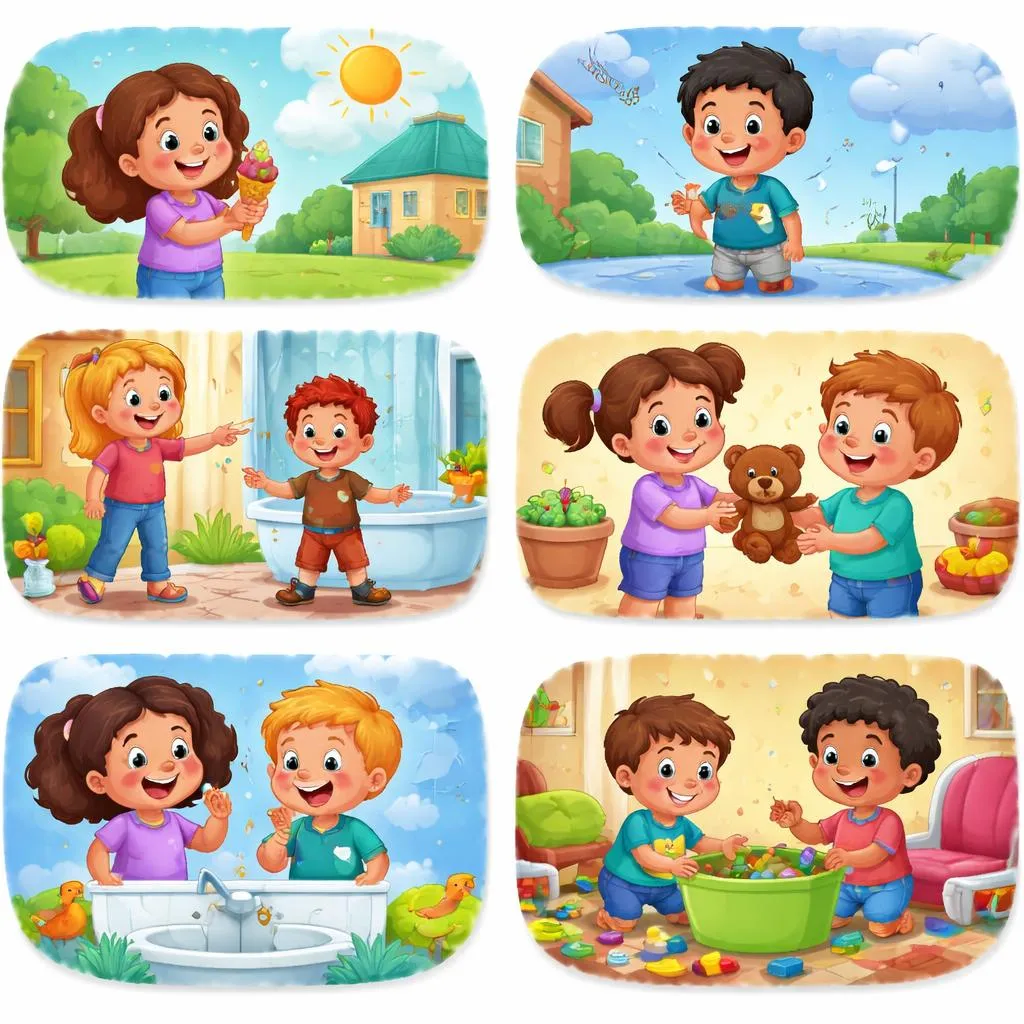

Conditional sentences are sentences that talk about things that might happen. They often use the word if. If it rains, we stay inside. If you are good, we get a treat. For a four-year-old, these sentences help them understand how the world works. They learn about causes and effects. They learn what leads to what. Learning the 50 most common conditional sentences for 4-year-olds gives children the tools to talk about possibilities, make plans, and understand rules. These sentences help them think ahead and express what might happen in different situations.
What Are Conditional Sentences?
Conditional sentences have two parts. One part has the condition, and the other part has the result. The condition usually starts with the word if. The result tells what happens when the condition is met.
If it is sunny, we will go to the park.
If you finish your dinner, you can have dessert.
If I find my shoes, we can leave.
The condition can come first or second in the sentence. Both ways are correct.
We will go to the park if it is sunny.
You can have dessert if you finish your dinner.
For a four-year-old, conditional sentences help them understand the rules of the house. They learn that certain actions lead to certain results. If they clean up, they get a story. If they are kind, they make friends. These sentences teach them about choices and consequences.
When we talk about the 50 most common conditional sentences for 4-year-olds, we mean the everyday if sentences that children hear and use in their daily lives. These are the sentences that help them navigate their world.
Meaning and Explanation of Conditional Sentences
Let us explore the different kinds of conditional sentences. For young children, the most important ones are real conditionals. These talk about things that are possible or likely to happen.
Zero conditional talks about things that are always true. When the condition happens, the result always follows.
If you heat ice, it melts.
If it rains, the ground gets wet.
If you are hungry, you eat.
These sentences describe facts about the world. Children learn these through experience. They learn that if they drop a toy, it falls. If they push too hard, the tower falls down.
First conditional talks about possible situations in the present or future. The condition is possible, and the result is likely.
If it is sunny tomorrow, we will go to the beach.
If you are good, I will read you a story.
If I find my crayons, I will draw a picture.
These sentences help children think about what might happen. They learn to connect their actions with future results.
Second conditional talks about imaginary or unlikely situations. For four-year-olds, these are often about pretend play.
If I were a bird, I would fly in the sky.
If I had a million cookies, I would share them.
If we lived in a castle, we would have a long slide.
These sentences are wonderful for imagination and pretend play. They let children explore possibilities that are not real.
For young children, the most useful are zero and first conditionals. They use these every day to understand rules and make plans.
Categories or Lists: The 50 Most Common Conditional Sentences
Here is a practical list of the 50 most common conditional sentences for 4-year-olds. These are the sentences children hear and use every day.
Everyday Rules and Routines
If you are hungry, you can have a snack.
If you are tired, it is time for bed.
If you finish your lunch, you can play outside.
If you brush your teeth, your smile will be bright.
If you wash your hands, they will be clean.
If you put on your coat, you will be warm.
If you share your toys, friends will play with you.
If you are kind, people will be kind to you.
If you listen to Mommy, you will learn new things.
If you hold my hand, we can cross the street safely.
Weather and Plans
11. If it rains, we will stay inside.
12. If it is sunny, we can go to the park.
13. If it snows, we can build a snowman.
14. If it is windy, we can fly a kite.
15. If it is hot, we can have ice cream.
16. If it is cold, we will wear our hats.
17. If the sun comes out, we can swim.
18. If there are clouds, it might rain.
19. If the rainbow appears, the rain has stopped.
20. If it storms, we will read stories inside.
Play and Activities
21. If you want to swing, we can go to the playground.
22. If you finish your puzzle, we can start another one.
23. If you find your ball, we can play catch.
24. If you build a tower, I will help you.
25. If you want to draw, I will get the crayons.
26. If you play nicely, we can stay longer.
27. If you are bored, we can read a book.
28. If you want music, we can sing songs.
29. If you dance, I will dance with you.
30. If you hide, I will find you.
Rewards and Treats
31. If you are good, you can have a sticker.
32. If you clean your room, we can get a treat.
33. If you try your vegetables, you might like them.
34. If you use the potty, you will get a prize.
35. If you are brave, you can have a special surprise.
36. If you say please, I will give you a cookie.
37. If you wait patiently, it will be your turn.
38. If you help me, we will finish faster.
39. If you are gentle, you can hold the baby.
40. If you use kind words, people will listen.
Imagination and Pretend
41. If I were a cat, I would nap in the sun.
42. If I had wings, I would fly to the moon.
43. If I were a giant, I would be very tall.
44. If I could talk to animals, I would ask them questions.
45. If I had a magic wand, I would make wishes.
46. If I were a fish, I would swim in the sea.
47. If I lived in a castle, I would have a princess dress.
48. If I had a pony, I would ride it every day.
49. If I could be invisible, I would play funny tricks.
50. If I were a superhero, I would help everyone.
Daily Life Examples with Conditional Sentences
The best way to teach conditional sentences is to use them naturally throughout your day. Children learn these patterns by hearing them in real situations.
Morning routines: "If you get dressed quickly, we will have time to read a book." "If you eat your breakfast, you will have energy to play." "If you find your shoes, we can go to the park."
At mealtimes: "If you try one bite, you might like it." "If you finish your dinner, you can have dessert." "If you are still hungry, you can have more."
During play: "If you share the blocks, your friend will share with you." "If you push too hard, the tower will fall." "If you want a turn, you can ask nicely."
At bedtime: "If you brush your teeth, they will stay healthy." "If you get into pajamas, we can read two stories." "If you are quiet, the baby will sleep."
Out and about: "If you hold my hand, we can cross the street." "If you stay close, you won't get lost." "If you are patient, it will be your turn soon."
When making plans: "If it doesn't rain, we will go to the zoo." "If Grandma comes to visit, we will bake cookies." "If you take a nap, you will have energy for the party."
Printable Flashcards for Conditional Sentences
Flashcards can help children see and remember conditional sentences. You can make them together, which makes the learning more meaningful.
To make the flashcards, you will need index cards or thick paper, markers, and maybe some stickers or magazine pictures. On each card, write a conditional sentence and draw a simple picture to show the meaning.
For example:
"If it rains, we stay inside." Draw a cloud with rain and a house.
"If you are good, you get a sticker." Draw a happy child and a sticker.
"If I were a bird, I would fly." Draw a child with bird wings.
Here are some fun ways to use your flashcards:
Matching game: Make cards with the if part on one card and the result part on another. "If it rains" on one card and "we stay inside" on another. Have your child match them together.
What comes next?: Show your child the if part of the card and ask them what happens next. "If you are hungry..." Your child says "you eat" or "you have a snack."
Story starters: Pick a card and use it to start a story. "If it rains, we stay inside. What shall we do inside today?"
Sorting game: Sort the cards into real things and pretend things. "If it rains" is real. "If I were a bird" is pretend.
Learning Activities or Games
Games make learning conditional sentences fun and natural. Here are some games you can play with your child to practice these important sentence patterns.
The If-Then Game: Take turns making if-then sentences. You start. "If you jump up and down..." Your child finishes. "Then I will get tired." Then they start one. "If we go to the park..." You finish. "Then we can play on the swings." Keep going and see how many you can make.
The Consequence Game: Set up simple situations and ask your child what will happen. "If you drop this ball, what will happen?" "It will fall down." "If you pour water on the floor, what will happen?" "It will get wet." This helps them understand cause and effect.
The Rule Game: Talk about the rules in your house using conditional sentences. "What is the rule about toys?" "If we finish playing, we put them away." "What is the rule about cookies?" "If we ask nicely, we can have one." This helps children understand why rules exist.
The Imagination Game: Use imaginary situations to practice second conditionals. "If you could have any pet in the world, what would you choose?" "If you could fly anywhere, where would you go?" "If you were invisible for a day, what would you do?" This sparks creativity and language use.
The Story Prediction Game: While reading a book, stop and ask your child what might happen next. "If the bear finds the honey, what will happen?" "If the little rabbit runs fast, will he get away?" This builds prediction skills and conditional thinking.
The Reward Chart Game: Create a simple reward chart with conditional statements. "If you get three stickers, you will get a special treat." "If you help with chores, you will earn a sticker." This makes the conditional sentences real and meaningful.
By using these examples, flashcards, and games, you are helping your child master the 50 most common conditional sentences for 4-year-olds in a natural and enjoyable way. These if sentences will become a comfortable part of their language. They will use them to understand rules, to make plans, and to imagine wonderful possibilities. Every day brings new opportunities to talk about what might happen. Your child will gain confidence as they learn to express conditions and results. The more they hear and use conditional sentences, the more naturally these patterns will flow in their everyday speech. Soon they will be telling you all about what will happen if, and imagining all the wonderful things that could be if only.