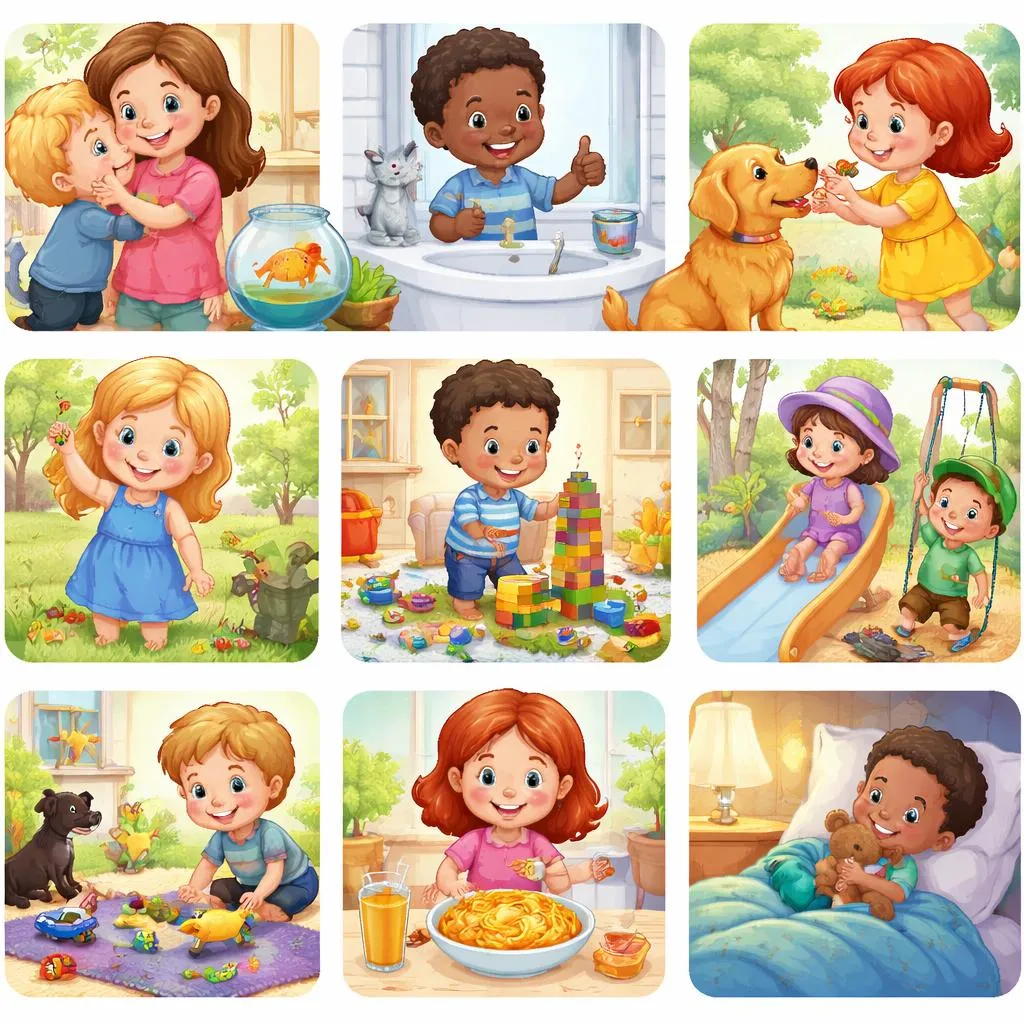

Four-year-olds spend most of their day telling you things. They state facts. They share opinions. They talk about what is real. This is called the indicative mood. Indicative mood makes statements. It tells us what is true, what happened, or what will happen. "The sky is blue." "I like pizza." "We will go to the park." These are all indicative. Teaching your child common indicative mood sentences helps them share information clearly. This article shares the 50 most common indicative mood sentences for 4-year-olds. These will help your child state facts and express ideas with confidence.
What Is Indicative Mood for a Four-Year-Old?
Indicative mood is the mood of reality. It states facts, opinions, and questions about what is real. Most of what we say is in indicative mood. "I am hungry." "Daddy is at work." "The dog is brown." Four-year-olds use indicative mood constantly. They tell you what they see, feel, and know. Indicative mood is the foundation of conversation. It lets children share their world with others.
Meaning and Explanation of Indicative Mood
Indicative mood has one job. It tells us how things are. It can be positive. "I have a red ball." It can be negative. "I do not have a blue ball." It can ask questions. "Where is my ball?" Questions are also indicative mood because they ask about reality. For young children, indicative mood is how they learn about the world. They make statements. Adults confirm or correct them. This builds their understanding of what is true.
Categories of Indicative Mood Sentences for Preschoolers
We group these indicative mood sentences into categories. This helps children learn different kinds of statements. Here are the main groups:
Present Tense Statements: What is true now.
Past Tense Statements: What already happened.
Future Tense Statements: What will happen.
Positive Statements: Saying what is.
Negative Statements: Saying what is not.
Questions: Asking about reality.
Opinions: Sharing beliefs and preferences.
Daily Life Examples of Indicative Mood Sentences
Indicative mood fills every conversation. In the morning, a child says "I am awake." At breakfast, they say "This cereal is good." During play, they say "My tower is tall." At the park, they say "The slide is fun." At bedtime, they say "I am tired." Parents use indicative mood too. "The sun is shining." "Dinner is ready." Indicative mood is how we share reality.
Present Tense Statements
I am four years old.
The sky is blue.
My dog is brown.
I like pizza.
Mommy is cooking.
Daddy is at work.
The cat sleeps.
I have a red ball.
This is my toy.
The flowers are pretty.
I feel happy.
The sun is hot.
Milk is white.
We live in this house.
My name is Lily.
The car is in the garage.
Birds fly in the sky.
I can jump high.
This soup is hot.
I love my family.
Past Tense Statements
I ate my lunch.
We went to the park.
The dog barked loudly.
I played with my friend.
Mommy read me a story.
I saw a big truck.
The baby cried.
I dropped my cup.
Grandma came to visit.
I lost my toy.
We had pizza for dinner.
The rain stopped.
I painted a picture.
Daddy fixed my bike.
The bird flew away.
I was tired last night.
We sang songs.
The cookie was yummy.
I found my shoe.
The sun went down.
Future Tense Statements
I will eat dinner soon.
We will go to the park.
Daddy will come home.
I will play with my toys.
Grandma will visit tomorrow.
It will rain later.
I will brush my teeth.
We will read a book.
The sun will come up.
I will be five next year.
We will have cake.
I will wear my red shirt.
The store will open.
I will see my friend.
We will go on vacation.
I will take a bath.
The dog will eat dinner.
I will say goodnight.
The flowers will grow.
We will have fun.
Positive Statements
I have a doll.
The car is red.
I like apples.
Mommy is nice.
The sun is out.
I can run fast.
This is my favorite book.
We have a dog.
The cake is sweet.
I am happy today.
My friend is here.
The water is warm.
I see a bird.
The music is loud.
I want more milk.
The door is open.
I love you.
The bed is soft.
We are going out.
The game is fun.
Negative Statements
I do not like peas.
The sky is not green.
I am not tired.
We do not have a cat.
The store is not open.
I cannot reach it.
This is not my shoe.
The dog is not here.
I did not do it.
It is not raining.
I do not want more.
The bath is not ready.
I am not scared.
That is not mine.
We will not go today.
The car does not work.
I do not know.
The cookie is not for me.
He is not my brother.
The light is not on.
Questions (Interrogative Indicative)
Where is my ball?
What is for snack?
Who is that?
When will Daddy come home?
Why is the sky blue?
How do you do that?
Is it time to go?
Are you happy?
Can I have a cookie?
Do you like this?
Where are my shoes?
What color is this?
Who made this?
When is my birthday?
Why do I have to sleep?
How does this work?
Is it raining?
Are we there yet?
Can we play outside?
Do I have to go?
Opinions and Preferences
I think this is pretty.
I believe you.
In my opinion, pizza is best.
I like blue best.
I do not like loud noises.
This is my favorite show.
I think the dog is friendly.
I prefer milk to juice.
This feels soft to me.
I think we should go now.
I believe in fairies.
I like this song.
I do not think it will rain.
This is the best day ever.
I think my friend is nice.
I prefer the red one.
I believe you are right.
I think this is funny.
I like the way this smells.
I think I can do it.
Printable Flashcards for Indicative Mood Sentences
Flashcards help children recognize indicative mood. Create cards with one sentence on each. Use a calm color like blue. On the back, draw a simple picture that matches the sentence. For "The sky is blue," draw a blue sky. For "I like pizza," draw a pizza. Show the card and read the sentence. Talk about whether it is true now, in the past, or in the future.
Another idea is to make tense sorting cards. Write sentences in present, past, and future on different colored cards. Have your child sort them by when they happen.
Learning Activities with Indicative Mood Sentences
Activities help children use indicative mood naturally. Try these at home:
Fact or Fiction Game: Say sentences. Your child says "fact" if it is true, "fiction" if it is not. "The sky is green." Fiction. "The sun is hot." Fact.
Today's News: Each day, have your child tell you three true things about their day. "I ate pancakes. I played with blocks. I saw a dog."
Past, Present, Future: Look at pictures. Talk about what is happening now, what happened before, and what will happen next.
Question Time: Take turns asking and answering questions about real things. "What color is your shirt?" "It is red."
Opinion Sharing: Share opinions and ask for your child's. "I think strawberries are yummy. What do you think?"
Learning Activities for Specific Indicative Types
For present tense, play "I Spy" with present tense statements. "I spy something that is blue." For past tense, talk about yesterday. "What did we do yesterday?" For future tense, talk about plans. "What will we do tomorrow?" For negative statements, play "Not True." Say true things and have your child make them not true. "The sky is blue." "The sky is not blue. It is green!" (Silly version)
Educational Games Using Indicative Mood Sentences
Games make learning indicative mood fun. Here are some favorites:
Fact Bingo: Make bingo cards with facts about your child's world. Call out sentences. "You have a red ball." If true, your child covers it.
Question Cube: Make a cube with question words. Roll it. Your child asks a question starting with that word about something real.
True/False Race: Say sentences. Your child runs to a "True" side or "False" side of the room.
Story Telling: Take turns adding true sentences to make a story about your day. "First we ate breakfast. Then we went to the store."
Interview Game: Pretend to be a reporter. Ask your child questions about their life. They answer with indicative sentences.
Game Ideas for Different Settings
In the car, play "I See Facts." Look out the window and make true statements. "I see a red car." "The sky is cloudy." Your child joins in. At the park, play "Park Facts." Make true statements about what you see and do. "The slide is fast." "I am swinging high." At mealtime, play "Food Facts." Take turns making true statements about the food. "This soup is hot." "Milk is cold."
How to Teach Indicative Mood Naturally
You are the best model. Use indicative mood throughout the day. Make statements about what is true. Ask questions about reality. Share your opinions. Your child hears how we talk about the real world.
When your child speaks, they are using indicative mood. Reinforce it. If they say "ball," you say "Yes, that is a red ball." This expands their language while keeping it in indicative mood.
Why Indicative Mood Matters for Four-Year-Olds
Indicative mood is how we share reality. It lets children tell us what they see, feel, and know. It lets them ask questions to learn more. Without indicative mood, we could not have conversations about the real world.
Indicative mood also builds thinking skills. To make a statement, children must observe and form an idea. To ask a question, they must wonder about something. These are critical thinking skills.
Tips for Parents to Support Indicative Mood Learning
Talk about what is real. Point out facts throughout the day. "Look, the leaves are falling." "The mail came." This builds awareness of reality.
Ask questions that invite indicative answers. "What did you do today?" "What is your favorite color?" These questions naturally get indicative responses.
Read nonfiction books. Books about real things use indicative mood. Point out that these are true facts.
The Power of Repetition with Indicative Mood
Children learn through repetition. They will state the same facts again and again. This is how they confirm their understanding. Each repetition strengthens their knowledge.
Sing songs with factual content. Songs about the world use indicative mood. "The wheels on the bus go round and round." "Old MacDonald had a farm." These songs state facts about how things are.
Create routines around facts. At breakfast, state facts about the food. At bedtime, state facts about the day. This builds natural practice.
Connecting Indicative Mood to Books and Media
Choose books that state facts. Nonfiction books are full of indicative mood. Point out that these are true. "This book tells us facts about dinosaurs."
Educational videos can also help. Watch together and talk about the facts presented. "They said that elephants are big. That is true."
Making an Indicative Mood-Rich Environment
Label things with facts. On the window, put "The window is made of glass." On the table, put "This table is wood." Read these with your child. They see that written words can state facts.
Create a fact board. Each day, write a new fact. "Cats have fur." "The sun is a star." Read it together. Talk about whether it is true.
Encouraging Your Child to Use Indicative Mood
Ask open-ended questions that invite statements. "Tell me about your day." "What do you see?" These invite indicative responses.
When your child shares a fact, show interest. "Really? Tell me more!" This encourages more sharing.
Celebrating Progress with Indicative Mood
Notice when your child uses a new tense. "You used past tense today! You said 'I played with blocks.'" Celebrate these language milestones.
Remember that every child develops at their own pace. Some use all tenses early. Others focus on present tense longer. Both are normal. Your support and encouragement make the difference.
By teaching your child these 50 most common indicative mood sentences, you give them the language of reality. They can state facts, ask questions, and share opinions. They can participate fully in conversations about the real world. Enjoy each new indicative sentence together. Every "I see" and "I think" shows a child engaging with reality.