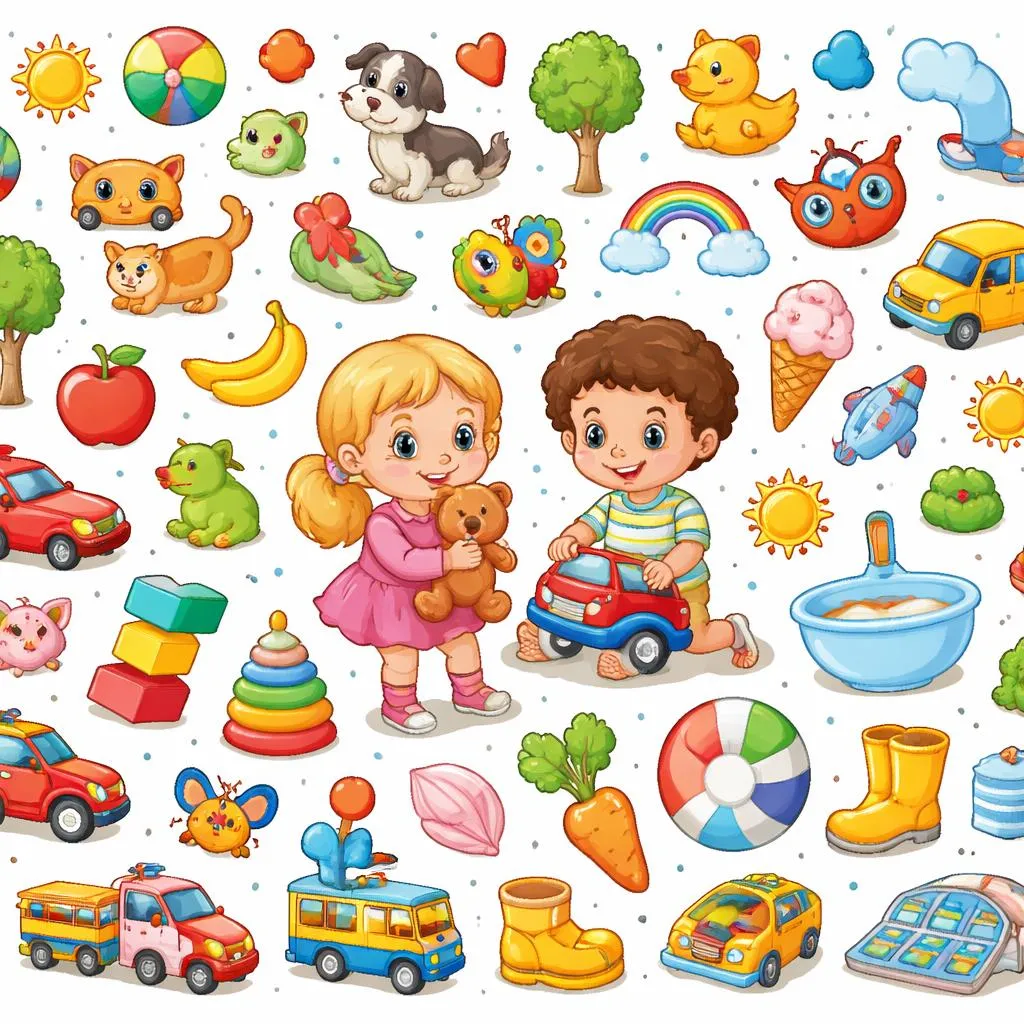

Four-year-olds live in a world full of things. They see objects everywhere. They want to know their names. An object in language is the thing that receives an action. In "I eat an apple," the apple is the object. Learning object names helps children talk about their world. They can ask for things they want. They can describe what they see. This article shares the 50 most common objects for 4-year-olds. These will help your child name the things around them.
What Is an Object for a Four-Year-Old?
An object is a noun that receives an action. It comes after the verb. In "Mommy reads a book," the book is the object. In "I kick the ball," the ball is the object. Objects can be things you can touch. They can also be people. In "I see Daddy," Daddy is the object. Four-year-olds use objects all the time. They say "want cookie" and "see dog." The cookie and dog are objects. Learning object names builds vocabulary and sentence skills.
Meaning and Explanation of Common Objects
Objects tell us what the action happens to. They complete the meaning of the sentence. "I eat" is not complete. "I eat an apple" is complete. The apple is the object. For young children, objects are usually concrete. They are things they can see, hold, or want. As children grow, they learn to talk about abstract objects too. But at four, the best objects are real things in their daily life.
Categories of Common Objects for Preschoolers
We group these objects into categories. This makes them easier to learn. Here are the main groups:
Food Objects: Things children eat and drink.
Toy Objects: Things children play with.
Clothing Objects: Things children wear.
Household Objects: Things found at home.
Nature Objects: Things found outside.
Body Objects: Parts of the body.
School Objects: Things used for learning.
Vehicle Objects: Things that go.
Daily Life Examples of These Objects
Objects fill every moment of a child's day. In the morning, they see a cup, a spoon, and cereal. During play, they touch a ball, a doll, and blocks. At mealtime, they want more juice and a cookie. At bedtime, they hold a blanket and a teddy bear. Parents can name these objects as they appear. "Here is your cup." "Do you see the ball?" This builds object vocabulary naturally.
Food Objects Children Love
apple
banana
cookie
milk
juice
bread
cheese
cereal
soup
water
Toy Objects for Playtime
ball
doll
blocks
car
train
puzzle
book
crayon
teddy bear
bubbles
Clothing Objects They Wear
shirt
pants
shoes
socks
hat
jacket
pajamas
dress
underwear
boots
Household Objects at Home
cup
plate
spoon
bowl
chair
table
bed
pillow
blanket
towel
Nature Objects Outside
flower
tree
rock
cloud
sun
moon
grass
stick
leaf
puddle
Body Objects We Name
head
nose
eyes
mouth
hands
feet
tummy
hair
teeth
ears
School Objects for Learning
crayon
paper
glue
scissors
pencil
book
backpack
chair
table
clock
Vehicle Objects That Go
car
truck
bus
train
plane
boat
bike
scooter
wagon
fire truck
Printable Flashcards for These Objects
Flashcards are perfect for learning object names. Create cards with one object on each. Use real photos if possible. Photos help children connect to real things. On one side, put the picture. On the other side, write the word. Show the picture and say the word. Your child repeats. You can also play identification games. Lay out several cards. Say "Find the apple." Your child finds it.
Another idea is to make an object book. Take photos of objects in your home. Print them and put them in a small album. Write the name under each photo. Read the book together. Your child will love seeing familiar things in a book.
Learning Activities with These Objects
Activities make object learning fun and meaningful. Try these at home:
Object Hunt: Go on a hunt around the house. Say "Find something we eat with." Your child finds a spoon. Name the object together.
I Spy with Objects: Play I Spy using objects. "I spy something red that you wear." Your child guesses "shirt!"
Sorting Game: Gather objects from different categories. Have your child sort them. Put all food together. Put all toys together. Name each object as you sort.
What Is Missing?: Place several objects on a tray. Name them together. Cover the tray and remove one. Uncover and ask "What is missing?" Your child names the missing object.
Shopping Trip: Use toy food or real empty boxes. Go shopping together. "Let's buy some milk." Your child finds the milk object. This builds vocabulary in play.
Learning Activities for Specific Object Categories
For food objects, involve your child in meals. Let them help set the table. Name each item. "This is a plate. This is a cup." For clothing objects, let them choose their clothes. Name each piece. "You picked a blue shirt." For nature objects, go on a nature walk. Collect leaves and rocks. Name them together. Bring them home and talk about them.
Educational Games Using These Objects
Games turn learning into play. Here are some favorites:
Object Bingo: Make bingo cards with pictures of objects. Call out an object name. Your child covers the picture. First to cover a line wins.
Matching Game: Make pairs of object cards. Mix them up and lay them face down. Take turns flipping two. If they match, name the object and keep the pair.
Object Charades: Act out using an object without words. Pretend to drink from a cup. Your child guesses "cup!" Then switch roles.
Go Fish with Objects: Make pairs of object picture cards. Deal them out. Players ask "Do you have apple?" If the other player has it, they give it. If not, they say "Go fish."
Object Race: Call out an object. "Find something to wear on your feet!" Your child races to find shoes and brings them back. Name the object together.
Game Ideas for Different Settings
In the car, play "I See Objects." Look out the window. "I see a tree. I see a car." Your child names objects they see. At the store, play "Find the Object." Give your child a small task. "Can you find the bananas?" They find them and name the object. At bath time, name bath objects. "This is soap. This is a towel." This makes routine learning.
How to Introduce Objects Naturally
You do not need special lessons. Just name things throughout the day. When you dress your child, name each clothing item. "Put on your shirt. Now your pants." When you eat, name the food. "This is an apple. This is cheese." When you play, name the toys. "You are playing with the ball." Your child hears object names again and again.
Follow your child's lead. When they point to something, name it for them. "That is a bird." When they ask "What's that?" tell them the object name. This satisfies their curiosity and builds vocabulary.
Why Objects Matter for Four-Year-Olds
Objects are the words children use most. They name what they want, see, and love. When children know object names, they can communicate their needs. They can say "want milk" instead of just pointing. This reduces frustration. It also builds confidence. Each new object name is a tool for connection.
Objects also build the foundation for reading. When children see written object names, they start to understand that print has meaning. They recognize words for things they know. This makes learning to read easier.
Tips for Parents to Support Object Learning
Talk about objects all the time. Use rich language. Instead of just "ball," say "The red ball bounces high." This puts the object in a sentence. It shows how objects work in language.
Read books with clear pictures. Point to each picture and name the object. Ask your child to find objects. "Where is the dog?" "Can you point to the house?" This builds comprehension.
Use repetition. Name the same objects in different places. Talk about "cup" at home, at grandma's house, and in stories. Each repetition strengthens the word in your child's memory.
The Power of Repetition with Objects
Young children love hearing the same words again. It makes them feel smart. When they hear "apple" many times, they learn it deeply. They can say it, understand it, and use it. Use songs and rhymes that name objects. "Apples and bananas" is a fun song. It repeats object names in silly ways. This makes repetition enjoyable.
Create routines around objects. At breakfast, name the food objects. At bath time, name the bath objects. At bedtime, name the comfort objects like blanket and teddy bear. These routines build a rich language environment.
Connecting Objects to Books and Media
Choose books with bright, clear pictures of objects. Board books are great for this. Point to each object and say its name. After many readings, let your child name them. "What is this?" They say "dog." This builds pride.
Educational videos can also help. Look for shows that name objects clearly. Watch together and repeat the names. But remember, real interaction with you is best. You can pause and talk about what you see.
Making an Object-Rich Environment
Label objects around your home. Use sticky notes or cute labels. Put "door" on the door. Put "window" on the window. Put "fridge" on the refrigerator. Read these labels with your child. They start to connect written words with real things.
Create object baskets. Fill baskets with objects from one category. Have a kitchen basket with a cup, spoon, and plate. Have a bathroom basket with soap, towel, and toothbrush. Take out each object and name it. Your child plays and learns.
Encouraging Your Child to Use Object Names
Give your child choices. "Do you want an apple or a banana?" They name the object they want. This gives them practice using object names. When they ask for something by pointing, name it for them. "You want the ball. Can you say ball?" Gentle prompts build confidence.
Play the naming game. Point to things and ask "What is this?" If your child does not know, tell them. "That is a lamp." No pressure, just learning.
Celebrating Progress with Objects
Keep a list of object names your child knows. Add new ones as they learn. Celebrate when they learn a new object. "You learned a new word today! Stove!" This positive feedback encourages more learning.
Remember that every child learns at their own pace. Some learn many object names quickly. Others take time. Both are normal. Your love and support make the difference.
By teaching your child these 50 most common objects, you give them words for their world. They can name what they see and want. They can share their experiences with you. Enjoy this journey together. Each new object name is a new connection.