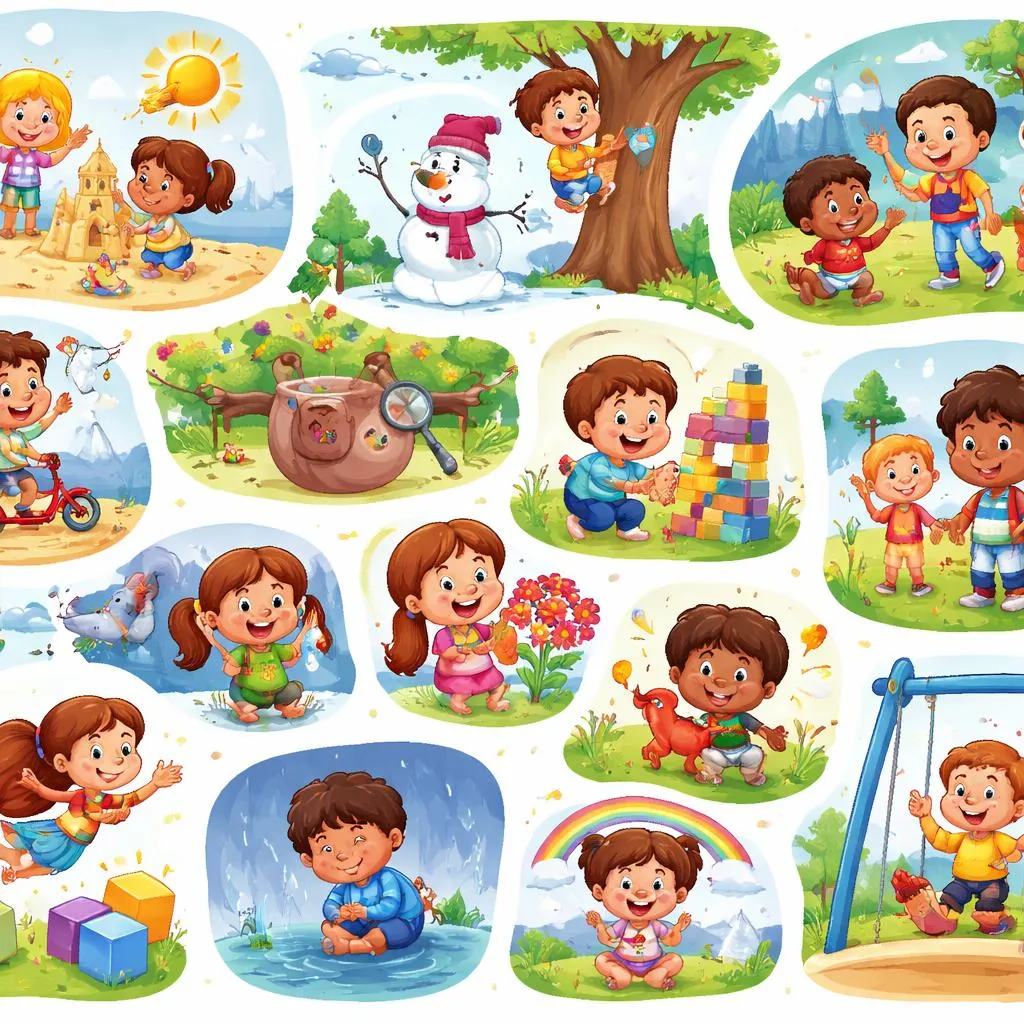

Adjectives are describing words. They tell us more about nouns. They tell us how something looks, feels, sounds, tastes, or smells. Big, small, happy, sad, red, blue, soft, and hard are all adjectives. For a six-year-old, adjectives make language colorful and interesting. Instead of just saying "the dog," they can say "the furry brown dog." Learning the 70 most common adjectives for a 6-year-old gives children the tools to describe their world in rich detail. These words help them express observations, feelings, and opinions.
What Are Adjectives?
Adjectives are words that describe nouns. They answer questions like: What kind? How many? Which one? They add information to help us picture things more clearly.
Think about a simple noun like cookie. Without adjectives, we do not know much about it. But with adjectives, we can picture it. A warm, chocolate chip cookie. A hard, burned cookie. A huge, sugary cookie. The adjectives change how we imagine the cookie.
Adjectives can describe many different qualities.
Size adjectives tell us how big or small something is. Big, small, tiny, huge, long, short.
Color adjectives tell us what color something is. Red, blue, green, yellow, purple, pink.
Shape adjectives tell us the form. Round, square, flat, pointy, curved.
Feeling adjectives tell us about emotions. Happy, sad, excited, scared, angry, surprised.
Sensory adjectives tell us how things feel, sound, taste, or smell. Soft, loud, sweet, sour, stinky, smooth.
Opinion adjectives tell us what someone thinks. Good, bad, nice, mean, funny, boring.
When we talk about the 70 most common adjectives for a 6-year-old, we mean the describing words that children use and encounter most often in their daily lives and in the books they read.
Meaning and Explanation of Adjectives
Adjectives make sentences more interesting and specific. They help us paint pictures with words.
Adjectives usually come before the noun they describe. "I see a red ball." "She has a fluffy cat." "We live in a big house." The adjective sits right in front of the noun and gives us more information.
Adjectives can also come after linking verbs like is, am, are, was, were. "The ball is red." "The cat is fluffy." "Our house is big." Here the adjective describes the subject through the verb.
Many adjectives have comparative and superlative forms. We use these to compare things.
big, bigger, biggest
small, smaller, smallest
happy, happier, happiest
good, better, best
For longer adjectives, we use more and most.
beautiful, more beautiful, most beautiful
delicious, more delicious, most delicious
Children learn to compare things naturally. "My cookie is bigger than yours!" "This is the best day ever!"
Adjectives can also be opposites. Learning opposite pairs helps children understand the full range of descriptive words.
hot and cold
happy and sad
fast and slow
loud and quiet
clean and dirty
For a six-year-old, building a rich collection of adjectives helps them become better storytellers and more precise communicators.
Categories or Lists: The 70 Most Common Adjectives
Here is a practical list of the 70 most common adjectives for a 6-year-old. These are the describing words children use and encounter most often in speaking, reading, and writing.
Size Adjectives (8 words)
big
small
tall
short
long
tiny
huge
little
Color Adjectives (10 words)
9. red
10. blue
11. green
12. yellow
13. orange
14. purple
15. pink
16. brown
17. black
18. white
Shape Adjectives (6 words)
19. round
20. square
21. flat
22. pointy
23. straight
24. curved
Feeling Adjectives (10 words)
25. happy
26. sad
27. angry
28. scared
29. excited
30. surprised
31. tired
32. sleepy
33. hungry
34. thirsty
Sensory Adjectives (10 words)
35. hot
36. cold
37. warm
38. soft
39. hard
40. loud
41. quiet
42. sweet
43. sour
44. stinky
Opinion Adjectives (8 words)
45. good
46. bad
47. nice
48. mean
49. funny
50. boring
51. pretty
52. ugly
Quantity Adjectives (6 words)
53. many
54. few
55. some
56. all
57. more
58. most
Age and Condition (6 words)
59. new
60. old
61. clean
62. dirty
63. wet
64. dry
Personality Adjectives (6 words)
65. kind
66. smart
67. brave
68. silly
69. shy
70. friendly
Daily Life Examples with Adjectives
The best way to teach adjectives is to use them naturally in everyday conversations. Children learn describing words best when they hear them in context.
Morning routine: "Put on your warm socks. The floor is cold. Do you want your blue shirt or your red one? You look so happy this morning!"
At breakfast: "This milk is cold. The pancakes are warm and fluffy. Is your cereal sweet enough? I like crunchy cereal."
Getting dressed: "These pants are too long for you. Let's find a softer shirt. Your shoes are dirty from playing outside. Here are your clean socks."
At the park: "The slide is slippery! Feel how smooth this rock is. That tree is so tall. The swings are fun. Watch out for the wet grass."
At the store: "Let's find some ripe bananas. These apples look shiny and red. Can you find a round watermelon? This bread smells fresh."
Reading together: As you read, point out adjectives. "Look, the author says the bear is furry and brown. The house is spooky and dark. The princess is beautiful and kind."
At bedtime: "You look tired. Let's read a quiet story. Your blanket is so soft. I love your sweet smile. You had a busy day."
Printable Flashcards for Adjectives
Flashcards are a wonderful tool for building adjective vocabulary. You can make them together, which makes the learning even more meaningful.
To make adjective flashcards, you will need index cards or thick paper, markers, crayons, and maybe some old magazines for pictures. On one side of the card, write the adjective. On the other side, draw a picture or glue a magazine cutout that shows the meaning.
For example:
"big" with a picture of an elephant next to a mouse
"happy" with a drawing of a smiling face
"red" with a red circle
"soft" with a picture of a pillow or a fuzzy kitten
Here are some fun ways to use your flashcards:
Name that card: Show your child the picture side and ask them to tell you the adjective. If they cannot remember, show them the word side and read it together.
Opposites matching: Make pairs of opposite adjectives. Match "big" with "small." Match "hot" with "cold." Match "happy" with "sad." Have your child find the opposites.
Sorting game: Have your child sort the cards into categories. Color adjectives in one pile. Feeling adjectives in another. Size adjectives in another. This helps them see how adjectives are related.
Describe the object: Pick an object in the room and have your child find all the adjective cards that could describe it. For a pillow, they might choose "soft," "big," "fluffy," "blue."
Sentence building: Pick an adjective card and a noun card and make a sentence. "The fluffy cat is sleeping." "I see a big truck." "This is a sweet apple."
Learning Activities or Games
Games make learning adjectives fun and memorable. Here are some games you can play with your child to practice these important describing words.
The I Spy Adjective Game: Play I Spy using adjectives as clues. "I spy something round and red." (an apple) "I spy something soft and fluffy." (a pillow) "I spy something tall and green." (a tree) This builds observation and descriptive skills.
The Adjective Hunt: Go on a hunt around your house or outside to find things that match different adjectives. "Can you find something smooth? Can you find something rough? Can you find something shiny? Can you find something dull?" Talk about what you find.
The Mystery Bag Game: Put an object in a bag without showing it. Have your child reach in and feel it, then describe it using adjectives. "It feels soft and squishy. It is small and round." Then they guess what it is.
The Adjective Jar: Write adjectives on slips of paper and put them in a jar. Take turns pulling one out and using it in a sentence. "The word is sparkly. My sentence: The princess wore a sparkly dress." You can also act out the adjective or draw it.
The Food Tasting Game: During snack or mealtime, describe foods using adjectives. "This apple is sweet and crunchy. This cracker is salty and hard. This yogurt is cold and creamy." Encourage your child to describe their food too.
The Adjective Art Game: Give your child a piece of paper and tell them to draw something based on adjective clues. "Draw a big, scary monster with green skin and sharp teeth." "Draw a tiny, happy mouse with pink ears and a long tail." This connects adjectives to creativity.
The Story Time Adjective Hunt: When you read stories together, have your child raise their hand every time they hear an adjective. "The big, friendly bear walked through the dark forest." This builds listening skills and adjective awareness.
The Compare Game: Hold up two objects and have your child compare them using adjectives. "This pencil is long, but that pencil is short." "This rock is smooth, but that rock is rough." "My juice is cold, but your juice is warm."
By using these examples, flashcards, and games, you are helping your child master the 70 most common adjectives for a 6-year-old in a natural and enjoyable way. These describing words will become a comfortable part of their vocabulary. They will use them to paint pictures with words, to share their observations, and to express their feelings and opinions. Every conversation gives them more practice. Your child will gain confidence as they learn to describe the world around them with more detail and precision. The more they hear and use adjectives, the more colorful their language will become. Soon they will be telling you all about the gigantic, sparkly, amazing things they see, and you will marvel at their growing ability to paint pictures with words.