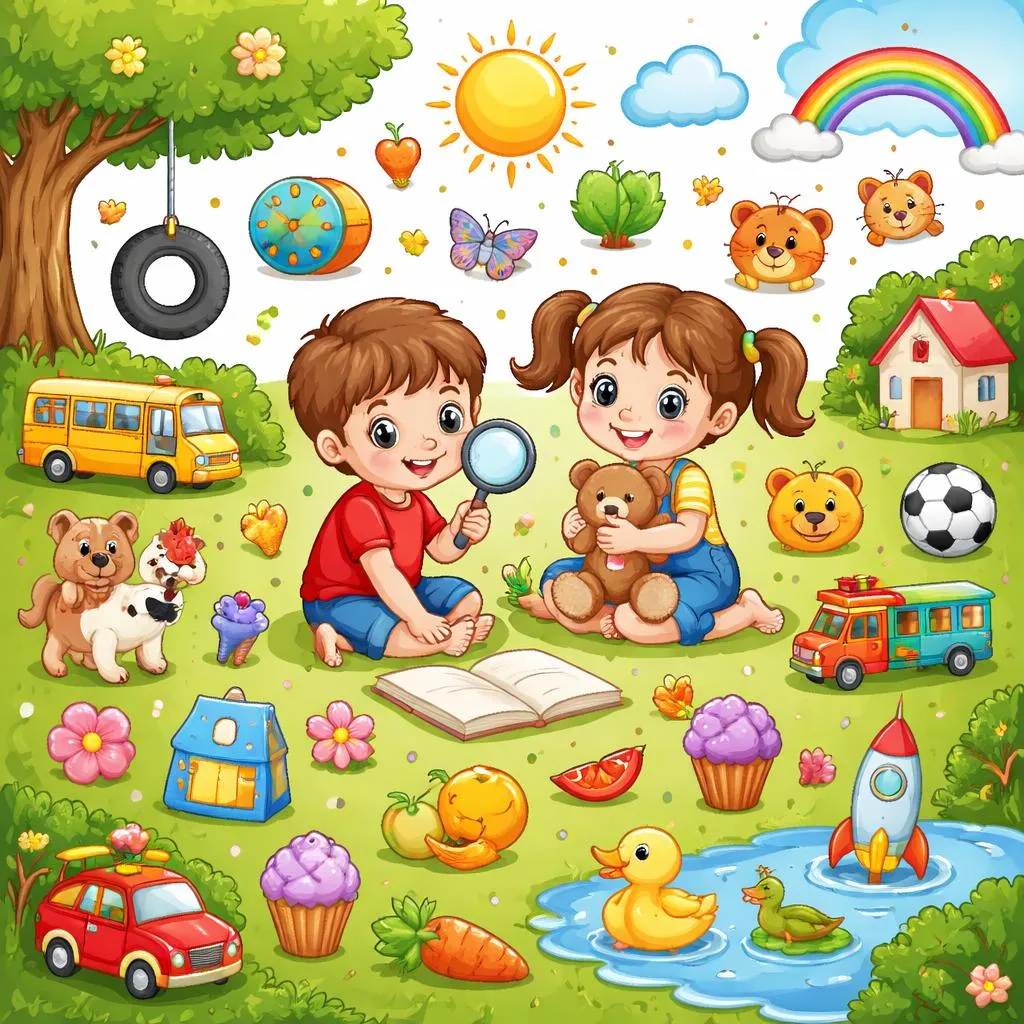

Nouns are the names of everything around us. They are the words for people, places, things, and ideas. For a six-year-old, nouns are the foundation of language. Every sentence they speak or write needs nouns. Learning the 70 most common nouns for a 6-year-old gives children the vocabulary they need to talk about their world. These words help them name what they see, what they want, and what they feel. Building a strong noun vocabulary opens the door to better communication and reading success.
What Are Nouns?
Nouns are naming words. They name everything we can see, touch, or think about. If you can put the word the in front of a word, it is probably a noun. The dog, the house, the happiness.
There are different kinds of nouns that children learn as they grow.
People nouns name the important people in a child's life. Mom, dad, friend, teacher, baby. These are some of the first words children learn because they name the people they love.
Place nouns name where things are. Home, school, park, store, zoo. These words help children talk about where they go and where they want to be.
Thing nouns name objects. Ball, book, toy, car, cookie. These are the words for everything children play with, use, and want.
Animal nouns name the creatures in their world. Dog, cat, bird, fish, elephant. Children love animals and learn their names quickly.
Food nouns name what they eat. Apple, milk, pizza, bread, juice. These words are very useful at snack time and mealtime.
Idea nouns name things we cannot touch. Love, fun, dream, wish, happiness. These are harder for young children but they use them all the time.
When we talk about the 70 most common nouns for a 6-year-old, we mean the naming words that children use and encounter most often in their daily lives and in the books they read.
Meaning and Explanation of Nouns
Nouns are easy to spot once you know what to look for. They are the words that answer the questions who or what in a sentence.
Who is in the sentence? The girl is singing. The teacher is reading. My friend came over. The words girl, teacher, and friend are nouns because they name who.
What is in the sentence? The ball is red. I want a cookie. We read a book. The words ball, cookie, and book are nouns because they name what.
Nouns can be singular or plural. Singular means one. One dog, one apple, one car. Plural means more than one. We usually add -s or -es. Two dogs, three apples, many cars. Some plurals are special. One child, two children. One mouse, two mice. Children learn these through practice.
Nouns can also be common or proper. Common nouns are general names. City, boy, day. Proper nouns are specific names and always start with capital letters. Chicago, Tom, Monday. Proper nouns name particular people, places, or things.
For a six-year-old, the most important thing is building a strong collection of common nouns. These are the words they will use every day for the rest of their lives.
Categories or Lists: The 70 Most Common Nouns
Here is a practical list of the 70 most common nouns for a 6-year-old. These are the words children use most often in speaking, reading, and writing.
People Nouns (10 words)
mom
dad
brother
sister
baby
friend
teacher
doctor
police officer
grandparent
Place Nouns (10 words)
11. home
12. school
13. park
14. store
15. zoo
16. beach
17. pool
18. playground
19. room
20. yard
Animal Nouns (10 words)
21. dog
22. cat
23. bird
24. fish
25. rabbit
26. horse
27. cow
28. pig
29. elephant
30. lion
Food Nouns (10 words)
31. apple
32. banana
33. cookie
34. pizza
35. milk
36. juice
37. bread
38. cereal
39. sandwich
40. soup
Thing Nouns (15 words)
41. ball
42. book
43. toy
44. car
45. doll
46. block
47. puzzle
48. game
49. bike
50. swing
51. slide
52. bed
53. chair
54. table
55. cup
Body Part Nouns (5 words)
56. head
57. hand
58. foot
59. eye
60. nose
Nature Nouns (5 words)
61. sun
62. moon
63. star
64. tree
65. flower
Idea Nouns (5 words)
66. love
67. fun
68. dream
69. wish
70. happiness
Daily Life Examples with Nouns
The best way to teach nouns is to point them out naturally throughout the day. Children learn new words best when they hear them in context.
Morning routine: "Time to get out of bed (noun). Put on your clothes (noun). Let's eat breakfast (noun). Do you want cereal (noun) or toast (noun)?"
At school: "Your teacher (noun) is waiting. Do you have your backpack (noun) and your lunchbox (noun)? What book (noun) will you read today?"
At the park: "Look at the swings (noun)! Do you want to go down the slide (noun)? I see a dog (noun) running in the grass (noun)."
At the store: "We need to buy milk (noun) and bread (noun). Can you help me find the cereal (noun) aisle? Look at all the fruit (noun)!"
At dinner: "This soup (noun) is hot. Please pass the spoon (noun). Do you want more bread (noun) with your dinner?"
At bedtime: "Time for a story (noun). Which book (noun) do you want? Give your teddy bear (noun) a hug. Sweet dreams (noun)!"
Printable Flashcards for Nouns
Flashcards are a wonderful tool for building noun vocabulary. You can make them together, which makes the learning even more meaningful.
To make noun flashcards, you will need index cards or thick paper, markers, crayons, and maybe some old magazines for pictures. On one side of the card, write the noun. On the other side, draw a picture or glue a magazine cutout that shows the word.
For example:
"dog" with a picture of a dog
"apple" with a picture of an apple
"school" with a picture of a school
"happiness" with a happy face
Here are some fun ways to use your flashcards:
Name that card: Show your child the picture side and ask them to tell you the word. If they cannot remember, show them the word side and read it together.
Matching game: Make two sets of the same flashcards. Lay them all out face down and take turns flipping two cards over to find matches. When you find a match, say the word together.
Sorting game: Have your child sort the cards into categories. Put all the animal nouns together. Put all the food nouns together. Put all the place nouns together. This helps them see how words are related.
Go on a noun hunt: Take the flashcards around the house and try to find the real thing that matches each card. Hold up the "bed" card and find the bed. Hold up the "ball" card and find a ball.
Storytelling with cards: Pick a few flashcards and use them to tell a silly story together. "Once upon a time, a dog went to the park with a ball. He saw a cat sitting under a tree..."
Learning Activities or Games
Games make learning nouns fun and memorable. Here are some games you can play with your child to practice these important naming words.
The I Spy Noun Game: Play I Spy, but only look for nouns. "I spy with my little eye, something that is a noun." Your child guesses. "Is it the lamp? Is it the pillow?" This builds awareness of nouns in the environment.
The Noun Hunt Game: Go on a noun hunt around your house or outside. Give your child a paper bag and tell them to find five nouns. They can bring you a leaf, a rock, a spoon, a sock, and a book. Talk about each noun they find.
The Alphabet Noun Game: Take turns naming nouns for each letter of the alphabet. "A is for apple." "B is for ball." "C is for cat." See how far you can go. This builds vocabulary and letter knowledge together.
The What's Missing Game: Place several objects on a tray. Name them together. "Here is a cup, a spoon, a ball, and a book." Have your child close their eyes. Remove one object. When they open their eyes, ask "What noun is missing?" They answer "The spoon is missing!"
The Category Game: Call out a noun category and have your child name as many nouns as they can in that category. "Name all the animals you can think of!" "Name all the foods you like!" "Name all the toys in your room!"
The Noun Collage: Give your child old magazines and a large piece of paper. Have them cut out pictures of nouns and glue them onto the paper to make a noun collage. Label each picture together. "This is a car. This is a dog. This is a house."
The Story Time Noun Hunt: When you read stories together, have your child put up a hand or say "noun" every time they hear a noun. This builds listening skills and noun awareness. "The bear (noun) went into the forest (noun) to find some honey (noun)."
By using these examples, flashcards, and games, you are helping your child master the 70 most common nouns for a 6-year-old in a natural and enjoyable way. These naming words will become a comfortable part of their vocabulary. They will use them to talk about their world, to ask for what they want, and to understand the stories they read. Every conversation gives them more practice. Your child will gain confidence as they learn to name more and more things around them. The more they hear and use nouns, the more naturally these words will flow in their everyday speech. Soon they will be pointing out nouns everywhere, and you will hear them say, "Look, a butterfly! That's a noun!" as they discover the joy of naming their world.