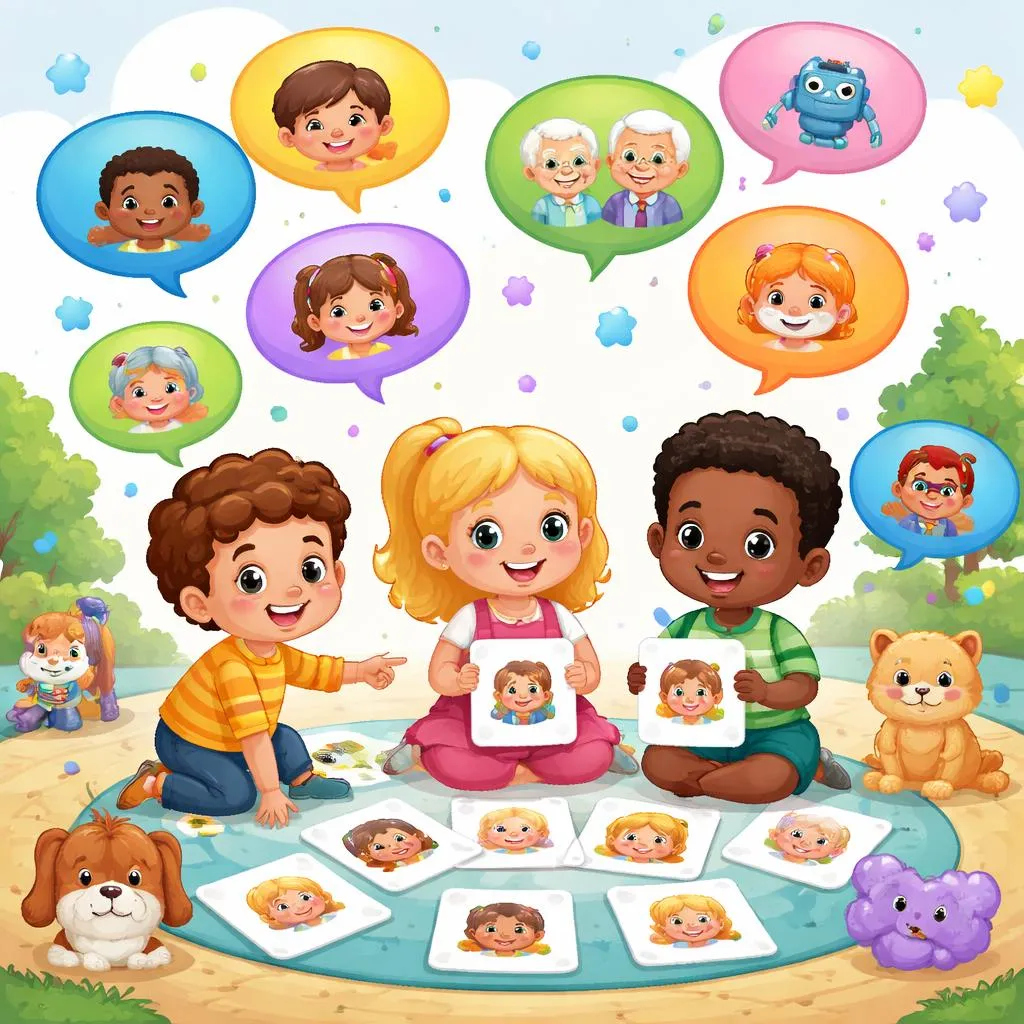

Pronouns are words that take the place of nouns. Instead of saying "Sarah" over and over, we can say "she." Instead of saying "the boys," we can say "they." For a six-year-old, pronouns make speaking and writing smoother. They help children avoid repeating the same words again and again. Learning the 70 most common pronouns for a 6-year-old gives children the tools to communicate more naturally and effectively. These little words do big jobs in sentences.
What Are Pronouns?
Pronouns are words we use in place of nouns. They stand in for people, places, or things that we have already mentioned or that everyone understands from the context.
Imagine if we had to say every name every time. "Sarah went to Sarah's house because Sarah was tired. Sarah ate Sarah's dinner and then Sarah went to Sarah's bed." That sounds strange and repetitive. Pronouns make it better. "Sarah went to her house because she was tired. She ate her dinner and then she went to her bed."
Pronouns help us talk without repeating. They make our sentences flow better. They also help us talk about people without always using their names.
There are different kinds of pronouns that children learn as they grow. Subject pronouns do the action. Object pronouns receive the action. Possessive pronouns show ownership. Reflexive pronouns reflect back to the subject.
When we talk about the 70 most common pronouns for a 6-year-old, we mean the pronouns that children use and encounter most often in their daily lives and in the books they read.
Meaning and Explanation of Pronouns
Let us explore the different types of pronouns. Each type has a special job in sentences.
Subject pronouns are used as the subject of a sentence. They do the action. The subject pronouns are: I, you, he, she, it, we, they.
I like pizza.
You are my friend.
He plays soccer.
She reads books.
It is raining.
We go to school.
They are playing outside.
Object pronouns are used as the object of a verb or preposition. They receive the action. The object pronouns are: me, you, him, her, it, us, them.
Mommy loves me.
I see you.
Give the ball to him.
Sit next to her.
Put it on the table.
Grandma visited us.
I made cookies for them.
Possessive pronouns show ownership. They tell us who something belongs to. The possessive pronouns are: mine, yours, his, hers, its, ours, theirs.
This book is mine.
Is that cup yours?
The blue one is his.
The pink one is hers.
The bone is its.
This house is ours.
Those toys are theirs.
Possessive adjectives are often taught with pronouns. They also show ownership but come before nouns. They are: my, your, his, her, its, our, their.
This is my book.
Is that your cup?
His bike is red.
Her hair is long.
The dog wagged its tail.
Our house is big.
Their toys are everywhere.
Reflexive pronouns refer back to the subject. They end in -self or -selves. They are: myself, yourself, himself, herself, itself, ourselves, yourselves, themselves.
I made it myself.
You can do it yourself.
He hurt himself.
She dressed herself.
The cat washed itself.
We built it ourselves.
You can all see for yourselves.
They enjoyed themselves.
For a six-year-old, the most important pronouns are the subject, object, and possessive forms. These are the ones they use every day.
Categories or Lists: The 70 Most Common Pronouns
Here is a practical list of the 70 most common pronouns for a 6-year-old. These are the words children use and encounter most often in speaking, reading, and writing.
Subject Pronouns (7 words)
I
you
he
she
it
we
they
Object Pronouns (7 words)
8. me
9. you
10. him
11. her
12. it
13. us
14. them
Possessive Pronouns (7 words)
15. mine
16. yours
17. his
18. hers
19. its
20. ours
21. theirs
Possessive Adjectives (7 words)
22. my
23. your
24. his
25. her
26. its
27. our
28. their
Reflexive Pronouns (8 words)
29. myself
30. yourself
31. himself
32. herself
33. itself
34. ourselves
35. yourselves
36. themselves
Demonstrative Pronouns (4 words)
37. this
38. that
39. these
40. those
Interrogative Pronouns (5 words)
41. who
42. whom
43. whose
44. which
45. what
Indefinite Pronouns (15 words)
46. all
47. another
48. any
49. anybody
50. anyone
51. anything
52. both
53. each
54. either
55. everybody
56. everyone
57. everything
58. few
59. many
60. most
More Indefinite Pronouns (10 words)
61. much
62. nobody
63. none
64. no one
65. nothing
66. one
67. other
68. several
69. some
70. somebody
Daily Life Examples with Pronouns
The best way to teach pronouns is to use them naturally in everyday conversations. Children learn these words by hearing them in context.
Morning routine: " I will help you get dressed. These are your socks. They are blue. Now we need to find your shoes. Where did you put them?"
At breakfast: " I made pancakes for us. Do you want syrup on yours? Mine are already on the plate. She likes hers with berries."
During play: " We are building a tower. I will put this block on top. You can add the next one. They are watching us play."
Resolving conflicts: "That toy is mine. He took it without asking. I was playing with it first. Can you help us share?"
At the store: " We need to buy milk. It is in the back of the store. I will push the cart. You can help me find the cereal."
At bedtime: " I love you so much. You are my special boy. We had a good day together. It was so much fun. Now we will read our favorite book."
Printable Flashcards for Pronouns
Flashcards can help children see and remember pronouns. You can make them together, which makes the learning more meaningful.
To make pronoun flashcards, you will need index cards or thick paper, markers, and maybe some stickers. On each card, write a pronoun and draw a simple picture or write a short sentence to show its meaning.
For example:
"I" with a picture of a child pointing to themselves
"you" with a picture of a child pointing to someone else
"mine" with a picture of a child holding a toy
"himself" with a picture of a boy looking in a mirror
Here are some fun ways to use your flashcards:
Matching game: Make pairs of cards that go together. Subject pronouns with object pronouns. "I" with "me." "He" with "him." Match possessive pronouns with possessive adjectives. "Mine" with "my."
Sentence building: Pick a pronoun card and use it in a sentence. " She is my friend." "This book is mine." Take turns making sentences with different pronouns.
Sorting game: Have your child sort the cards into categories. Subject pronouns in one pile. Object pronouns in another. Possessive pronouns in another. This helps them see the different types.
Act it out: Pick a reflexive pronoun card and act out the meaning. For "myself," point to yourself. For "yourself," point to your child. For "himself," have a boy doll look in a mirror.
Learning Activities or Games
Games make learning pronouns fun and memorable. Here are some games you can play with your child to practice these important words.
The Pronoun Replacement Game: Say a sentence with nouns and have your child replace the nouns with pronouns. "Sarah loves her dog." Your child says " She loves it." "The boys are playing with the ball." " They are playing with it."
The Who Am I? Game: Describe someone without using their name, using only pronouns. " She has long hair. She is wearing a red shirt. She is my teacher." Your child guesses who you are describing.
The Possessive Hunt: Walk around the house and talk about who things belong to using possessive pronouns. "Whose book is this?" "It is mine." "Whose shoes are these?" "They are yours." "Whose room is this?" "It is ours."
The Mirror Game: Practice reflexive pronouns by looking in a mirror. "I see myself." "You see yourself." "He sees himself." Use dolls or stuffed animals to practice "herself" and "itself."
The Story Time Pronoun Hunt: When you read stories together, have your child put up a hand every time they hear a pronoun. "The bear (noun) went into the forest. He (pronoun) was looking for honey." This builds listening skills and pronoun awareness.
The Substitute Teacher Game: Pretend your child is the teacher and has to correct sentences that use nouns too many times. Give them a repetitive sentence. "Mary went to Mary's room because Mary was tired." Your child says, "Mary went to her room because she was tired."
The Pronoun Chain Game: Start a story and take turns adding a sentence, but you must use at least one pronoun each time. You start: " I went to the park." Your child continues: " I saw my friend there." You continue: " She was playing on the swings." Keep going and see how long the story gets.
By using these examples, flashcards, and games, you are helping your child master the 70 most common pronouns for a 6-year-old in a natural and enjoyable way. These little words will become a comfortable part of their language. They will use them to speak more smoothly and to avoid awkward repetition. Every conversation gives them more practice. Your child will gain confidence as they learn to choose the right pronoun for each situation. The more they hear and use pronouns, the more naturally these words will flow in their everyday speech. Soon they will be using pronouns correctly without even thinking about it, and you will hear them say, " I did it myself!" as they discover the power of these small but mighty words.