
Every time children speak, they choose a type of sentence. Sometimes they tell us something. Sometimes they ask us something. Sometimes they show excitement or give commands. Each type has its own job and its own special punctuation. For a six-year-old, understanding sentence types helps them communicate more effectively and recognize patterns in language. This guide will help you explore the 70 most common types of sentences for 6-year-old learners in ways that feel natural and encouraging for both you and your child.
What Are Types of Sentences?
Sentences come in different types based on what they do. Some sentences make statements. Some ask questions. Some express strong feelings. Some give commands or make requests. Each type uses specific words and punctuation to do its job. Learning to recognize and use different sentence types helps children become more flexible and effective communicators. They learn when to make a statement, when to ask a question, and when to show excitement.
Meaning and Explanation
Think of sentence types as different tools in a toolbox. You would not use a hammer to screw in a screw. Similarly, you would not use a statement when you need to ask a question. Each sentence type has a special purpose. For a six-year-old, we can explain that we have different ways of talking depending on what we want to do. Sometimes we want to tell something. Sometimes we want to ask something. Sometimes we want to shout about something exciting. The way we build our sentence changes for each job.
Declarative Sentences
Declarative sentences make statements. They tell us something or give information. They end with a period. Most of the sentences children use are declarative. "I like ice cream." "The sun is shining." "We went to the park today." "My favorite color is blue." These sentences simply share information. They do not ask questions, give commands, or show strong excitement. They just tell us something. Children use declarative sentences constantly to share their thoughts, experiences, and observations.
Interrogative Sentences
Interrogative sentences ask questions. They end with a question mark. Children are naturally curious, so they use many question sentences every day. "Where is my toy?" "Can I have a snack?" "Why is the sky blue?" "What are we having for dinner?" "Are we going to the park?" These sentences seek information. They help children learn about their world and get their needs met. Learning to form questions correctly helps children participate fully in conversations.
Exclamatory Sentences
Exclamatory sentences show strong feeling or excitement. They end with an exclamation point. Children experience emotions intensely, so exclamatory sentences come naturally to them. "I am so excited!" "That is amazing!" "Look at that huge truck!" "We won the game!" "This is the best day ever!" These sentences let children express their feelings with energy. They add emotion and emphasis to communication.
Imperative Sentences
Imperative sentences give commands or make requests. They often end with a period, though they can use an exclamation point for strong commands. The subject "you" is usually understood rather than stated. Children hear many imperative sentences from adults. "Please put your shoes on." "Come here." "Sit down." "Be careful." "Give me the ball." Children also use imperative sentences themselves when they want something or want others to do something. "Look at me!" "Help me please." "Go away."
Daily Life Examples
Children encounter all four sentence types throughout their day. In the morning, parents might use imperatives: "Wake up now. Get dressed." Children might use declaratives: "I am still tired." At breakfast, questions fly back and forth: "Do you want cereal or pancakes?" Exclamations appear when something exciting happens: "Pancakes! My favorite!" During play, children use all types: "Throw it to me!" (imperative), "I caught it!" (exclamatory), "Is it my turn?" (interrogative), "This is fun." (declarative).
Learning Tips for Parents
The best way to help your child understand sentence types is to notice them together in everyday language. When you read stories, you can point out different sentence types. "Listen, this sentence ends with a question mark. The character is asking something." "This one ends with an exclamation point. She must be excited!" This gentle noticing helps children become aware of sentence patterns.
Using different sentence types in your own speech models their use naturally. Ask questions, make statements, show excitement, and give clear commands. Your child hears these patterns and learns to use them appropriately.
Educational Games
Games make learning about sentence types playful and engaging. One simple game is "Sentence Type Hunt." Read a book together and see how many of each sentence type you can find. Use different colored sticky notes to mark declarative, interrogative, exclamatory, and imperative sentences. Count them at the end and see which type appears most often.
Another favorite is "What Type Is It?" Say a sentence and have your child identify its type. "The dog is barking." "Declarative!" "Is the dog barking?" "Interrogative!" "That dog is so loud!" "Exclamatory!" "Stop barking, dog!" "Imperative!" This game builds quick recognition of sentence types.
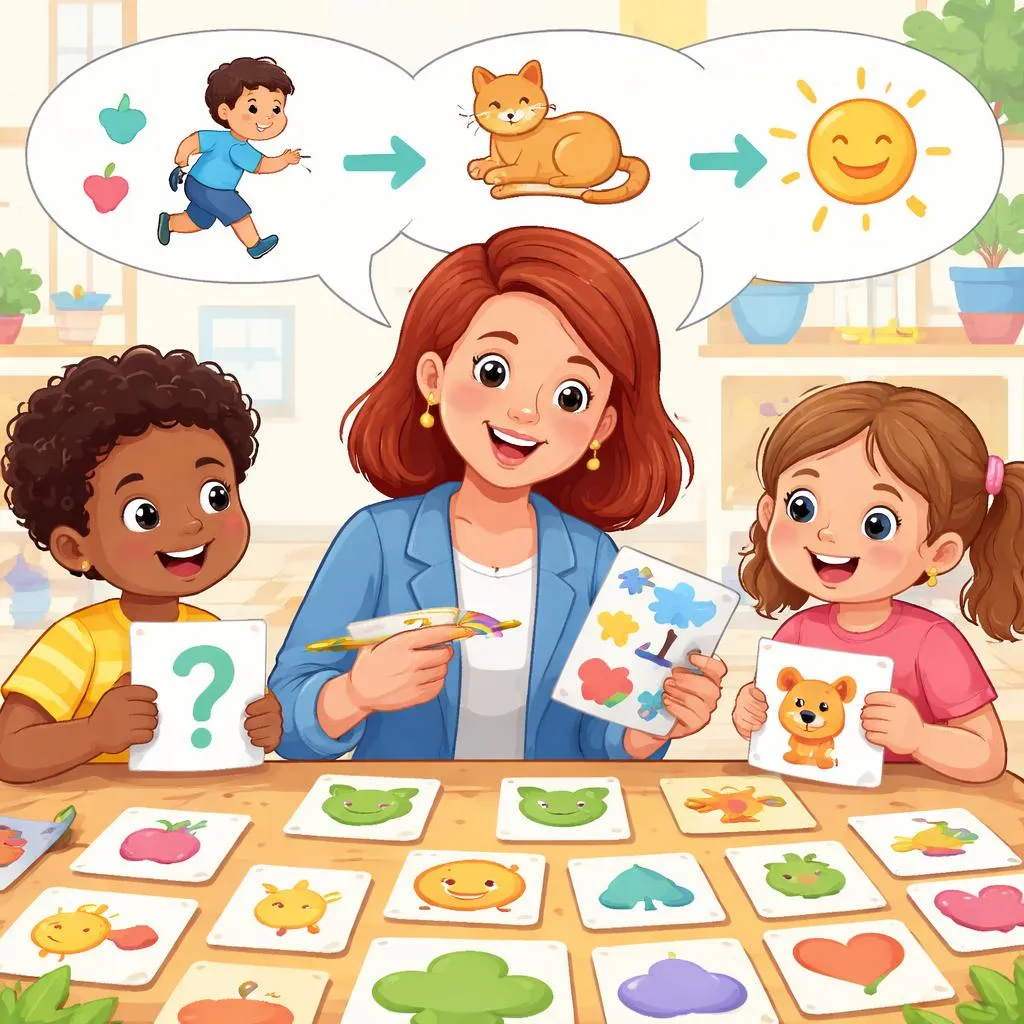
Using the 70 most common types of sentences for 6-year-old learners, you can create simple "Sentence Type Cards." Write example sentences on cards, each with its punctuation mark. Have your child sort them into piles based on type. Then practice saying each sentence with the appropriate feeling and intonation.
The "Punctuation Detective" game helps children connect sentence types with punctuation. Write sentences without punctuation and have your child add the correct ending mark. "Where is my shoe" needs a question mark. "I love pizza" could be a period or exclamation point depending on the feeling. Discuss why different punctuation might work in different situations.
Movement games also work well with sentence types. Call out a sentence type and have your child act out a sentence of that type. "Show me an exclamatory sentence." Your child jumps up and shouts "Hooray!" "Show me an interrogative sentence." Your child puts on a thinking face and asks "What's that?" This kinesthetic learning connects sentence types with physical expression.
The "Conversation Game" helps children practice using different sentence types in context. Give your child a simple situation and have them create one sentence of each type. "We are at the playground." Declarative: "The swings are fun." Interrogative: "Can I go down the slide?" Exclamatory: "This is the best playground ever!" Imperative: "Push me on the swing!" This game shows how all four types work together in real communication.
Storytelling games provide wonderful opportunities for sentence type practice. Start a story and pause to ask what type of sentence might come next. "The bear saw a cave. He wondered..." "Interrogative! What is inside?" "He peeked in and saw..." "Exclamatory! A huge pile of honey!" This back-and-forth storytelling builds narrative skills while practicing sentence types naturally.
Remember that understanding sentence types helps children become more flexible and effective communicators. Your child does not need to master all the terminology overnight. The goal is simply to become aware that sentences do different jobs and use different punctuation. Through your gentle guidance, through playful games, and through the natural flow of conversation, the 70 most common types of sentences for 6-year-old learners will become familiar and comfortable.
Your patience and encouragement make all the difference. When your child uses different sentence types appropriately, celebrate their growing language skills. When they mix them up, you can gently model the correct form. Language grows best in an atmosphere of love and acceptance, where exploring new ways of speaking feels safe and rewarding. With your support, your child will continue to build their understanding of how sentences work, gaining confidence and skill with each passing day.