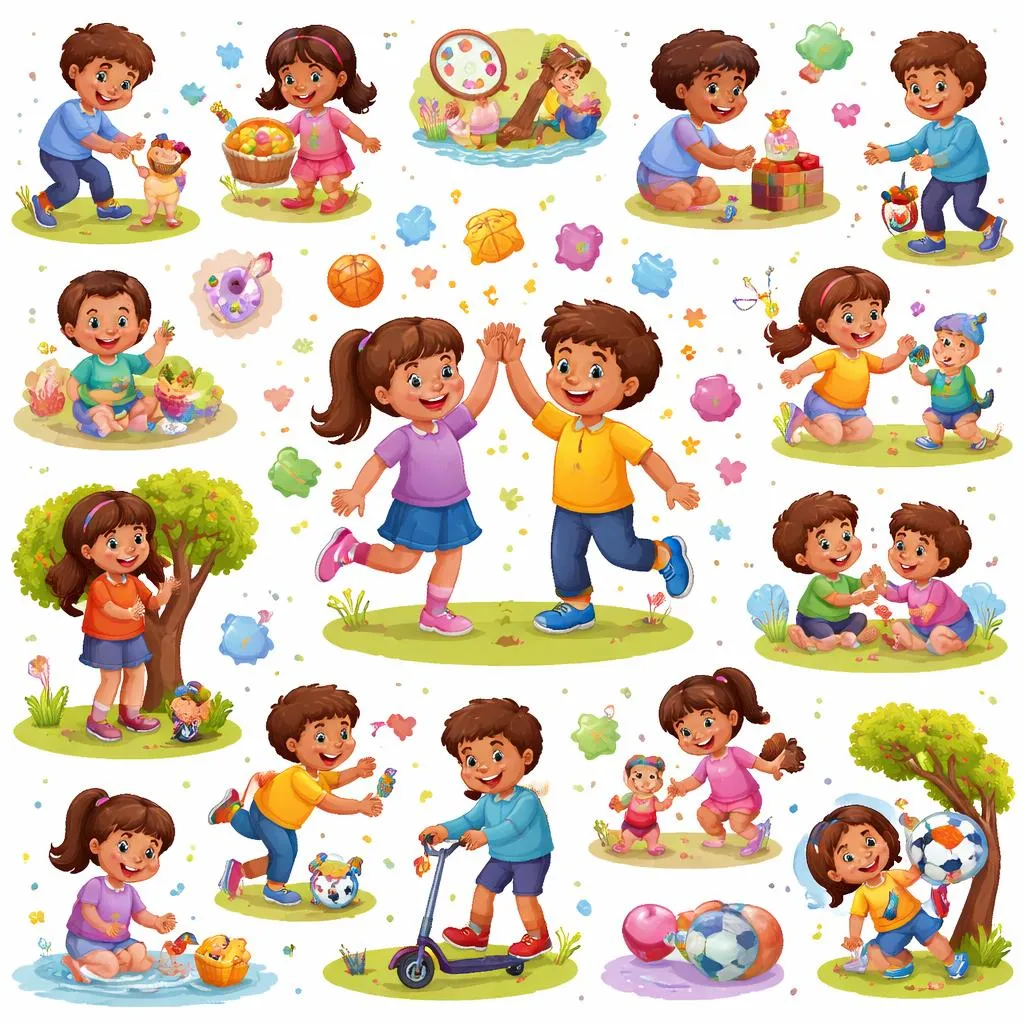

Verbs are action words. They tell us what people do, what happens, or what exists. Run, jump, eat, sleep, and think are all verbs. For a six-year-old, verbs bring sentences to life. Without verbs, we cannot say what is happening. Learning the 70 most common verbs for a 6-year-old gives children the tools to express actions, feelings, and states of being. These words help them tell stories, ask questions, and share what they know.
Meaning of Verbs
Verbs are the heart of every sentence. They show action or state of being. Every complete sentence needs a verb. If you want to know if a word is a verb, ask yourself: Can I do it? Can I run? Yes. Can I eat? Yes. Can I think? Yes. These are actions.
Some verbs show physical actions that we can see. Run, jump, eat, drink, build. These are easy for children to understand because they can do them and watch others do them.
Some verbs show mental actions that happen inside our heads. Think, know, believe, want, like. These are harder to see but just as important.
Some verbs show state of being. The most important one is be. I am happy. You are my friend. It is raining. These verbs do not show action. They show what something is like.
When we talk about the 70 most common verbs for a 6-year-old, we mean the action and state words that children use and encounter most often in their daily lives and in the books they read.
Conjugation of Verbs
Verbs change form depending on who is doing the action and when it happens. These changes are called conjugation. For young children, learning these patterns comes naturally through hearing and using the language.
Present tense shows actions happening now or habits.
I walk to school.
You walk to school.
He walk s to school.
She walk s to school.
It walk s.
We walk to school.
They walk to school.
Notice that we add -s for he, she, and it. This is an important pattern for children to learn.
Past tense shows actions that already happened.
I walked to school yesterday.
You walked to school.
He walked to school.
We walked to school.
They walked to school.
Most verbs add -ed for past tense. But many common verbs are irregular. They have special past forms.
go becomes went
eat becomes ate
see becomes saw
come becomes came
Children learn these irregular forms through practice.
Future tense shows actions that will happen.
I will walk to school tomorrow.
You will walk to school.
He will walk to school.
We will walk to school.
They will walk to school.
We use the helping verb will before the main verb to show future.
For a six-year-old, the most important thing is learning to use verbs correctly in the present and past tenses. They will use these every day.
Present Tense with Verbs
In the present tense, verbs tell us what happens now or what happens regularly. Children use present tense verbs constantly to talk about their lives.
Action verbs in present: "I play with my friends." "She runs fast." "We eat lunch at noon." "The dog barks at the mailman."
State verbs in present: "I like ice cream." "He wants a turn." "She knows the answer." "We need more crayons."
The verb be in present: "I am six years old." "You are my best friend." "He is funny." "We are at school." "They are playing outside."
Children also use the present continuous to talk about actions happening right now. This uses am, is, or are with the -ing form.
"I am eating lunch right now."
"She is sleeping in her bed."
"They are playing in the yard."
Here are some present tense examples you might hear from a six-year-old:
"I go to school every day."
"My mom makes the best cookies."
"We have a new puppy."
"The sun shines in the sky."
"I do my homework after snack."
Past Tense with Verbs
In the past tense, verbs tell us about things that already happened. Children use past tense to tell stories about their day and share memories.
Regular past tense: "I played with my friend yesterday." "She walked to the park." "We watched a movie." "They jumped on the trampoline."
Irregular past tense: "I went to Grandma's house." "She ate all her lunch." "We saw a deer in the woods." "He came to my party." "I had a good time."
The verb be in past: "I was tired last night." "You were so funny." "He was happy." "We were at the beach." "They were late for school."
Children often make cute mistakes with irregular verbs at first. They might say "I goed to the store" instead of "I went." This is normal and shows they are learning the -ed pattern. Gently model the correct form back to them. "Oh, you went to the store? That sounds fun."
Here are some past tense examples you might hear:
"I got a new bike for my birthday."
"We went to the zoo last weekend."
"She told me a secret."
"I made a picture for you."
"The baby cried all night."
Future Tense with Verbs
In the future tense, verbs tell us about things that will happen. Children use future tense to make plans and talk about what is coming.
With will: "I will go to the park tomorrow." "She will come to my party." "We will have pizza for dinner." "It will rain later."
With going to: "I am going to visit Grandma." "She is going to sleep soon." "We are going to build a fort." "They are going to play soccer."
With present continuous for future plans: Sometimes we use present continuous for planned future events. "I am going to the doctor tomorrow." "We are having a party on Saturday."
Here are some future tense examples you might hear:
"I will be six forever!"
"We are going to get a new pet."
" Will you play with me later?"
"I am not going to eat my broccoli."
"Tomorrow I will show you my new toy."
Questions with Verbs
Asking questions with verbs helps children get information and express their needs. Questions follow special patterns with helping verbs.
Yes/no questions with do: " Do you like pizza?" " Does he play soccer?" " Did you see that?" The helping verb comes first.
Yes/no questions with be: " Are you hungry?" " Is she your sister?" " Were they at school?" The verb be comes before the subject.
Yes/no questions with helping verbs: " Can I have a cookie?" " Will you help me?" " Have you seen my shoe?" The helping verb comes first.
Wh- questions: " What do you want?" " Where are you going?" " When will we eat?" " Why is she crying?" " How do you make pancakes?"
Here are some question examples children ask every day:
" Can I watch TV?"
" Do you love me?"
" Where did my toy go?"
" Why do I have to go to bed?"
" What are we having for dinner?"
Other Uses of Verbs
Verbs have many other uses in English. Learning these patterns helps children understand and use more complex language.
Modal verbs: These special verbs add meaning to main verbs. "I can jump high." "You must be careful." "We should share." " May I go outside?" These express ability, necessity, and permission.
Phrasal verbs: These are verbs combined with small words like up, down, in, out. "Please pick up your toys." "I fell down." "She came over." "Let's go out." These are very common in everyday speech.
Helping verbs: These work with main verbs to form different tenses. "I have eaten lunch." "She is singing." "They were playing." "We will come." Helping verbs include be, have, and do.
Imperative verbs: These give commands or directions. They use the base form of the verb. " Sit down." " Eat your dinner." " Look at me." " Come here." Children use and hear these every day.
Here are some examples:
"I have to go now."
" Let's go to the park."
"Please put away your toys."
"I want to play outside."
Learning Tips for Verbs
Helping your child learn verbs happens naturally through everyday conversations. You do not need special lessons. You just need to use these words and gently encourage your child to use them too.
Talk about actions: Throughout the day, name the actions you and your child are doing. "I am cutting the apple. You are waiting patiently. Now we are eating our snack."
Ask about the past: At the end of the day, ask your child what they did. "What did you do at school? What did you eat for lunch? Who did you play with?" This practices past tense naturally.
Make plans together: Talk about future actions. "What will we do tomorrow? Where will we go? What will we eat for dinner?" This practices future tense.
Read books together: Children's books are full of verbs. As you read, you can emphasize the action words. "The bear climbed the tree. The bird flew away. The rabbit hid in the bushes."
Play pretend: Pretend play is perfect for practicing verbs. "I am cooking soup. You are setting the table. The baby is sleeping." This puts verbs in a meaningful context.
Educational Games for Verbs
Games make learning verbs fun and memorable. Here are some games you can play with your child to practice these important action words.
The Action Game: Call out a verb and have your child act it out. " Jump! Spin! Hop! Sit! Laugh!" Then switch roles and let your child call out verbs for you to act out.
The Simon Says Game: Play Simon Says using verbs. "Simon says touch your nose. Simon says stomp your feet. Freeze!" This practices listening and action verbs together.
The Verb Charades Game: Take turns acting out a verb without speaking while the other person guesses. Act out eating, sleeping, running, swimming, reading. This is fun and builds vocabulary.
The What Did You Do? Game: Ask your child to tell you three things they did today. They must use past tense verbs. "I played with my friend. I ate a sandwich. I watched a show."
The Verb Chain Game: Start with a verb, then take turns adding a new verb that connects to the last one. " Wake up... get dressed... eat breakfast... go to school..." See how long you can make your chain.
The Opposites Game: Call out a verb and have your child say the opposite. " Come" opposite is " go." " Give" opposite is " take." " Open" opposite is " close." " Laugh" opposite is " cry."
The Story Time Verb Hunt: When you read stories together, have your child raise their hand every time they hear a verb. "The little bear woke up. He got out of bed. He walked downstairs." This builds listening skills and verb awareness.
By using these tips and games, you are helping your child master the 70 most common verbs for a 6-year-old in a natural and enjoyable way. These action words will become a comfortable part of their language. They will use them to tell stories, to ask questions, and to share what they know and feel. Every conversation gives them more practice. Your child will gain confidence as they learn to use verbs correctly in different tenses. The more they hear and use verbs, the more naturally these words will flow in their everyday speech. Soon they will be telling you long stories full of action, using past, present, and future verbs like little language experts.