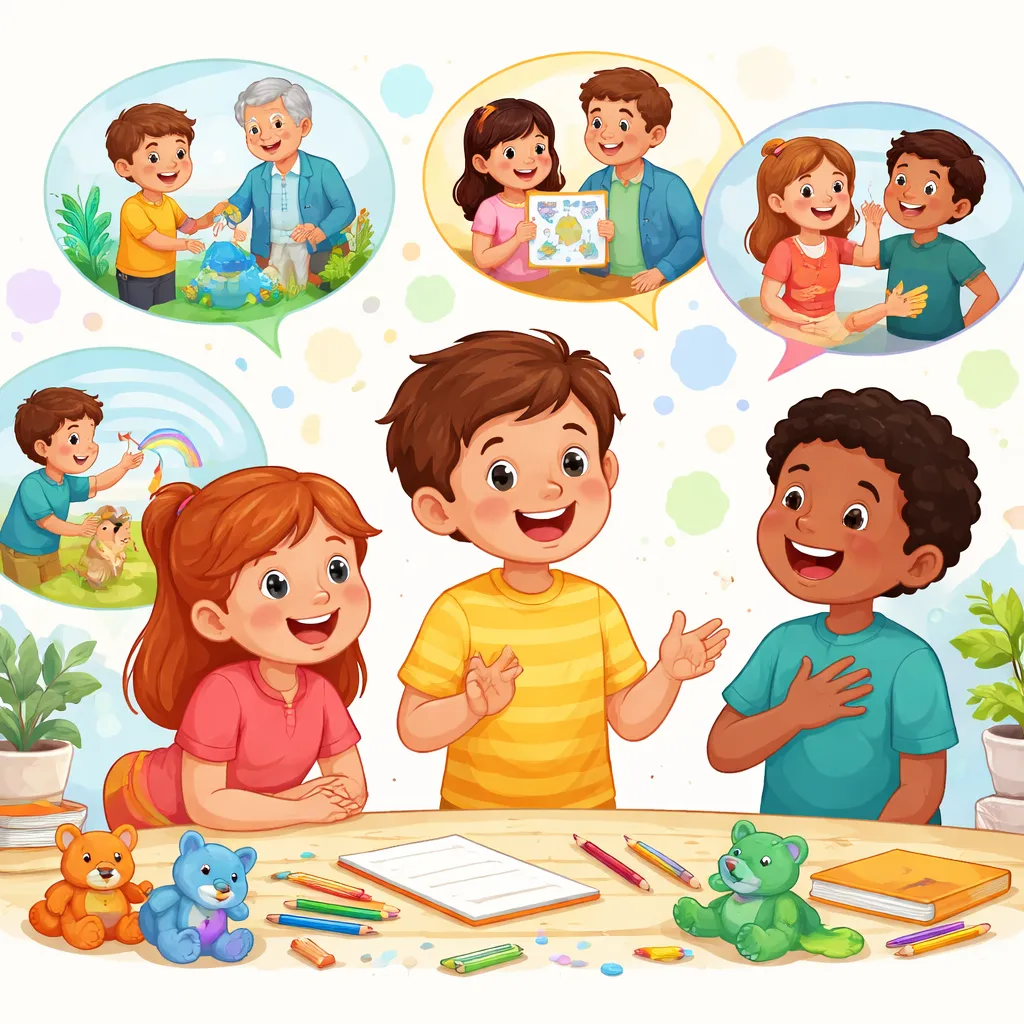

Every day we share facts. We tell stories. We express opinions. We describe our world. All of these use one special kind of sentence. The declarative sentence is the workhorse of language. It is how we say what is true, what we think, and what we know.
This guide explores the 90 essential declarative sentence for 8-year-old learners. We will look at what declarative sentences are, how they work, and why they matter. Together, you and your child can discover how to make clear statements about everything. Let us explore the sentences that tell the world what we know.
What Is a Declarative Sentence? The Sentence That Tells
A declarative sentence makes a statement. It declares something. It tells a fact, shares an opinion, or gives information. Declarative sentences end with a period.
"The sun rises in the east." That is a fact.
"I think pizza is delicious." That is an opinion.
"We are going to the park tomorrow." That is information.
Declarative sentences are the most common type of sentence. We use them all day long. When we answer questions, we use declarative sentences. When we tell stories, we use declarative sentences. When we explain things, we use declarative sentences.
For an 8-year-old, declarative sentences are how they share their world. "I have a pet dog." "My favorite color is blue." "I feel happy today." These sentences tell others who they are and what they think.
Meaning and Explanation: The Parts of a Declarative Sentence
Every declarative sentence has two main parts. The subject tells who or what the sentence is about. The predicate tells something about the subject.
In "My dog plays fetch," the subject is "my dog." The predicate is "plays fetch."
Declarative sentences can be short or long. They can be simple or complex. But they always do the same job. They state something.
Simple Declarative Sentences
These have one subject and one verb. They express one complete thought.
"The cat sleeps."
"I read books."
"We play outside."
Compound Declarative Sentences
These join two simple sentences with words like and, but, or so.
"I like dogs, but I am scared of snakes."
"She plays soccer, and he plays baseball."
"We wanted to go out, so we put on our jackets."
Complex Declarative Sentences
These have one main idea and one smaller idea joined by words like because, when, or if.
"I stayed inside because it was raining."
"When I grow up, I want to be a teacher."
"If we have time, we will go to the park."
The 90 essential declarative sentence for 8-year-old learners includes all these types. Children need to recognize and use each one.
Categories or Lists: 90 Essential Declarative Sentences
We have grouped these declarative sentences into categories. Each category covers a different part of a child's world. Practice a few from each group.
About Me - Personal Facts
My name is [child's name].
I am eight years old.
I have [number] people in my family.
My birthday is in [month].
I live in [city or town].
My hair is [color].
My eyes are [color].
I am [tall/short] for my age.
I go to [school name] school.
I am in third grade.
My teacher's name is [name].
I have a pet [type of pet].
My favorite color is [color].
My favorite food is [food].
I like to [hobby or activity].
About My Family
16. My mom's name is [name].
17. My dad's name is [name].
18. I have [number] brothers.
19. I have [number] sisters.
20. My brother is [number] years old.
21. My sister likes to [activity].
22. My grandma makes delicious cookies.
23. My grandpa tells funny stories.
24. We eat dinner together every night.
25. My family likes to go on vacation.
26. My mom works as a [job].
27. My dad helps me with homework.
28. We have a family movie night on Fridays.
29. My aunt lives in [place].
30. My cousins are my best friends.
About School
31. School starts at [time] in the morning.
32. We have [subject] class first.
33. Math is my favorite subject.
34. Reading is fun because I love stories.
35. My teacher is very kind.
36. We have recess after lunch.
37. The playground has a big slide.
38. I sit next to my friend in class.
39. We learn about science on Tuesdays.
40. Art class is on Thursdays.
41. I like to draw in my notebook.
42. The library has many books.
43. We have homework every night.
44. I pack my lunch in a blue lunch box.
45. The school bus picks me up at [time].
About Friends
46. My best friend's name is [name].
47. We like to play together after school.
48. She lives near my house.
49. He is very funny.
50. We share our snacks at lunch.
51. I met my friend in kindergarten.
52. We both like the same games.
53. My friend helps me when I am sad.
54. We have sleepovers on weekends.
55. She tells the best jokes.
56. We walk to the park together.
57. My friend is good at soccer.
58. We draw pictures together.
59. He always shares his toys.
60. I am lucky to have such a good friend.
About Things I Like
61. I love to eat pizza.
62. Ice cream is my favorite treat.
63. I enjoy playing video games.
64. Reading books is fun.
65. I like to watch cartoons.
66. My favorite movie is [movie title].
67. I love playing outside.
68. Building with LEGOs is the best.
69. I enjoy riding my bike.
70. Swimming is so much fun.
71. I like to sing in the shower.
72. Drawing makes me happy.
73. I love going to the beach.
74. Playing with my dog is great.
75. I enjoy learning new things.
About Feelings
76. I feel happy when I play with friends.
77. I feel sad when I lose my favorite toy.
78. I feel excited about my birthday.
79. I feel scared of the dark.
80. I feel proud when I do well in school.
81. I feel tired after a long day.
82. I feel hungry before dinner.
83. I feel loved when my family hugs me.
84. I feel nervous before a test.
85. I feel calm when I read a book.
86. I feel brave when I try new things.
87. I feel silly when I tell jokes.
88. I feel grateful for my family.
89. I feel curious about how things work.
90. I feel lucky to be me.
Daily Life Examples: Declarative Sentences in Action
Seeing these declarative sentences in real situations helps children understand how to use them. Here is how the 90 essential declarative sentence for 8-year-old learners come to life.
Morning Time
"The sun is shining through my window."
"I hear the birds singing outside."
"Breakfast is ready on the table."
"I am wearing my favorite blue shirt."
"The bus comes in fifteen minutes."
At School
"The teacher writes on the whiteboard."
"We are learning about dinosaurs today."
"Math problems can be tricky sometimes."
"The girl next to me has a new pencil case."
"Lunch is my favorite part of the day."
Recess Time
"The slide is very slippery."
"My friends are playing tag over there."
"I feel hot from all the running."
"The swings are all taken right now."
"We have five more minutes of recess."
Lunch Time
"Pizza is on the menu today."
"I have a juice box in my lunch."
"My sandwich has turkey and cheese."
"The cookies my mom packed are chocolate chip."
"I sit at the same table every day."
After School
"I am tired from a long day."
"My backpack is full of papers."
"I have homework in math and reading."
"The weather is perfect for playing outside."
"I can't wait to tell mom about my day."
Dinner Time
"Dinner smells delicious."
"Mom made my favorite meal."
"We all sit together at the table."
"I have to eat my vegetables first."
"Dessert is a special treat tonight."
Bedtime
"I am starting to feel sleepy."
"My pajamas are soft and warm."
"I want to read one more chapter."
"The stars are visible from my window."
"Tomorrow is another school day."
Weekend Mornings
"There is no school today."
"I can sleep a little longer."
"Dad is making pancakes for breakfast."
"The whole family is home together."
"We might go to the park later."
Playing with Friends
"My friend just arrived at the door."
"We are going to build a fort."
"She brought her new board game."
"We have been friends for a long time."
"Playing together is always fun."
Expressing Feelings
"I feel so happy right now."
"That movie made me feel scared."
"I am proud of my drawing."
"This is the best day ever."
"I love my family very much."
Printable Flashcards: Making Declarative Sentences Tangible
Flashcards help children see and practice declarative sentences. Create cards for learning games.
How to Make Them
Write each declarative sentence on a card. Group them by category. Personal facts on blue cards. Family facts on green cards. School facts on yellow cards. Friend facts on orange cards. Feelings on pink cards. This helps organize learning.
Subject and Predicate Match
Cut some cards between the subject and predicate. Mix them up. Have your child match the correct subjects with the correct predicates. "My dog" matches with "likes to play fetch." "The pizza" matches with "tastes delicious."
Fill in the Blank
Create cards with missing words. "My name is _______." "I am _______ years old." "My favorite color is _______." Have your child fill in their own information. This makes the sentences personal and meaningful.
Learning Activities or Games: Fun with Declarative Sentences
Games make grammar fun. Here are activities that reinforce the 90 essential declarative sentence for 8-year-old learners.
Declarative Sentence Hunt
Read a book together. Find all the declarative sentences. They end with periods and tell facts. Count how many you find on one page. This builds recognition skills.
Fact or Opinion Game
Some declarative sentences state facts. Some state opinions. Practice telling the difference. "The sky is blue" is a fact. "Blue is the best color" is an opinion. Sort sentences into fact and opinion piles.
Finish the Sentence
Start a sentence and let your child finish it with a declarative statement. "My favorite thing to do is..." "The best food in the world is..." "I feel happy when..." This builds sentence completion skills.
Truth Chain
Take turns adding true declarative sentences about yourselves. "I have a pet cat." "I like to swim." "I am afraid of spiders." See how many true sentences you can say about each other.
About Me Book
Create a small book using the "About Me" sentences. Each page has one declarative sentence and a drawing. "My name is Sam." Draw a picture of Sam. "I am eight years old." Draw eight candles. This creates a personal keepsake.
Sentence Swap
Take a declarative sentence and change one word to make a new sentence. "I have a pet dog." Change to "I have a pet cat." Change to "I have a pet fish." This builds vocabulary and sentence flexibility.
Draw the Sentence
Read a declarative sentence and ask your child to draw what it describes. "The big, fluffy dog sleeps on the soft rug." Draw the scene. This builds comprehension and creativity.
Declarative Bingo
Create bingo cards with categories. "A sentence about family." "A sentence about school." "A sentence about feelings." As you read sentences, players mark the category. First to get five in a row wins.
Story Building
Build a story using only declarative sentences. Each person adds one sentence. "Once upon a time, there was a little dragon." "The dragon lived in a cave near the mountains." "He had shiny green scales." See what story you can create.
Sentence Scavenger Hunt
Go around the house and find things. Make declarative sentences about each thing. "The lamp is on the table." "The clock says three o'clock." "The couch is soft." This builds real-world connection.
Feelings Check-In
Use declarative sentences during daily feelings check-ins. "I feel tired today." "I am excited about the party." "I feel nervous about my test." This builds emotional vocabulary.
True or False Game
Say a declarative sentence. Ask your child if it is true or false. "The sky is green." False. "Dogs can bark." True. Make some silly false sentences for fun.
Sentence Expansion
Start with a very simple declarative sentence. Take turns adding words to make it longer. "The dog runs." "The brown dog runs." "The brown dog runs fast." "The brown dog runs fast in the park." Watch the sentence grow.
Memory Game with Sentences
Write several declarative sentences on cards. Place them face down. Take turns flipping two cards. When you find two sentences about the same topic, keep the pair. This builds memory and categorization.
These activities help the 90 essential declarative sentence for 8-year-old learners become natural and automatic. Your child will use declarative sentences confidently in speaking and writing. They will share facts, express opinions, and tell stories with ease.
Declarative sentences are how we share our world. They are how we say what we know and what we think. By mastering these 90 essential declarative sentences, your child gains the power to communicate clearly about everything that matters to them. Their family, their friends, their school, their feelings. Every fact becomes a sentence. Every thought becomes a statement. Keep practice playful and positive. Celebrate every sentence they create. And watch as their ability to share their world grows stronger every day.