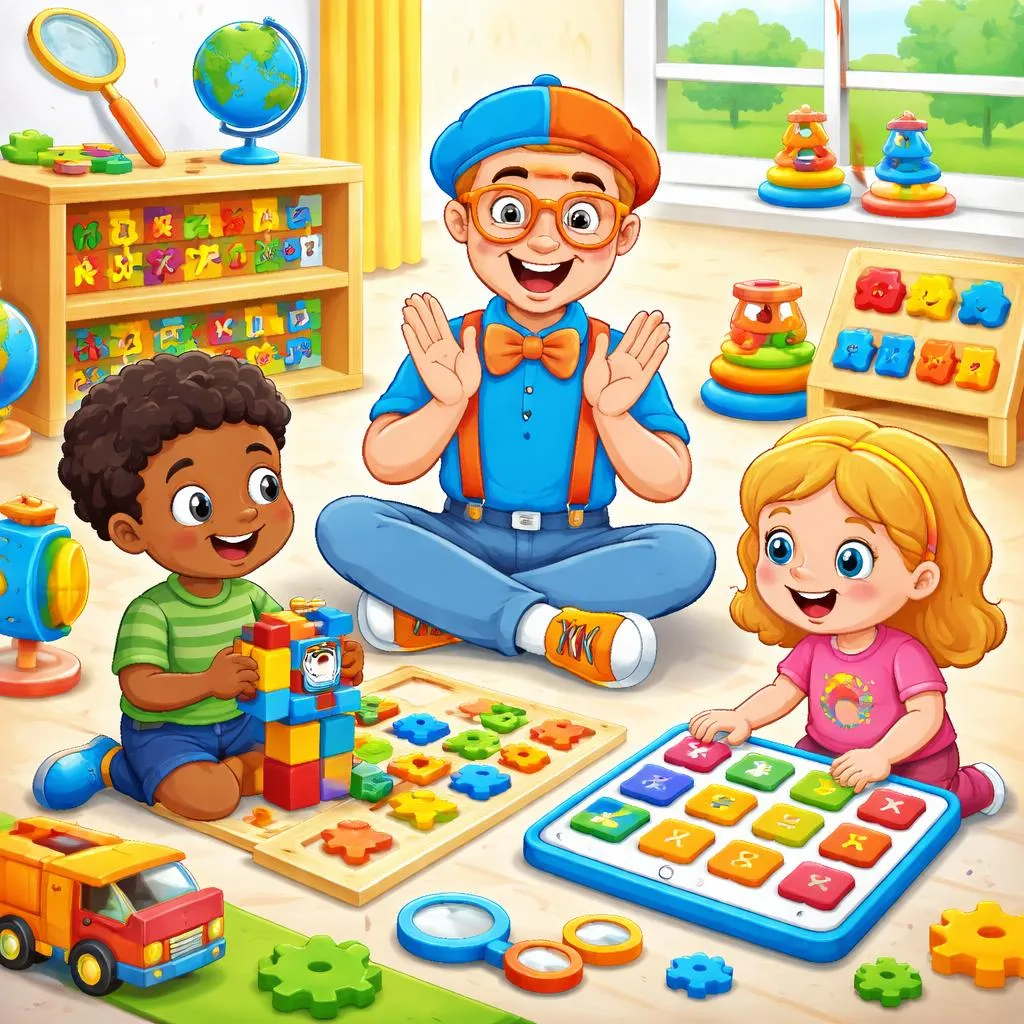

Many young children recognize Blippi immediately. His bright orange suspenders and blue hat are iconic. His energetic videos teach children about everything from tractors to zoo animals. Today, we are going to explore how Blippi games can extend this learning beyond video watching. We will look at different types of games, what skills they build, and how to use them effectively in educational settings.
What Are Blippi Games? Blippi games are interactive digital experiences featuring the popular children's entertainer. They build on the themes from his videos. Children can explore, solve problems, and learn new concepts while playing with a familiar character.
These games come in different formats. Some are mobile apps for tablets and phones. Some are available on websites through computers. Some are video-based interactive experiences. All of them aim to make learning feel like play.
The games typically focus on preschool learning goals. Colors, shapes, numbers, letters, and vocabulary appear throughout. Children also practice problem-solving and following directions. The familiar Blippi character guides them through each activity.
Categories of Blippi Games Blippi games cover several different learning areas. Understanding these categories helps us choose the right game for each child.
Exploration Games: These games let children explore virtual environments. They might visit a farm, a museum, or a playground with Blippi. Clicking on objects reveals their names and sounds. This builds vocabulary through discovery.
Puzzle Games: These games challenge children to solve problems. They might match shapes, complete patterns, or put things in order. The puzzles become more difficult as children improve. This builds logical thinking skills.
Coloring and Creativity Games: These games focus on artistic expression. Children color pictures of Blippi and his friends. They might design vehicles or create scenes. This builds fine motor skills and creativity.
Memory Games: These games strengthen recall abilities. Children match cards with Blippi characters or objects. They remember where things are hidden. This builds working memory and concentration.
Counting and Number Games: These games introduce early math concepts. Children count objects with Blippi. They learn number recognition and simple addition. This builds foundational math skills.
Vocabulary Learning Through Blippi Games One of the main benefits of Blippi games is vocabulary development. The games introduce words in context, which helps children understand and remember them.
When children play an exploration game at a farm, they click on animals. The game says "cow" and makes a mooing sound. Children hear the word, see the picture, and hear the associated sound. This multi-sensory approach strengthens learning.
When they play a game about vehicles, they see different trucks. The game labels each one. "Excavator. Dump truck. Bulldozer." Children learn specific vocabulary they might not encounter in daily life.
The games repeat words in different contexts. This repetition helps move words from short-term to long-term memory. Children hear the word, use it in the game, and hear it again later.
Skills Developed Through Game Play Beyond vocabulary, Blippi games build many important skills. Understanding these benefits helps us appreciate their educational value.
Fine Motor Skills: Tapping, dragging, and swiping on screens develop small muscle control. These are the same muscles children need for writing later. The games provide fun practice for these important movements.
Listening and Following Directions: Each game gives instructions. Children must listen carefully and follow them to succeed. This builds attention and comprehension skills that transfer to classroom settings.
Problem-Solving Abilities: Many games present challenges. Children must figure out how to complete a puzzle or find a hidden object. They learn to try different approaches when one does not work.
Cause and Effect Understanding: Children quickly learn that their actions cause reactions in the game. Tapping here makes something happen. This builds understanding of how their choices affect outcomes.
Sustained Attention: Engaging games hold children's attention longer than many other activities. This builds the ability to focus on a task over time, an important skill for school readiness.
Learning Activities with Blippi Games Games are most effective when we use them thoughtfully. Here are some ways to maximize learning with Blippi games.
Guided Play Sessions: Play alongside children rather than leaving them alone. Ask questions about what they see. "What color is that truck? How many ducks do you see?" This turns screen time into interactive learning time.
Vocabulary Reinforcement: After playing a game, reinforce the words outside the game. If the game was about farm animals, look for farm animal books. Talk about animals during other parts of the day. Connect the game vocabulary to real life.
Physical Extensions: Use game themes for physical play. If children played a game about construction vehicles, set up a building activity with blocks. If they played a color game, do a color scavenger hunt around the room.
Story Connections: Watch Blippi videos that connect to the games. If the game is about the zoo, watch a Blippi zoo video first. This builds background knowledge before playing. The video and game reinforce each other.
Printable Materials for Blippi Games Printable materials can extend the learning beyond the screen. Here are some resources to create.
Blippi Coloring Pages: Find or create simple coloring pages featuring Blippi. Children can color while talking about their favorite games. This connects digital play to offline creativity.
Blippi Bingo: Create bingo cards with pictures from the games. As children play, they mark off items they see. This gives them a focus during game play and builds observation skills.
Blippi Memory Cards: Create pairs of cards with characters and objects from the games. Children play memory match offline, reinforcing the vocabulary from digital play.
Blippi Scavenger Hunt: Create a list of things for children to find in their environment that relate to the games. "Find something red like Blippi's hat. Find something round like a wheel." This connects game concepts to the real world.
Educational Games vs. Entertainment Not all Blippi games are created equal. Some focus more on education, while others emphasize entertainment. Understanding the difference helps us make good choices.
Educational games have clear learning goals. They teach specific concepts like colors, numbers, or letters. They provide feedback that helps children learn. They adjust difficulty based on performance.
Entertainment-focused games emphasize fun over learning. They may have lots of sounds and animations but little educational content. They keep children engaged but may not build skills.
The best Blippi games balance both. They are fun enough to hold attention but structured enough to teach. Looking at app descriptions and reviews helps identify which games offer real learning value.
Screen Time Considerations Using Blippi games requires thoughtful screen time management. Games are engaging, and children may want to play for long periods. We need to set healthy boundaries.
We can set time limits before play begins. "We will play two games, and then we will turn it off." Using a timer helps children know when play will end. This prevents arguments when it is time to stop.
We can alternate screen play with physical play. After playing a game about movement, we can do a physical activity. After a quiet puzzle game, we can do a quiet offline activity like reading.
We can use games as rewards or special activities rather than constant entertainment. This maintains their special appeal and prevents overuse.
Talking About Game Play Discussion after game play deepens learning. We can ask children questions about their experience.
"What was your favorite game today? What did you learn? What was tricky?" These questions encourage children to reflect on their play. They practice describing experiences and expressing opinions.
We can also ask children to teach us about the game. "Can you show me how to play? What do I need to do?" Teaching others requires children to organize their thinking and use language to explain.
These conversations turn passive game play into active learning experiences. Children process what they learned and practice communication skills.
Combining Games with Real Experiences The most powerful learning happens when we connect digital experiences to real life. Blippi games can spark interests that lead to real-world exploration.
If children love Blippi farm games, we can visit a real farm. They will recognize animals from the game. They can connect the digital experience to real sights, sounds, and smells.
If they enjoy vehicle games, we can watch real trucks work. We can visit a construction site from a safe distance. We can read books about different vehicles.
If they like color games, we can do real color mixing with paint. We can sort objects by color. We can go on color walks and find things in the environment.
These real experiences make the game learning concrete and meaningful. Children understand that what they learn in games connects to the real world.
As we explore Blippi games with young learners, we see their potential as educational tools. They build vocabulary, develop skills, and engage children with a beloved character. Used thoughtfully, with limits and conversation, they become valuable additions to our learning toolkit. They are not replacements for real experiences, but they can spark curiosity and build foundations for deeper learning.