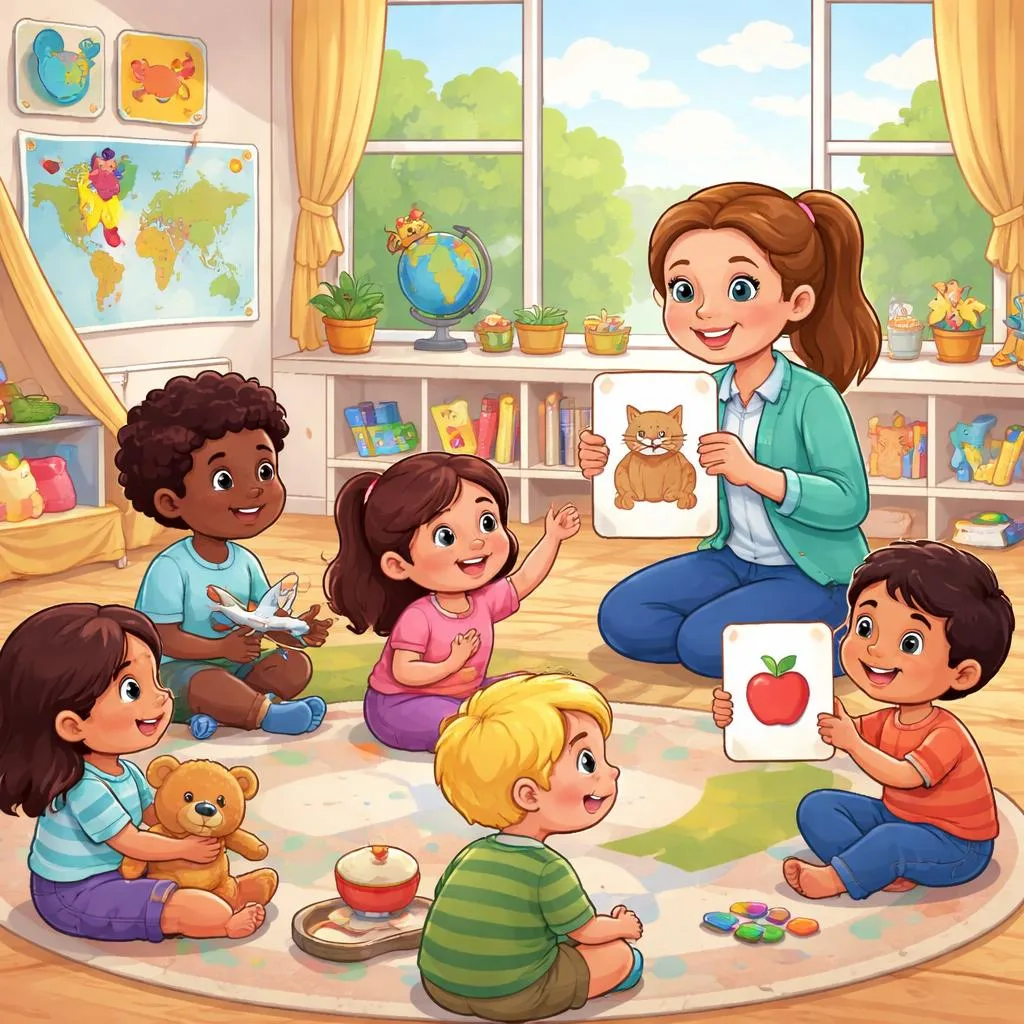

Teaching children about the world around them begins with understanding places. Places are where things happen. They are where people live, work, learn, and play. Today, we are going to explore different examples of a place that young English learners need to know. We will look at how to introduce these words and connect them to children's daily experiences.
What Is a Place? Let us start with the basic concept. A place is a specific point or area in space. It is somewhere we can go. It has a name or a purpose. Places can be big like a country or small like a closet. They can be indoors like a classroom or outdoors like a park.
When we teach about places, we are building a foundation for many language skills. Children learn to describe where things are. They learn to give directions. They learn to talk about where they go and what they do there. Place words appear in stories, conversations, and instructions every day.
Understanding places also helps children navigate their world. They learn where to find things they need. They learn how to describe where they want to go. This knowledge builds independence and confidence.
Meaning and Explanation of Places How do we explain places to young children? We start with what they know. Their bedroom is a place. Their classroom is a place. The kitchen where they eat breakfast is a place. These are familiar spaces they visit every day.
We can explain that every place has a purpose. The kitchen is for cooking and eating. The bedroom is for sleeping. The playground is for playing. The store is for buying things. When children understand the purpose, they understand why the place exists.
Places also have features that make them special. A kitchen has a stove and a refrigerator. A bedroom has a bed and a closet. A park has swings and slides. These features help children identify and remember different places.
Categories or Lists of Places To make learning organized, we can group places into categories. This helps children build a mental map of their world.
Home Places: These are rooms and areas inside a house. Bedroom, kitchen, bathroom, living room, dining room, garage, basement, and backyard are common examples. Children spend much of their time in these places.
School Places: These are areas in a school building. Classroom, library, cafeteria, playground, gymnasium, music room, art room, and principal's office belong here. Children learn these places quickly through daily use.
Community Places: These are places in the neighborhood where people go for services. Hospital, fire station, police station, post office, bank, grocery store, pharmacy, and library are essential community places.
Fun Places: These are places for entertainment and recreation. Park, playground, movie theater, restaurant, museum, zoo, aquarium, beach, and swimming pool fit in this category.
Transportation Places: These help people move from one place to another. Bus stop, train station, airport, subway station, and parking lot are important for travel vocabulary.
Nature Places: These are outdoor spaces in the natural world. Forest, mountain, river, lake, ocean, desert, and field help children understand the wider world.
Daily Life Examples of Places The best way to learn about places is to connect them to daily life. Throughout the day, children visit many places. We can name them as we go.
In the morning, we are in the bedroom waking up. Then we go to the bathroom to brush teeth. We eat breakfast in the kitchen. We put on shoes in the entryway. We walk to the bus stop to wait for the school bus.
At school, we go to the classroom for lessons. We visit the library for story time. We eat lunch in the cafeteria. We run and play on the playground. We go to the gym for music class.
After school, we might go to the grocery store with a parent. We might visit the park to play. We might go to a restaurant for dinner. We might stop at the pharmacy to pick up medicine.
Each of these moments is a chance to name the place and talk about what happens there. "We are at the grocery store. What do we buy here? Food!" This builds vocabulary in natural, meaningful contexts.
Printable Flashcards for Places Flashcards are excellent for teaching place vocabulary. Each card should show a clear picture of a place and the word for that place.
For home places, we show a picture of a bedroom with a bed. For school places, we show a classroom with desks and chairs. For community places, we show a hospital with an ambulance outside. For fun places, we show a park with children on swings.
We can use these cards in many ways. Hold up a card and ask, "What place is this?" Ask children to describe what people do there. "What do we do at the library? We read books." Ask children to find the card for a place you describe. "Show me where we go when we are sick."
Learning Activities or Games for Places Games make learning about places active and engaging. Here are some activities that work well in the classroom.
Place Scavenger Hunt: Hide pictures of different places around the room. Give children a list of places to find. When they find a picture, they name the place and say one thing people do there. This combines movement with vocabulary practice.
Where Am I? Game: Describe a place without naming it. "I am a place with many books. People come here to read and borrow books. People are quiet here. Where am I?" Children guess the library. This builds listening and inference skills.
Place Sorting: Create cards with pictures of different places. Also create cards with activities. "Sleeping" goes with bedroom. "Cooking" goes with kitchen. "Checking out books" goes with library. Children match the activity to the correct place.
Build a Town: Use blocks or boxes to create a model town. Include different places like houses, a school, a hospital, a fire station, a park, and a store. Children name each place as they add it. They can move toy people between places and describe where they are going.
Place Bingo: Create bingo cards with pictures of different places. Call out descriptions of what happens there. "This is where we go to see a movie." Children cover the matching picture. The first to cover a row wins.
Places in Stories Stories are wonderful for teaching about places. Many children's books take place in specific locations. As we read, we can point out the places and talk about them.
In a story about a trip to the farm, we see the barn, the field, and the pond. In a story about a city, we see the skyscrapers, the subway, and the park. In a story about the beach, we see the sand, the ocean, and the boardwalk.
After reading, we can ask questions about the places. "Where did the character go first? What was that place like? What did they do there?" This builds comprehension and connects places to narrative.
We can also create our own class stories about visiting different places. Children decide where to go and what happens there. This builds creativity and language skills together.
Prepositions with Places When we teach places, we also need to teach how to talk about location. Prepositions like in, on, at, under, behind, next to, and between help describe where things are in relation to places.
We can practice with simple sentences. "The book is in the library." "The swing is at the park." "The car is in the parking lot." "The cat is behind the house."
Using a model town or classroom objects, we can practice these prepositions. "Put the toy person next to the school." "Put the car in front of the fire station." This combines place vocabulary with grammar practice.
Places in the Community Community places deserve special attention because children encounter them regularly. We can take a walk in the neighborhood and point out the places we see. The post office, the bank, the grocery store, the fire station all become real through direct experience.
If a real walk is not possible, we can use pictures or videos of a typical downtown. We can talk about what happens in each place. "At the post office, people buy stamps and mail packages. At the bank, people save money. At the grocery store, people buy food."
We can invite community helpers to visit the classroom. A firefighter can talk about the fire station. A librarian can talk about the library. These real connections make the vocabulary come alive.
Comparing Places As children learn more place vocabulary, we can begin comparing places. How is a house different from an apartment? How is a city different from a farm? How is a school different from a library?
We can use Venn diagrams to compare two places. What is the same? Both have people. Both have rooms. What is different? A farm has animals. A city has tall buildings. This builds critical thinking along with vocabulary.
We can also talk about favorite places. "What is your favorite place? Why do you like it?" Children share about their bedroom, their grandparent's house, the park, or the beach. This personal connection makes the learning meaningful.
Creating Place Books A wonderful project is creating class books about places. Each child chooses a place they know well. They draw a picture and dictate or write sentences about that place.
For the kitchen page, a child might draw their kitchen and say, "In my kitchen, my mom cooks dinner. We eat breakfast at the table. The refrigerator has magnets on it."
For the park page, another child might draw and say, "At the park, I go on the swings. My brother plays in the sand. We have picnics on the grass."
These books become class treasures. Children read them again and again, reinforcing place vocabulary while learning about each other's lives.
As we explore different examples of a place with young learners, we help them understand the world they inhabit. Places become more than just locations. They become settings for activities, memories, and relationships. Through games, stories, and real experiences, children build a rich vocabulary of place words that will serve them throughout their lives. They learn to describe where they are, where they are going, and where they have been with confidence and clarity.