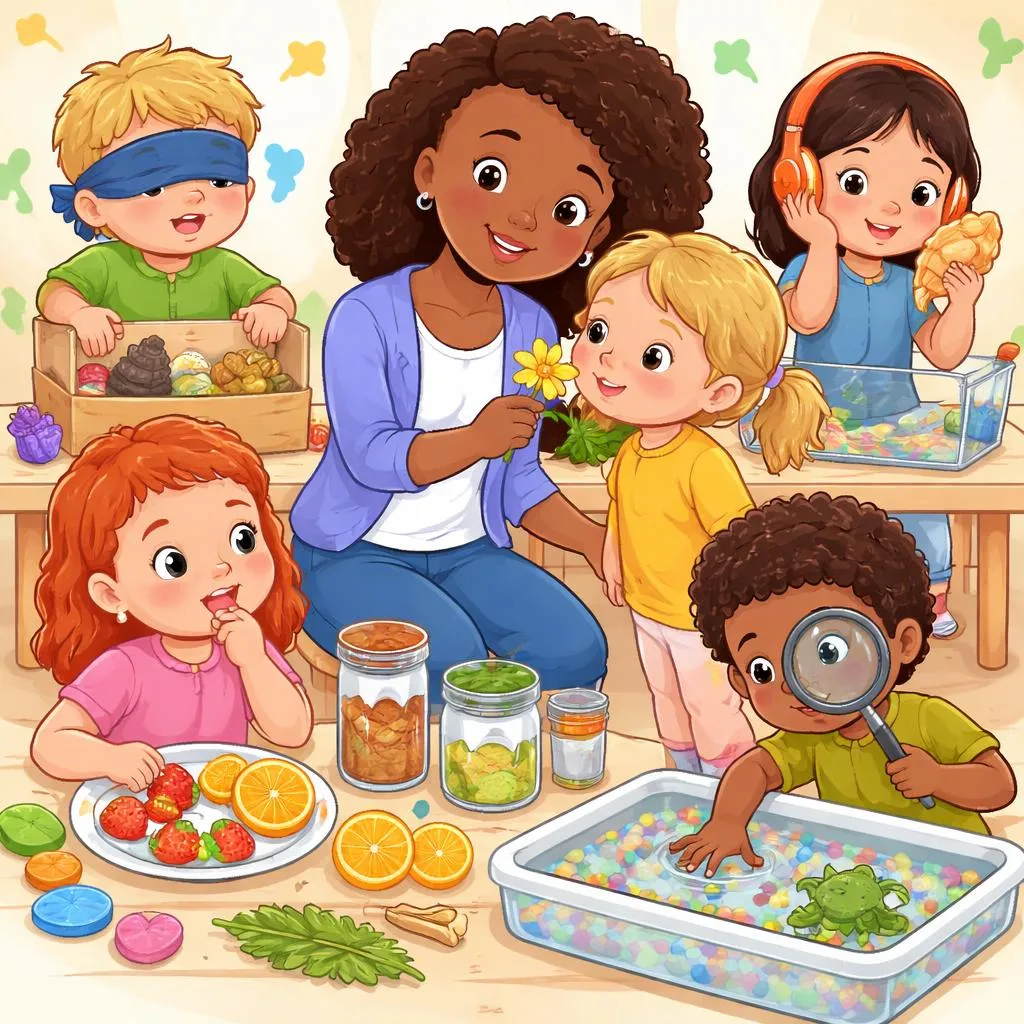

Young children explore the world through their bodies. They touch everything. They put things in their mouths. They listen to every sound. This natural curiosity makes the five senses a perfect topic for preschool learning. By planning intentional five senses activities preschool teachers can channel this exploration into meaningful discovery. Children learn to notice details. They build vocabulary. They make connections between their bodies and the world. The senses provide a foundation for science, language, and self-awareness. Let us explore how to create engaging sensory experiences in the preschool classroom.
What Are the Five Senses for Preschoolers? The five senses are how we experience the world. Each sense uses a specific body part. Teaching this connection helps children understand themselves better.
Sight uses the eyes. We see colors, shapes, sizes, and movements. Children notice the bright sun, the red apple, the round ball.
Hearing uses the ears. We hear sounds that are loud or soft, high or low. Children hear the birds singing, the doorbell ringing, a friend laughing.
Smell uses the nose. We detect scents that are pleasant or unpleasant. Children smell the flowers, the cookies baking, the soap in the bathroom.
Taste uses the tongue. We experience flavors like sweet, sour, salty, and bitter. Children taste the sweet strawberry, the sour lemon, the salty pretzel.
Touch uses the skin. We feel textures that are soft, rough, smooth, or sticky. Children feel the fuzzy blanket, the bumpy rock, the cold ice.
For preschoolers, these concepts need to be concrete. Use simple language. Point to the body part. Name the sense. Connect it to real experiences throughout the day.
Meaning and Explanation of Sensory Learning Sensory learning means using the senses to gain information. When children touch, taste, smell, see, and hear, their brains create strong connections. This is how young children learn best.
The preschool years are a time of rapid brain development. Sensory experiences build neural pathways. Each time a child feels a new texture, the brain grows. Each new smell creates a memory. This is why hands-on learning matters so much.
Sensory learning also builds language. When children experience something, they want to talk about it. The sand feels rough. The ice cream tastes sweet. The music sounds loud. These experiences give children something to say. Vocabulary grows naturally through real encounters.
The classroom becomes a laboratory for sensory discovery. Every activity can engage one or more senses. Teachers plan experiences that highlight each sense in turn. This focused approach helps children notice and name what they are experiencing.
Categories of the Five Senses Organizing the senses into categories helps with lesson planning. Each category offers unique opportunities for exploration.
Sight Activities: These focus on visual discrimination. Children notice similarities and differences. They match colors. They find hidden objects. They observe changes in the world around them.
Hearing Activities: These develop auditory awareness. Children identify sounds. They follow rhythm. They discriminate between loud and soft, high and low. They learn to listen carefully.
Smell Activities: These sharpen olfactory senses. Children identify familiar scents. They learn to describe smells. They connect smells to memories and experiences.
Taste Activities: These explore flavor. Children experience the basic tastes. They learn to describe what they eat. They discover preferences and make comparisons.
Touch Activities: These build tactile awareness. Children feel different textures. They describe how things feel. They learn to identify objects by touch alone.
Many activities naturally combine multiple senses. A cooking activity involves sight, smell, taste, and touch. A music activity involves hearing and sometimes sight and touch. This integration mirrors real life, where senses work together.
Daily Life Examples for Each Sense The best sensory learning happens in everyday moments. Pointing out these moments helps children notice the senses at work.
Morning Arrival: Children hang up their coats. Feel the soft fabric. Feel the smooth hook. Hear the classroom door open. See friends arriving. Smell the breakfast cooking in the cafeteria.
Snack Time: Look at the colors of the food. Smell the apple before biting. Taste the sweet juice. Hear the crunch. Feel the smooth peel. A simple snack becomes a sensory feast.
Outdoor Play: Feel the warm sun on skin. See the blue sky and green grass. Hear the birds and the traffic. Smell the flowers or the fresh air. Touch the rough bark of a tree.
Art Time: Feel the cool, wet paint. See the bright colors mixing. Smell the glue and markers. Hear the sound of scissors cutting paper. Art engages multiple senses naturally.
Clean-Up Time: Hear the blocks clatter into the bin. See the toys going into their places. Feel the weight of the books as we stack them. Everyday routines offer sensory learning too.
Use these moments as teaching opportunities. Name the sense being used. Ask questions about what children notice. This builds awareness and vocabulary.
Printable Flashcards for the Five Senses Flashcards provide visual support for sensory learning. They help children connect the sense to the body part and to examples.
Body Part Cards: Create cards showing an eye, an ear, a nose, a mouth, and a hand. These represent each sense clearly. Use real photos if possible. Children need to recognize these body parts.
Sense Word Cards: Create cards with the words sight, hearing, smell, taste, and touch. Add a simple icon for each. These support early reading development.
Example Cards: Create cards showing things we experience with each sense. A rainbow for sight. A bell for hearing. A flower for smell. A cookie for taste. A blanket for touch.
Matching Games: Use two sets of cards. One set has the body parts. One set has the examples. Children match the eye to the rainbow. Match the ear to the bell. This builds understanding of the sense connections.
Laminate the cards for durability. Keep them in a basket for independent exploration. Use them during circle time to introduce or review the senses.
Learning Activities for Each Sense Here are specific activities designed to highlight each sense. These five senses activities preschool teachers can rotate throughout a unit or use as learning centers.
Sight Activities:
Create a color hunt. Give each child a small square of colored paper. They search the classroom for items that match their color. This focuses attention on visual details.
Make a light and shadow play area. Use a flashlight and objects. Children notice how light passes through some things and is blocked by others. They see shadows change size and shape.
Provide magnifying glasses. Children examine leaves, fabrics, or their own skin up close. They notice details invisible to the naked eye.
Hearing Activities:
Fill small containers with different items. Use rice, bells, sand, or beads. Seal them tightly. Children shake them and guess what is inside. They listen for differences in sound.
Play a listening walk. Go outside or around the classroom. Stop and close eyes. What sounds can we hear? Make a list together afterward.
Use rhythm instruments. Children follow a beat. They make loud and soft sounds. They play fast and slow. This builds auditory discrimination.
Smell Activities:
Create scent jars. Use small opaque containers with holes in the lid. Place cotton balls with different scents inside. Use vanilla, lemon, coffee, peppermint. Children smell and guess. Always use safe, non-toxic scents.
Cook or bake in the classroom. The smell of bread or muffins fills the air. Talk about the smell. Ask children to describe it. Connect the smell to the food we will eat.
Smell walk in the garden. Smell flowers, herbs, and soil. Talk about which smells are pleasant and which are not.
Taste Activities:
Host a taste test party. Provide small samples of foods representing different tastes. Sweet grapes, salty pretzels, sour lemon, bitter dark chocolate. Talk about each taste. Chart preferences.
Make lemonade together. Children squeeze lemons. They taste the sour juice. They add sugar and taste again. They see how mixing changes flavor.
Taste and describe snack foods. Use words like sweet, salty, crunchy, soft. Build vocabulary while eating.
Touch Activities:
Create a feely box. Cut a hole in a shoebox. Place an object inside. Children reach in and feel without looking. They describe what they feel and guess the object.
Make texture collages. Provide materials with different textures. Sandpaper, cotton balls, foil, fabric scraps. Children glue them onto paper. They feel the differences as they work.
Play with sensory bins. Fill a bin with rice, beans, sand, or water. Add scoops and containers. Children pour, scoop, and feel. This open-ended play builds tactile awareness.
Educational Games for Sensory Learning Games add excitement to sensory exploration. Here are games that engage the senses.
Sense Charades: Act out using a sense without speaking. Cup a hand behind an ear for hearing. Point to eyes for sight. Sniff the air for smell. Children guess which sense is being shown.
Mystery Sounds: Play recorded sounds. A dog barking, rain falling, a door closing. Children guess what they hear. This builds listening skills and sound identification.
What's Missing: Place several objects on a tray. Children look carefully. Cover the tray and remove one object. Uncover and ask what is missing. This sharpens visual memory.
Feely Guessing Game: Place objects in a bag. Children reach in, feel one object, and describe it. Others guess what it is based on the description. This builds descriptive language.
Scent Memory Game: Use the scent jars from earlier. Let children smell each one. Later, see if they can identify the scents again. This builds olfactory memory.
Taste Test Challenge: Blindfold willing children. Give them small tastes of familiar foods. Can they guess what they are eating? This focuses attention on flavor alone.
Integrating Senses Across the Curriculum The five senses connect to every subject area. Use them throughout the day, not just during science time.
Literacy: Read books that highlight senses. "Brown Bear, Brown Bear, What Do You See?" focuses on sight. "Polar Bear, Polar Bear, What Do You Hear?" focuses on hearing. After reading, children can create their own sense books.
Math: Sort objects by texture or color. Count how many things feel rough. Graph favorite tastes. Measure ingredients for cooking. Math becomes concrete through sensory experiences.
Art: Explore color mixing with sight. Create textured paintings with sand or salt added to paint. Use scented markers or paint. Art naturally engages multiple senses.
Music: Sing songs about the body. Use instruments to explore sound. Move to music, feeling the rhythm in our bodies. Music class is sensory learning.
Movement: Play games that involve senses. Blindfolded guiding games build trust and listening. Freeze dance builds listening and body awareness. Movement and senses work together.
Creating a Sensory-Rich Classroom The classroom environment itself can support sensory learning. Small changes make a big difference.
Visual: Display colorful artwork at children's eye level. Change displays regularly. Use natural light when possible. Add plants for visual interest.
Auditory: Notice the sound level in the room. Use a quiet voice. Play soft music during quiet times. Reduce echoing with soft furnishings.
Tactile: Provide a variety of textures in the environment. Soft pillows, smooth tables, bumpy rugs. Let children sit on different surfaces throughout the day.
Olfactory: Be aware of classroom smells. Open windows for fresh air. Avoid strong artificial scents. Cook occasionally to fill the room with pleasant food smells.
Taste: Offer snacks with variety. Talk about flavors during meals. Let children help prepare food when possible.
The five senses are gifts that help us understand the world. For preschoolers, this understanding is just beginning. Through intentional five senses activities preschool teachers open doors to discovery. Children learn to notice details they might otherwise miss. They gain vocabulary to describe their experiences. They build neural connections that support all future learning. Most importantly, they develop wonder and curiosity about the amazing world their bodies help them explore.