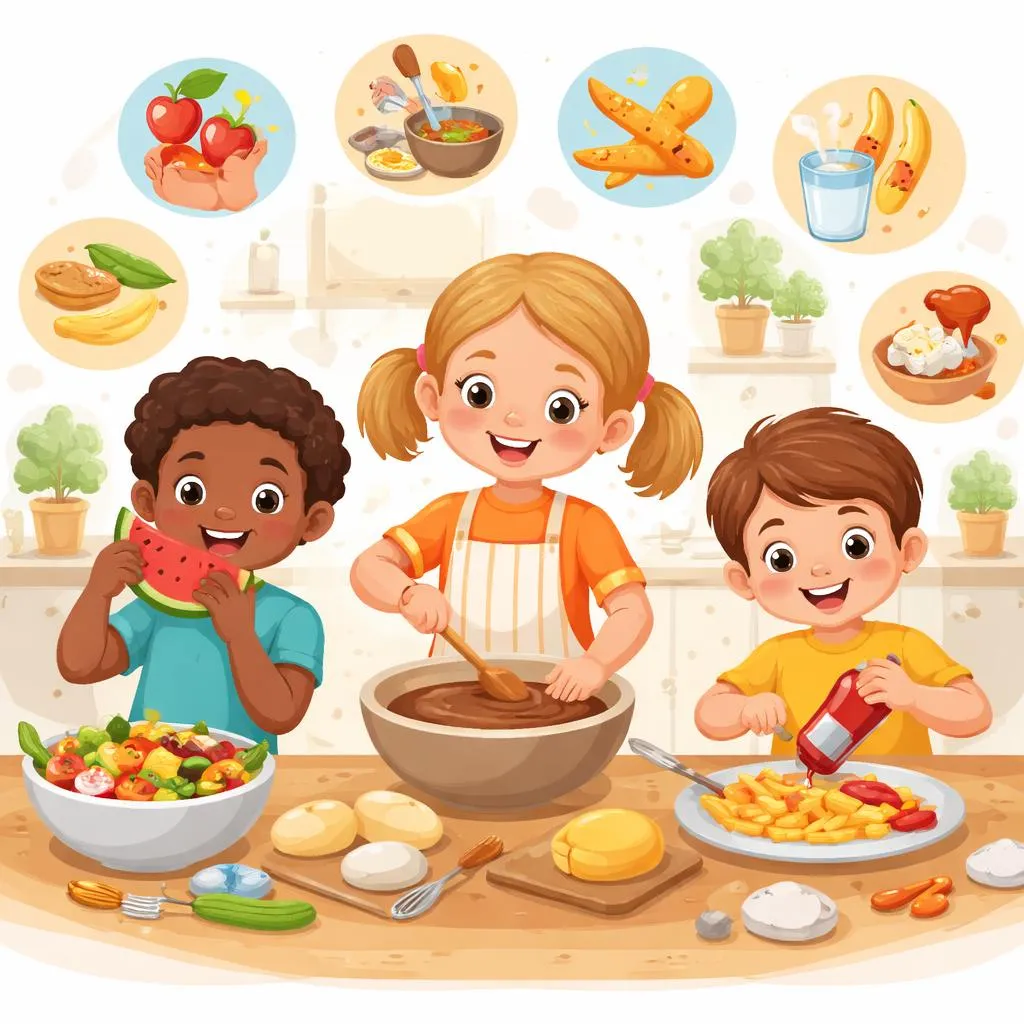

Hello, everyone! Welcome to our special English learning kitchen. Today, we are not just making food. We are cooking up some delicious English skills.
As a teacher, I love watching children connect words with actions. And what better way to do that than with food? Food verbs are the action words we use when we prepare, cook, and eat our meals. These are words we use every single day.
This lesson is all about food verbs. We will explore what they mean. We will see how to use them. We will practice them together. Let's get our hands dirty and learn some wonderful new words.
What Are Food Verbs? Let’s start with the basics. What exactly are we talking about today?
Food verbs are action words. They describe the steps we take with food. Think about making a simple sandwich. You don't just "make" it. You take the bread. You spread the butter. You cut the sandwich.
Every step is a verb. Every verb is an action. These words help children describe the world around them. They give children the language to talk about their daily routines. It is the language of the kitchen, the lunchbox, and the dinner table.
When a child knows these words, they can tell you what they did. "I washed the apple." They can ask for help. "Can you cut this, please?" They can understand recipes and instructions. Learning food verbs is a big step in becoming a confident English speaker.
Categories of Food Verbs We can group food verbs to make them easier to learn. Let's look at three main categories. This will help children organize the words in their minds.
Preparation Verbs These are the first steps. These are things we do before the cooking starts.
Wash: We wash fruit to make it clean.
Peel: We peel a banana or an orange.
Cut: We cut an apple into pieces.
Slice: This is a special way to cut. We slice bread to make it thin.
Grate: We grate cheese to make small pieces.
Mix: We mix ingredients in a bowl.
Cooking Verbs Now, we add heat. These verbs are for the stove or oven.
Cook: This is a general word for making food hot.
Boil: We boil water for pasta.
Fry: We fry an egg in a pan.
Bake: We bake cookies in the oven.
Toast: We toast bread until it is brown and crispy.
Eating Verbs Finally, the best part! How do we enjoy our food?
Eat: This is the main word. We eat our dinner.
Drink: We drink water or juice.
Bite: We take a bite of a big sandwich.
Chew: We must chew our food well before swallowing.
Swallow: After we chew, we swallow the food.
Daily Life Examples Now, let's see these food verbs in action. The best way to learn is to see words in real situations. Here are some short stories from a child's day.
Imagine it is breakfast time. "First, I pour milk into my bowl. Then, I add the cereal. I take a spoon and I eat my breakfast."
Now it is lunch. "For lunch, I have a sandwich. I open the lunch box. I take the sandwich. I bite into it. It is yummy. I drink my juice."
What about helping with dinner? "I help my family cook. I wash the potatoes. I peel the carrots. I mix the salad. It is fun to help."
Later, it is snack time. "I want an apple. I wash it first. Then, I bite into it. It is sweet and crunchy."
These are all simple sentences. But they are full of powerful food verbs. Practicing these sentences helps the words feel natural.
Printable Flashcards Flashcards are a wonderful tool. They are simple and effective. For this lesson, we can make our own set of food verbs flashcards.
Here is an idea for making them at home or in the classroom.
Get some small cards or thick paper.
On one side, write the verb. For example, "Peel".
On the other side, draw a simple picture. A picture of a hand peeling an orange.
Do this for all the main verbs: cut, mix, fry, bake, eat, and drink.
How can we use these cards?
Show and Tell: Hold up the word side. Ask the child to say the word and do the action.
Match the Action: Do an action, like pretending to stir a pot. Ask the child to find the card with the correct verb.
Story Time: Pick a few cards. Use them to make a short story about cooking.
These cards make learning active. They connect the word to a picture and an action. This is a very strong way to remember new food verbs.
Learning Activities or Games Learning should be fun. Games turn vocabulary into a playful experience. Here are some games focused on food verbs that work very well in a classroom or at home.
Activity 1: The "Do as I Say" Cooking Game This is a pretend game. The teacher or parent is the chef. The child is the helper.
The chef gives instructions using food verbs.
"Please wash the tomatoes."
"Now, cut the tomatoes." (The child pretends to cut).
"Next, mix the tomatoes with the lettuce." This game is great for listening comprehension. It makes the child move and think.
Activity 2: Recipe Charades Write some simple food verbs on slips of paper. Put them in a bowl.
A child picks a slip of paper. They must not show anyone.
The child acts out the verb. For example, for "grate," they might pretend to hold cheese and move their hand up and down.
The other children guess the verb. "Are you grating?" This game is excellent for vocabulary recall. It is also very funny and engaging.
Activity 3: My Food Diary This is a simple writing and drawing activity.
Give the child a piece of paper. The title is "My Food Diary."
Ask them to draw what they ate for breakfast, lunch, and dinner.
Next to each drawing, help them write a sentence. It could be "I ate cereal." or "I drank milk."
For an extra challenge, they can write about how the food was prepared. "Mom fried an egg."
These activities make food verbs a part of the child's active vocabulary. They are not just memorizing lists. They are using the words to play, to imagine, and to describe their own lives.
Teaching children these verbs is a gift. It gives them the words to participate in the kitchen. It allows them to talk about their favorite meals. It opens up a whole new area of conversation.
So, let's keep practicing. Let's use these words every day. The next time you are making a snack or eating a meal, point out the actions. "Look, I am slicing the bread." "Now, we are going to spread the jam." Soon, these food verbs will become a natural part of every child's English vocabulary. Keep up the great work, everyone