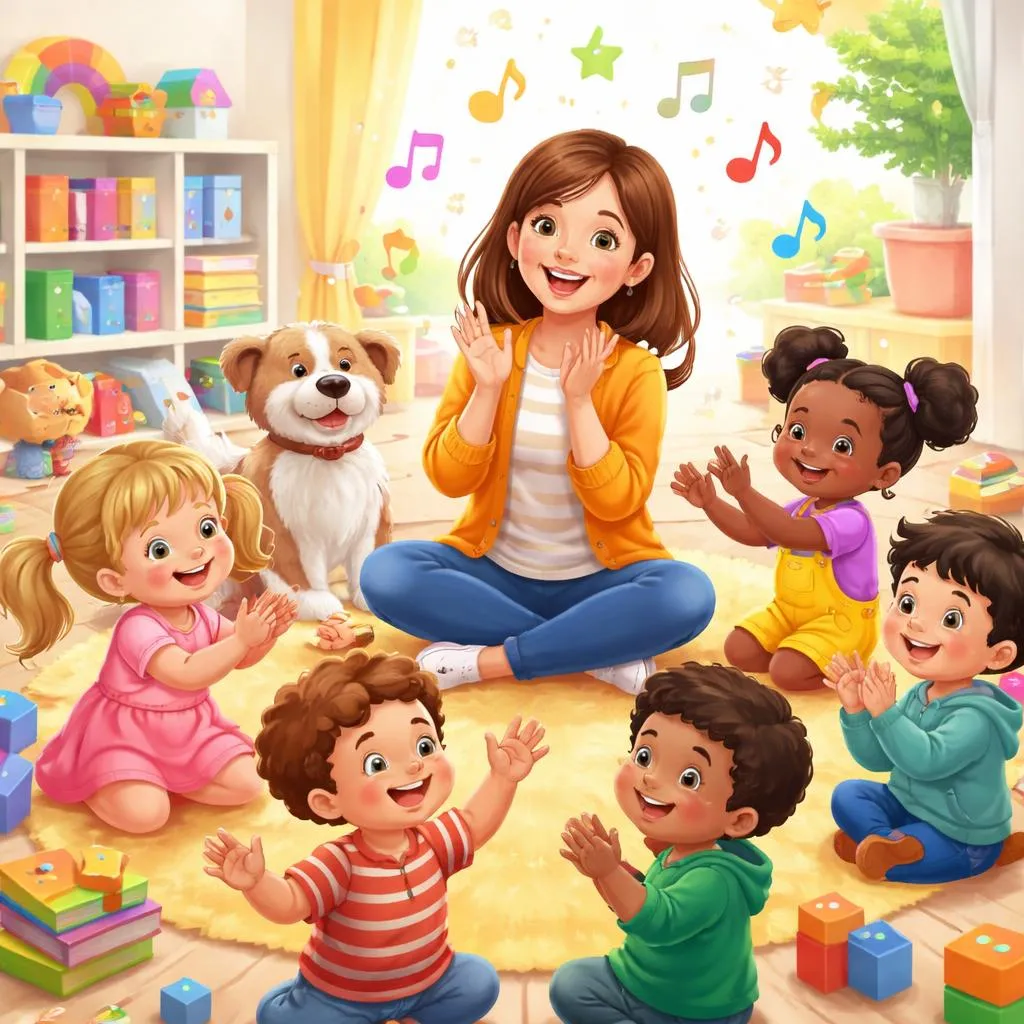

Starting a class with young learners requires a special kind of magic. We need to transition them from the playground or home into a learning mindset. A hello song provides this magic perfectly. Today, we are going to explore how hello song words can set a positive tone for the entire lesson. We will look at the language within these songs and how they build essential social and linguistic skills.
What Is a Hello Song? A hello song is a simple musical greeting. We sing it at the beginning of a class or group time. It welcomes each child and acknowledges their presence. The song creates a warm, inclusive atmosphere. It signals that learning time has begun.
These songs use simple, repetitive language. They often include the names of the children. They may ask how everyone is feeling. The melody is usually easy and cheerful. The goal is not musical perfection. The goal is connection and community building. The hello song words are the tools we use to build this bridge.
The Lyrics of Hello Songs Let us look at some common hello song lyrics. There are many versions, but they share similar patterns. Here is a classic example:
Hello, hello, hello everyone. Hello, hello, hello everyone. We're so glad to see you here today. Hello, hello, hello everyone.
Another common version asks a question:
Hello, hello, what's your name? Hello, hello, what's your name? My name is [child's name]. That's my name.
Some songs check in on feelings:
Hello, how are you today? Hello, how are you today? I am fine, I am fine. I am fine today.
The words are simple and repetitive. This makes them accessible to even the youngest learners. They can join in after hearing the song just a few times.
Vocabulary Learning in Hello Songs Hello songs introduce essential social vocabulary. This is language children will use every day. Let us look at the key word groups.
First, we have the greeting words. Hello and hi are the most obvious. Some songs also include good morning or good afternoon. These teach children different ways to greet people depending on the time of day.
Second, we have the question words. What and how appear frequently. Children learn to recognize these question starters. They learn that "what" asks for a thing, like a name. They learn that "how" asks about a state, like feelings.
Third, we have the feeling words. Fine, happy, great, tired, and sleepy appear in different versions. Children learn to identify and express their emotional state. This builds emotional intelligence along with language skills.
Fourth, we have the community words. Everyone, friends, class, and together are common. These words build a sense of belonging. They teach children that they are part of a group.
Phonics Points in Hello Songs We can use hello songs to practice specific sounds. The word "hello" itself offers good practice. The /h/ sound at the beginning is a gentle breath sound. We can put our hands in front of our mouths and feel the air. This makes the sound physical and memorable.
The word "what" has the /w/ sound. This sound requires rounded lips. We can practice making a fish face before singing. The word "name" has the long /a/ sound. We can stretch it out: "naaaaaame." This helps children hear the vowel length.
The word "today" has the /t/ sound at the beginning and end. We can tap our fingers for each /t/. One tap at the start, one tap at the end. This builds awareness of sounds in different positions within words.
Grammar Patterns in Hello Songs Hello songs are rich with useful grammar. Let us examine the patterns we find.
The present tense of the verb "to be" appears frequently. We see "I am" and "you are" in many versions. "I am fine. How are you?" This is a fundamental grammar structure. Children learn it naturally through repetition.
Questions are a major feature. "What is your name?" and "How are you?" are question forms that children need in daily life. The song provides a safe space to practice answering these questions. The repetition builds confidence.
The imperative form appears in some songs. "Clap your hands" or "wave hello" are commands. Children learn to follow instructions through the song. They connect the words to the actions.
The first person pronoun "I" is used in answers. "I am fine. My name is Sarah." This helps children talk about themselves. It builds the language they need for self-expression.
Learning Activities with Hello Songs A hello song can be the center of many activities. Here are some ways to extend the learning beyond the song itself.
Name Recognition Activity: Create name cards for each child. During the hello song, hold up the card for the child whose turn it is. When they hear their name, they stand up and wave. This connects the spoken name with the written word. It builds early literacy skills.
Feeling Check-In: After singing a feelings hello song, have a feeling chart ready. The chart shows faces with different expressions: happy, sad, tired, excited. Children point to the face that shows how they feel. They can say "I am happy" or point silently. This builds emotional vocabulary.
Action Verses: Add actions to the hello song. Touch your head when you say hello. Tap your knees when you say your name. Wave when you say hello to friends. These kinesthetic connections help memory. They also release energy and help children focus.
Pass the Greeting: Sit in a circle with a soft ball or stuffed toy. Sing the hello song. When the song stops, the child holding the toy says hello to the group. They can say "Hello, friends" or "Hello, everyone." This builds public speaking confidence in a safe setting.
Printable Materials for Hello Songs Printable resources can enhance the hello song experience. Here are some materials to create.
Hello Song Poster: Create a large poster with the hello song lyrics. Add simple pictures next to key words. A picture of a hand waving next to "hello." A picture of a smiley face next to "fine." Display this poster where children can see it during the song. They begin to connect the written and spoken words.
Name Cards: Create beautiful name cards for each child. Use bright colors and clear letters. Laminate them for durability. Use these cards during the hello song. Hold up the card when it is time to say that child's name. Children learn to recognize their own name and their friends' names.
Feeling Cards: Create a set of feeling cards. Each card shows a face and the word: happy, sad, tired, excited, scared, fine. Use these cards during the hello song. Hold up different cards and ask children to show that feeling with their face. This builds emotional recognition and vocabulary.
Educational Games with Hello Songs Games make the hello song even more engaging. Here are some games to try.
Hello Name Game: Sing the hello song, but leave a blank for the name. "Hello, hello, what's your name? Hello, hello, what's your name?" Point to a child. They say their name. The class repeats: "Hello, [name]!" This gives each child a moment of individual recognition.
Mystery Voice Game: One child closes their eyes or turns around. Point to another child. That child says "Hello, friend!" in a disguised voice. The first child guesses who spoke. This builds listening skills and adds an element of fun.
Hello Freeze Dance: Play a recording of the hello song. Children dance while the music plays. When the music stops, they freeze. When the music starts again, they find a friend, look at them, and sing "Hello!" together. This builds social connection and listening skills.
Puppet Hello: Use a hand puppet during the hello song. The puppet goes to each child and says hello. The child says hello back to the puppet. The puppet can ask "What is your name?" The child answers. Puppets reduce anxiety for shy children. They make the interaction feel like play.
Adapting Hello Songs for Different Levels Not all preschool classes are the same. We need to adapt hello songs for different age groups and language levels.
For very young children or beginners, keep it simple. Use only "hello" and names. Add lots of waving and smiling. Focus on participation, not perfect pronunciation. The goal is comfort and familiarity.
For older or more advanced children, add complexity. Ask about feelings. Ask about the weather. Ask what they did last night. Add more verses. Challenge them to answer in complete sentences. The hello song can grow with the children.
For mixed-level classes, use a song with a simple chorus and a more complex verse. Everyone can join the chorus. More advanced children can answer the questions in the verses. This allows all children to participate at their own level.
Building Community Through Hello Songs The most important function of a hello song is community building. When we sing hello to each child by name, we say "You matter. You are seen. You belong here." This message is powerful for young children.
The routine of the hello song creates security. Children know what to expect. They know they will be welcomed. They know their friends will be named. This predictability reduces anxiety and builds trust.
The shared experience of singing together creates bonds. Children look at each other. They smile at each other. They hear each other's voices. They learn each other's names. The hello song builds the classroom community one verse at a time.
As we explore the power of hello song words, we see they are much more than simple lyrics. They are the keys that unlock the door to learning. They welcome each child into a safe, joyful space. They teach essential language in a natural, musical way. They build the social connections that make learning possible. With a hello song, we start each day by saying: you are welcome here, and we are so glad to see you.