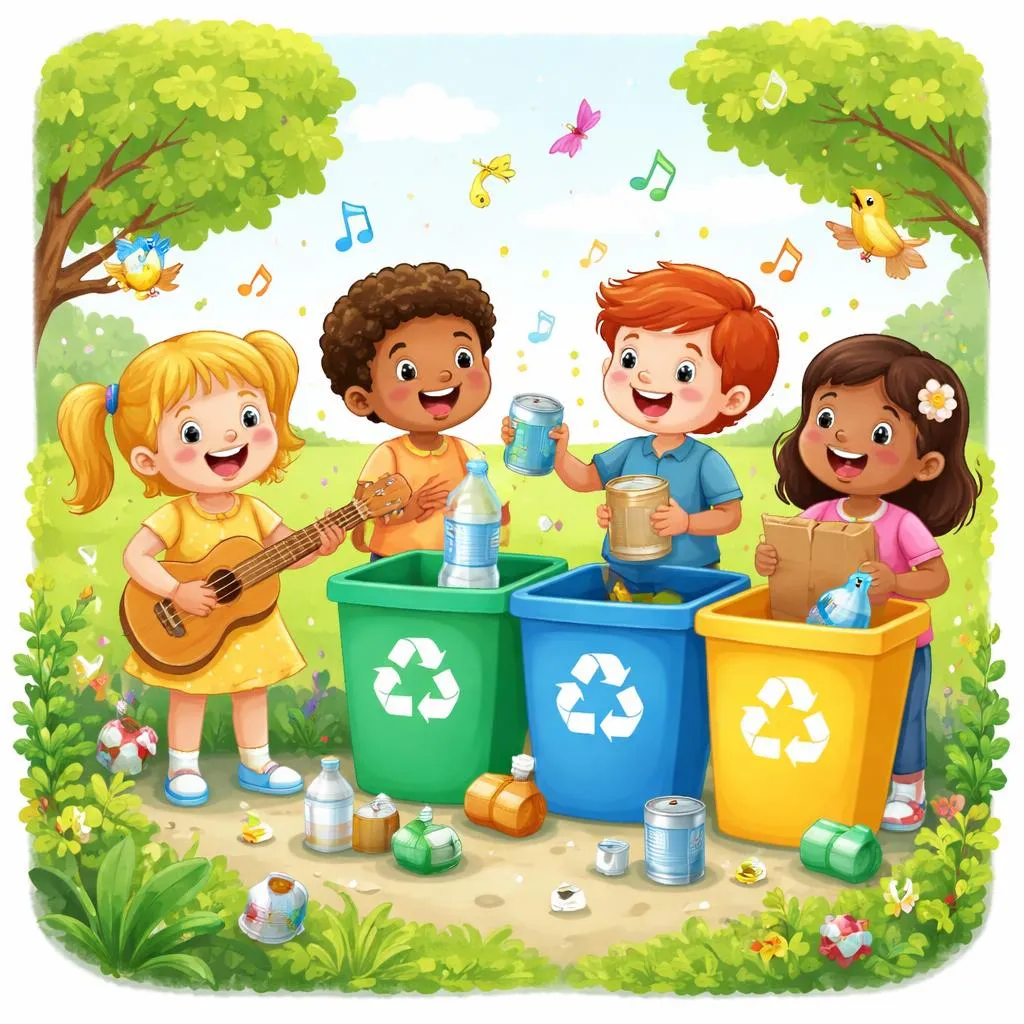

Teaching young children about caring for our planet is a beautiful responsibility. At the preschool level, complex environmental concepts need simple, joyful delivery. Music is our greatest ally in this mission. Today, we are going to explore how recycling songs for preschoolers can build foundational green habits. These songs turn learning about waste reduction into a fun, musical experience that children will remember and love.
What Are Recycling Songs? Recycling songs are simple musical pieces designed for young children. They teach the basic ideas of sorting trash, reusing materials, and caring for the Earth. These songs use simple words and repetitive melodies. They often include actions or movements that children can copy.
The goal of these songs is not to explain the chemistry of recycling. The goal is to build positive associations. When children sing about putting a bottle in the blue bin, they are forming a habit. They are learning that recycling is a normal, fun part of daily life. The music makes the message stick.
The Message Behind the Music Why do we use songs for this topic? Young children learn best through repetition and joy. A song provides both. When we sing about recycling, we are not just giving instructions. We are creating an experience. Children feel the rhythm. They move their bodies. They sing along.
This emotional connection is powerful. A child who sings "Reduce, Reuse, Recycle" with a smile is more likely to remember the words when they see a plastic bottle. The song becomes an internal guide. It shapes their behavior in a gentle, positive way. This is the magic of music in early education.
Vocabulary Learning Through Songs Recycling songs introduce important new words. These are words children need to understand environmental conversations. Here are some key vocabulary groups we can teach.
First, we have the materials. Words like paper, plastic, glass, and aluminum appear in many songs. Children learn to identify these materials by name. They learn that different materials go in different places.
Second, we have the action words. Recycle, reuse, reduce, sort, toss, save, and clean are common. These verbs give children the language to talk about what they do. They can say "I recycle this bottle" with confidence.
Third, we have the container words. Bin, box, basket, can, and bag are useful. Children learn where things belong. The songs often mention blue bins or recycling boxes. This connects the vocabulary to physical objects in their world.
Phonics Points in Recycling Songs We can use recycling songs to practice specific sounds. Let us look at some examples. The word "recycle" has a clear /r/ sound at the beginning. This sound can be tricky for some young learners. We can practice it in the song. We stretch the sound: "rrrrecycle."
The word "bottle" has a /b/ sound and a /t/ sound in the middle. We can clap when we say the /b/. We can tap our feet when we say the /t/. This connects sound to movement. The word "paper" has a long /a/ sound. We can open our mouths wide when we sing it. These small exercises build phonemic awareness naturally within the music.
Grammar Patterns in the Songs Recycling songs are full of simple grammar structures. The most common is the imperative form, or command. Songs often say "Put the bottle in the bin" or "Recycle paper every day." Children learn these command forms through repetition. They understand that these are instructions for action.
We also see the present tense used frequently. "We recycle all our cans. We recycle all our paper." This describes a habit, a regular action. Children absorb this grammar pattern. They learn to talk about what they do regularly.
Some songs use the modal verb "can." "We can save the Earth today. We can recycle and reuse." This teaches possibility and ability. Children learn that they have the power to make a difference. The grammar supports the empowering message.
Learning Activities with Recycling Songs Songs are just the beginning. We can build whole lessons around them. Here are some activities that work well with recycling songs for preschoolers.
Sorting Station: After singing a song about sorting, we set up a sorting station. We have four bins or boxes. We label them Paper, Plastic, Glass, and Cans. We provide clean trash items. Children take turns picking an item and placing it in the correct bin. We sing the song while they sort. The activity reinforces the song's message.
Recycling Bin Drums: We use clean recycling bins as drums. We give children sticks or spoons. We sing a recycling song and tap the bins to the rhythm. This connects music with the materials themselves. Children see that recycling items can become instruments. It teaches reuse in a concrete way.
Movement Game: We assign a movement to each material. For paper, we float like a piece of paper. For plastic, we stretch like a plastic bag. For cans, we stomp like heavy cans. When we sing the song, children do the movement for the material they hear. This builds listening skills and body awareness.
Printable Materials for Song Time Printable materials can extend the learning from songs. Here are some ideas for resources to create.
Song Lyric Posters: Create large posters with the song lyrics. Add simple pictures next to key words. A picture of a bottle next to the word "bottle." A picture of a bin next to the word "bin." Display these posters during song time. Children begin to connect the written word with the spoken word and the image.
Picture Cards: Create cards showing different items: a newspaper, a plastic bottle, a glass jar, a soda can. Also create cards showing bins of different colors. During the song, hold up the cards at the right moment. This adds a visual element to the music.
Coloring Pages: Create simple coloring pages that match the song themes. A page showing children putting items in bins. A page showing the Earth smiling. Children can color these during quiet time. They can sing the song softly while they work. This reinforces the message through a different activity.
Educational Games with Recycling Songs Games make learning active and social. Here are some games that pair well with recycling songs.
Freeze Dance Recycle: Play a recycling song. Children dance and move around. When the music stops, call out a material. "Plastic bottle!" Children must freeze in a shape that represents that item. Someone who froze like a tall bottle, someone like a crumpled bottle. This builds creativity and listening.
Mystery Bin Game: Place a clean recycling item in a bag. Do not show the children. Sing the recycling song. At the end of the song, reach into the bag. Describe what you feel without showing it. "It is hard. It is clear. It has a round top." Children guess what it is. Then pull it out and place it in the correct bin.
Pass the Recyclable: Sit in a circle with a clean recycling item, like a plastic bottle. Sing a recycling song while passing the bottle around. When the song stops, the child holding the bottle must name the material and say which bin it goes in. This adds a element of surprise and focus.
Creating Original Recycling Songs We do not have to rely only on existing songs. We can create our own with the children. This is a powerful learning experience. We start by choosing a tune the children know well, like "Row, Row, Row Your Boat." Then we brainstorm new words together.
What do we want to say about recycling? What materials do we see in our classroom? Where do they go? The children suggest lines. We write them down. We sing them together. This process builds ownership. The children feel proud of their song. They remember it better because they helped create it.
Here is a simple example using the tune of "Twinkle, Twinkle, Little Star":
Throw the paper in the bin, That is where it goes right in. Save the bottles, save the cans, Help the Earth with all your hands. Throw the paper in the bin, That is where it goes right in.
Building a Year-Long Habit Songs should not be limited to Earth Day. The best learning happens when we sing throughout the year. We can start each day with a recycling song during morning circle. We can sing a quick cleanup song before snack. We can create songs for specific moments, like after art class when we have paper scraps.
The key is consistency. When children hear the songs regularly, the message becomes part of their thinking. They start to sing the songs on their own while they play. They remind each other of the words. The songs become a shared language for environmental care in the classroom.
As we bring recycling songs for preschoolers into our daily routine, we plant seeds for a lifetime of green habits. The children learn that caring for the Earth is not a chore. It is a natural, joyful part of life. They learn through music, movement, and play. These early lessons, wrapped in melody and fun, will stay with them as they grow. They will remember the songs. And they will remember what the songs taught them about loving our planet.