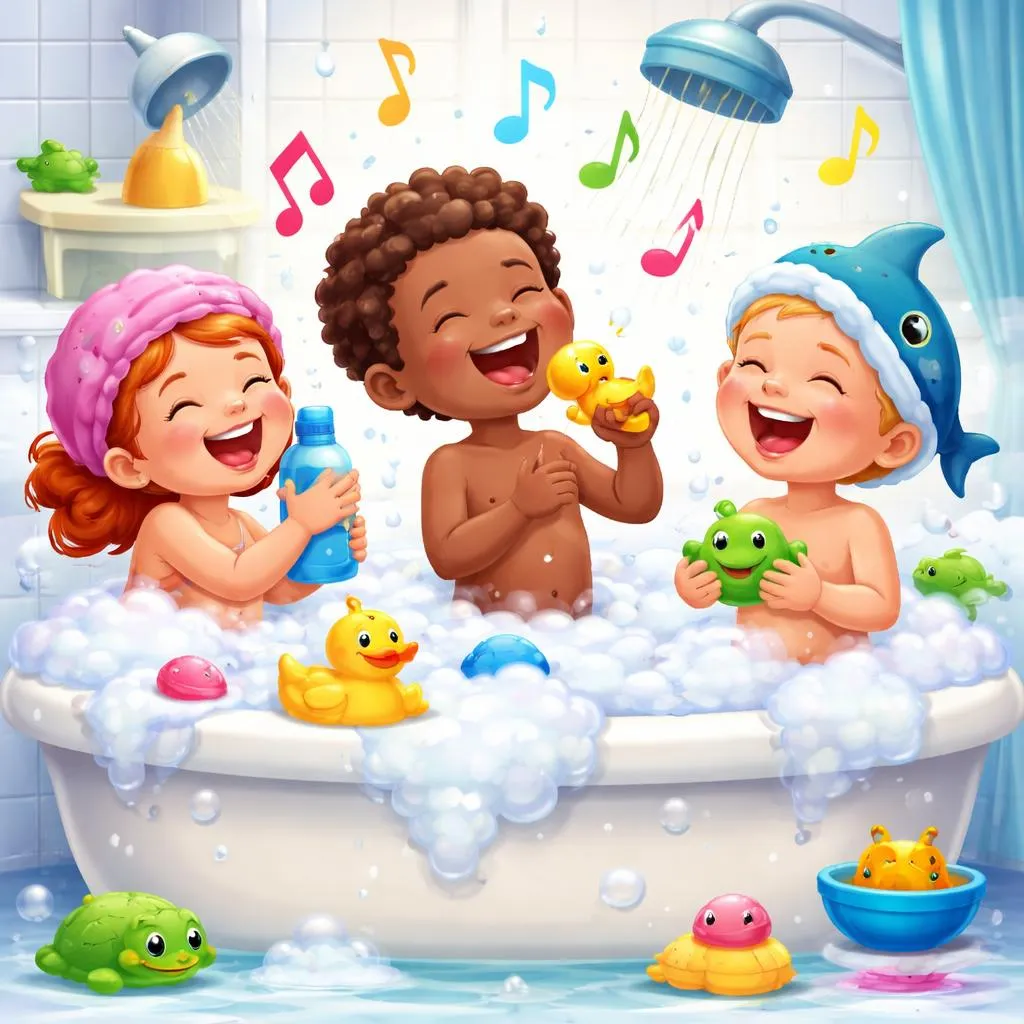

Bath time can sometimes be a challenge for young children. Some children resist getting clean. Others are nervous about water. Music transforms this daily routine into something fun and enjoyable. Today, we are going to explore different shower song lyrics that make bath time a happy experience while teaching hygiene habits and building language skills.
What Is a Shower Song? A shower song is a simple tune children sing while bathing. These songs make washing feel like play. They often include actions for scrubbing different body parts. The cheerful music distracts from any anxiety about water.
Shower songs serve many purposes. They establish a routine for bath time. They teach children the steps of getting clean. They build vocabulary for body parts and hygiene. They create positive associations with washing.
The best shower songs have simple, repetitive lyrics. Children learn them quickly. They can sing along while scrubbing. The actions keep little hands busy and ensure thorough cleaning.
The Lyrics of Popular Shower Songs Let us look at some classic shower song lyrics that work well for young children.
This Is the Way We Wash (to the tune of "Here We Go Round the Mulberry Bush"):
This is the way we wash our hair, Wash our hair, wash our hair. This is the way we wash our hair, When we take a shower.
This is the way we wash our face... This is the way we wash our arms... This is the way we wash our tummy... This is the way we wash our legs... This is the way we wash our feet...
I'm a Little Teapot (Bath Version) (to the tune of "I'm a Little Teapot"):
I'm a little child, short and stout. Here is my washcloth, here is my spout. When I get all soapy, hear me shout, "Rinse me off and pour me out!"
Scrub-a-Dub-Dub (original chant):
Scrub-a-dub-dub, in the tub, Wash my toes and wash my club. Scrub-a-dub-dub, in the tub, I'm a clean little cub!
The Shower Song (simple chant):
Water falling down, down, down, Making me the cleanest in town. Soapy bubbles here and there, Washing away everywhere.
Vocabulary Learning from Shower Songs Shower songs introduce important vocabulary related to hygiene and the body.
Body Part Words: Hair, face, arms, tummy, legs, feet, toes, hands, back, neck. Children learn to name these parts while washing them.
Hygiene Words: Wash, scrub, rinse, soap, shampoo, bubbles, towel, dry, clean. These words describe the bathing process.
Action Words: Scrub, rub, splash, pour, dry, wipe, rinse, sing. Children learn verbs for what they do in the shower.
Water Words: Water, shower, tub, splash, pour, drip, drain. These words describe the bathing environment.
Descriptive Words: Clean, soapy, bubbly, wet, dry, warm, slippery. Children learn to describe how things feel.
Phonics Points in Shower Songs We can use shower songs to practice specific sounds. The repetition helps children hear and produce these sounds correctly.
The /sh/ sound appears in "shower," "wash," and "splash." This digraph requires rounded lips. Children practice making the sound while thinking about water.
The /s/ sound appears in "soap" and "scrub." This sibilant sound requires the tongue near the teeth.
The /b/ sound appears in "bubbles" and "tub." This voiced sound requires lips together.
The /w/ sound appears in "water" and "wash." This sound requires rounded lips.
The /k/ sound appears in "clean" and "scrub." This voiceless sound comes from the back of the mouth.
Grammar Patterns in Shower Songs Shower songs contain several important grammar patterns that children absorb naturally.
Present Continuous Tense: "Water is falling" and "I am washing" use the present continuous form. Children learn to describe actions happening now.
Imperative Form: "Scrub your arms" and "Wash your face" give commands. Children learn to follow instructions.
Repetitive Structure: The repeated pattern "This is the way we wash our..." teaches sentence structure. Children internalize this pattern.
Prepositional Phrases: "In the tub" and "down, down, down" teach prepositions of place and movement.
Rhyming Patterns: "Tub" and "cub," "here" and "there" build phonemic awareness through rhyme.
Learning Activities with Shower Songs Shower songs can be part of many engaging activities, even outside the bathroom.
Bath Time Routine Chart: Create a chart showing the steps of bath time. Wash hair, wash face, wash arms, wash tummy, wash legs, wash feet, rinse, dry off. Children sing the song while following the steps.
Body Part Review: Use the song to review body parts. Children point to each part as it is named in the song. This builds body awareness.
Soapy Bubble Play: Talk about bubbles while singing. Where do bubbles come from? What happens to them? This connects science to the song.
Towel Time: After the shower song, sing a towel song about drying off. "This is the way we dry our hair, dry our hair, dry our hair..."
Shower Puppet: Create a simple puppet of a child. Children act out washing the puppet while singing. This reinforces the steps in a playful way.
Printable Materials for Shower Songs Printable resources can enhance the shower song experience. Here are some materials to create.
Song Lyrics Poster: Create a colorful poster with the shower song lyrics. Add pictures next to key words. A drop of water next to "water." A bar of soap next to "soap." Display this in the bathroom if possible.
Bath Time Sequence Cards: Create cards showing each step of bath time in order. Hair washing, face washing, arm washing, tummy washing, leg washing, foot washing, rinsing, drying. Children arrange them in order while singing.
Body Part Coloring Page: Create a coloring page of a child in a shower. Children color and label the body parts they wash.
Mini Song Book: Create a simple foldable book with the song lyrics and pictures. Children can "read" their book at home during bath time.
Bath Time Sticker Chart: Create a chart for bath time. Children add a sticker each time they sing the shower song and complete their bath routine.
Educational Games with Shower Songs Games make hygiene learning even more engaging. Here are some games to try.
Freeze Dance Shower: Play a shower song. Children pretend to wash in the shower. When the music stops, they freeze in a washing pose. This builds listening and self-control.
What's Next? Game: Sing the song but pause before naming the next body part. Children guess what part comes next. "This is the way we wash our..." Children shout "legs!" This builds prediction and memory.
Body Part Pointing Game: Sing the song and point to each body part as it is named. Children copy the pointing. This builds body awareness and coordination.
Soap Bubble Counting: Cut out paper soap bubbles. Place them around the room. Children find and count them while singing. How many bubbles did we find?
Clean Up Relay: Set up a relay where children must "wash" different body parts. Touch your head, run to the tub, touch your arm, run back. This adds movement to learning.
Hygiene Habits Shower songs naturally teach hygiene habits. Children learn the importance of washing all body parts.
We can talk about why we wash. Washing removes dirt and germs. Germs can make us sick. Soap helps wash them away.
We can talk about when we wash. After playing outside, after using the bathroom, before eating, and before bed.
We can talk about what we use. Soap, shampoo, washcloth, towel. Each has a job in getting clean.
These discussions build health knowledge along with vocabulary.
Water Safety Bath time is a good time to talk about water safety. Even in the shower, children need to be careful.
Never stand in the tub without an adult. The floor can be slippery. Water can be too hot. An adult should always check the temperature.
We can sing about being safe. "This is the way we stay safe, stay safe, stay safe. This is the way we stay safe when we take a shower."
Creating New Verses Children love creating new verses for shower songs. This builds creativity and language skills.
What other body parts could we wash? Elbows, knees, back, neck. Children suggest new verses.
What if we were washing a pet? "This is the way we wash the dog, wash the dog, wash the dog..."
What if we were washing toys? "This is the way we wash the toys, wash the toys, wash the toys..."
Writing new verses together builds confidence. Children see that they can play with language.
Shower Songs in Different Languages For multilingual classrooms or families, we can explore shower songs in other languages.
In Spanish, "Esta es la forma de lavar el pelo..." In French, "C'est comme ça qu'on lave les cheveux..." In Mandarin, "Zhè shì wǒmen xǐ tóufǎ de fāngshì..."
Children learn that children everywhere need to wash. Music makes it fun in any language.
Bath Time Books Picture books about bath time reinforce shower song themes. Here are some favorites.
"Rub-a-Dub-Dub" by various authors is a classic bath time rhyme.
"Bathtime for Biscuit" by Alyssa Satin Capucilli tells the story of a puppy who does not want a bath.
"King Bidgood's in the Bathtub" by Audrey Wood is a humorous story about a king who will not get out of the tub.
"Five Little Monkeys Jumping on the Bed" includes a bathtime element. After falling, the monkeys take a bath.
While reading, we connect to shower songs. "Remember our song about washing? What do the monkeys need to wash?"
Making Bath Time Positive For children who resist bath time, shower songs are especially helpful. The music creates a positive association. The predictable routine reduces anxiety.
We can let children choose the song. Which shower song do you want to sing today? This gives them some control.
We can use bath toys that connect to the song. Rubber ducks, boats, cups for pouring. These make bath time playful.
We can praise effort. "You did such a good job washing your arms!" Positive reinforcement builds cooperation.
As we explore the shower song with young children, we turn a daily routine into a joyful experience. The simple lyrics teach body parts and hygiene habits. The cheerful tunes create positive associations with getting clean. Through songs, games, and playful repetition, children learn that taking care of their bodies can be fun. The shower becomes not a chore but a chance to sing, splash, and celebrate being clean.