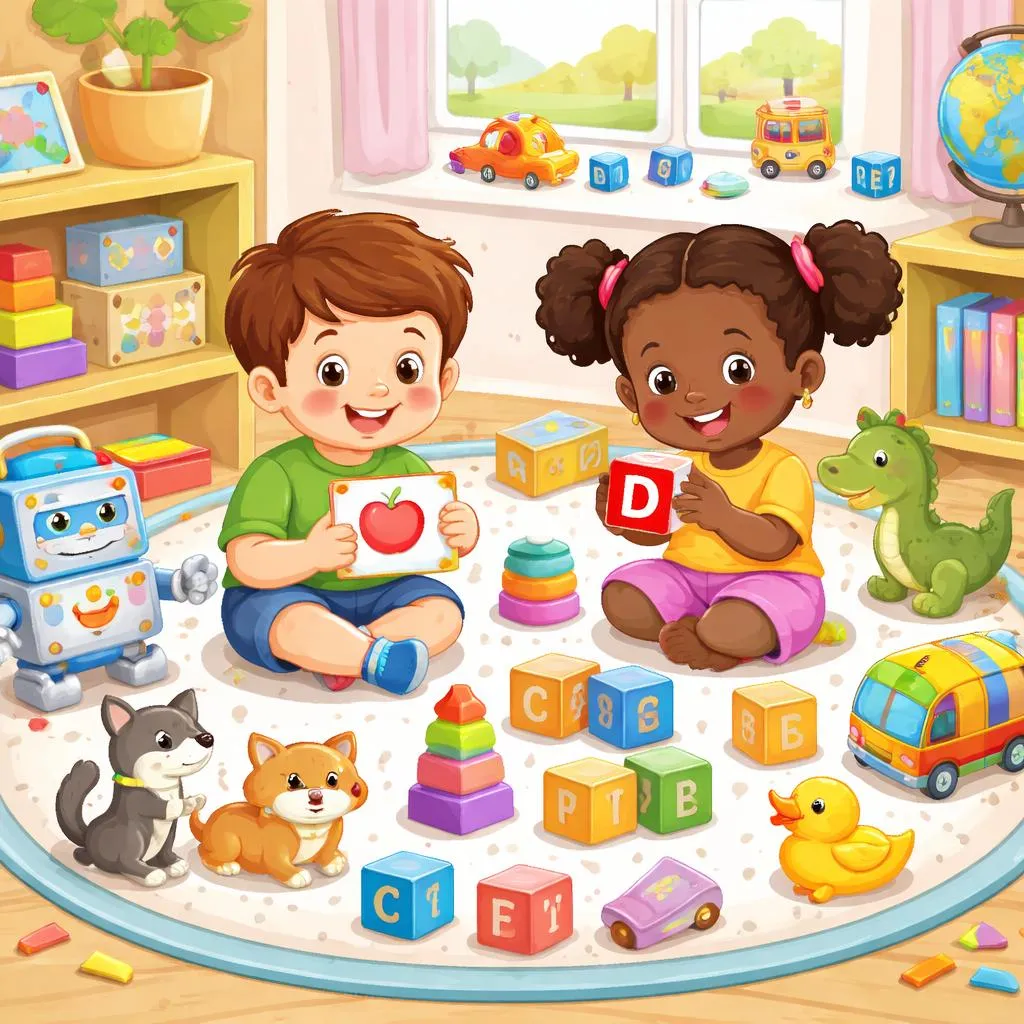

Hello, playful teachers and joyful young learners! Today we explore a wonderful way to learn English. Toys are already part of children's lives. They play with them every day. They have favorites they love. Using toys exercises helps children learn new words while having fun. They practice vocabulary in natural ways. They build sentences about things they care about. Let us discover how to turn playtime into language time. Let us learn with dolls, blocks, cars, and more.
What Are Toys Exercises? Toys exercises are learning activities that use toys to teach English. They combine play with language practice. Children learn vocabulary for different toys. They practice describing them. They talk about colors, sizes, and actions. They learn prepositions by placing toys in different positions.
These exercises work well because children are already motivated. They want to talk about their favorite things. The learning feels natural, not forced. Every play session becomes a chance to practice English.
Toys exercises can be simple or more structured. They can be done at home or in the classroom. They work with any toys children already have. This makes them accessible and practical.
Meaning and Explanation of Toy Vocabulary Learning toy vocabulary helps children talk about their play. Here are common toy words and categories.
Dolls and figures include baby dolls, action figures, and stuffed animals. Children learn to name these toys. They learn to describe their features. "My doll has blue eyes." "The teddy bear is soft."
Building toys include blocks, LEGO bricks, and magnetic tiles. Children learn to describe what they build. "I made a tall tower." "This is a house with a red roof."
Vehicles include cars, trucks, trains, and airplanes. Children learn to name different vehicles. They learn action words like drive, fly, and push. "The car drives fast." "The airplane flies in the sky."
Games and puzzles include board games, card games, and puzzles. Children learn to talk about taking turns and following rules. "It's my turn." "I found the matching piece."
Outdoor toys include balls, jump ropes, and bicycles. Children learn to describe outdoor play. "I can bounce the ball." "The jump rope is long."
Categories or Lists of Toys Exercises Here are toys exercises organized by skill and activity type.
Vocabulary Building Exercises:
Toy Identification: Place several toys in a row. Name each one clearly. "This is a doll. This is a car. This is a block." Children repeat the names. Then ask, "Where is the doll?" Children point to it. This builds receptive and expressive vocabulary.
Toy Sort: Gather a variety of toys. Have children sort them into categories. All vehicles together. All dolls together. All building toys together. Name each category as they sort. This builds classification skills.
Toy Descriptions: Hold up a toy. Ask children to describe it. "What color is it?" "Is it big or small?" "Is it soft or hard?" This builds descriptive language.
Toy Sounds: Make the sound a toy might make. A car goes "vroom." A doll says "mama." Children guess which toy makes that sound. This builds listening skills.
Grammar Exercises:
Preposition Practice: Place a toy in different positions. Ask children to describe where it is. "The doll is on the box." "The car is under the chair." "The block is in the bucket." This teaches location words.
Action Words: Demonstrate actions with toys. "The car drives." "The doll sleeps." "The ball bounces." Children copy the actions and say the words. This teaches verbs.
Possessive Practice: Use toys to practice possessives. "This is my doll." "That is your car." "This is Maria's block." This teaches ownership language.
Question Practice: Ask questions about toys. "Do you have a doll?" "What color is your car?" "How many blocks do you have?" Children answer using full sentences.
Counting Exercises:
Toy Count: Give children a pile of toys. Ask them to count how many. "One, two, three cars." This practices counting and number words.
**How Many?: Place several toys in a group. Ask "How many dolls?" Children count and answer. "Three dolls." This builds number vocabulary.
More or Less: Create two groups of toys. Ask which group has more. Which has less. This builds comparison language.
Daily Life Examples of Toys Exercises Toys exercises fit naturally into daily routines. Here are examples of how to use them.
During playtime, join in and use toy vocabulary. "You are building with blocks. That tower is very tall." "Your car is driving under the table." This models language in context.
At cleanup time, give directions using toy names. "Please put the dolls in the basket." "The blocks go on the shelf." This reinforces vocabulary while doing a task.
During playdates, encourage children to talk about toys with friends. "Ask Sarah if you can have a turn with the truck." "Tell Tom what you made with the LEGOs." This builds social language.
Printable Flashcards for Toys Exercises Flashcards help children learn toy vocabulary visually. They provide clear images with words.
Toy Flashcards: Create cards showing common toys. Doll, car, block, ball, teddy bear, train. Each card has a clear picture and the word.
Action Flashcards: Create cards showing actions with toys. A child driving a car, building with blocks, bouncing a ball. Children match the action to the toy.
Color Flashcards: Create color cards. Children match toys to the correct color. "The red car goes with red."
Preposition Flashcards: Create cards showing toys in different positions. A doll on a box, a car under a chair, a block in a bucket. Children practice describing the position.
Use the cards for games. Hold up a card and name the toy. Ask children to find that toy in the room. Play memory match with two sets.
Learning Activities or Games for Toys Exercises Games make learning with toys active and fun.
Toy Store Pretend Play: Set up a pretend toy store. Arrange toys on shelves. Children take turns being shopkeeper and customer. "How much is this doll?" "I want to buy that car." This builds conversation skills.
Toy Hide and Seek: Hide toys around the room. Children search for them. When they find one, they name it and say where it was. "I found the doll under the chair!" This builds vocabulary and prepositions.
Toy Bingo: Create bingo cards with toy pictures. Call out toy names. Children cover the matching picture. When someone gets BINGO, they name all the toys in their winning row.
Toy Memory Game: Place toy picture cards face down. Children flip two trying to find matches. When they find a match, they name the toy and say something about it.
Toy Charades: Act out playing with a toy without speaking. Pretend to bounce a ball. Pretend to rock a baby doll. Others guess which toy it is.
Printable Materials for Toys Exercises Printable resources support toy vocabulary learning. They provide structure for activities.
Toy Coloring Pages: Create coloring pages showing different toys. Children color them and practice saying the names. This reinforces vocabulary quietly.
Toy Matching Worksheets: Create pages where children match the toy picture to its name. Draw a line from the doll to the word "doll."
My Favorite Toy Drawing Page: Create a page where children draw their favorite toy. They write or dictate a sentence about it. "My favorite toy is my teddy bear."
Toy Store Price Tags: Create printable price tags for pretend play. Children can put them on toys and practice numbers along with toy names.
Educational Games for Toys Exercises Games extend toy vocabulary learning in joyful ways.
Toy Scavenger Hunt: Give children a list of toys to find. "Find something soft. Find something with wheels. Find something red." Children search and name what they find. This builds observation and vocabulary.
Toy Categories Game: Call out a category. "Name all the toys that have wheels." Children list cars, trucks, trains, bikes. This builds categorization skills.
Toy Description Game: Describe a toy without naming it. "It is soft and brown. It has a nose and two eyes. You can hug it." Children guess "teddy bear!" This builds descriptive language.
Toy Story Building: Gather several toys. Use them to create a story. "Once upon a time, a doll and a car went on an adventure." Children add to the story using toy vocabulary.
Toy Sorting Relay: Place mixed toys at one end of the room. Have bins labeled with categories at the other end. Children take turns running, grabbing a toy, and placing it in the correct bin. This combines movement with learning.
Through toys exercises, children learn English while doing what they love. They play and learn at the same time. Every toy becomes a teaching tool. Every play session builds vocabulary. Children gain confidence talking about their favorite things. The learning feels natural and joyful.