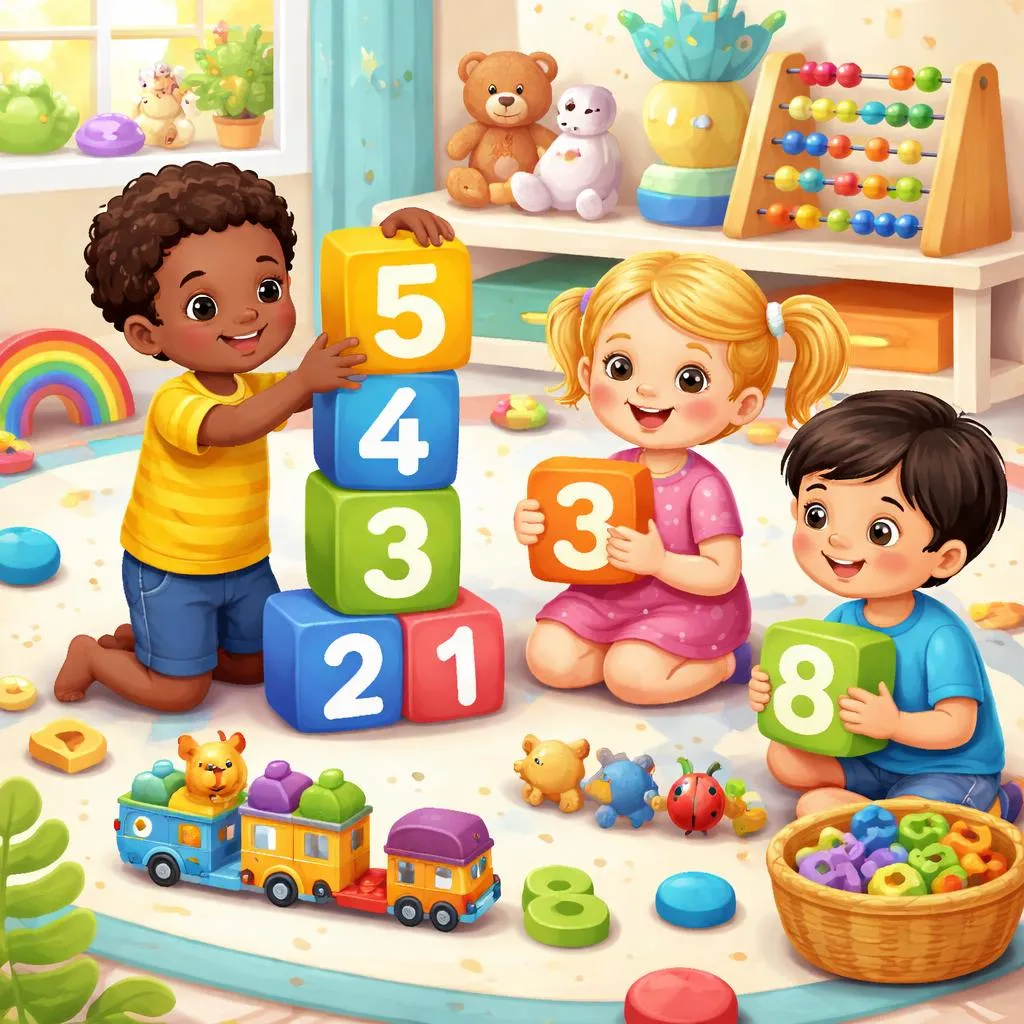

Teaching numbers to young children is one of the most rewarding experiences in early education. Numbers are everywhere in our world. They help us understand quantity, order, and measurement. Today, we are going to explore how to help children learn the numbers in a way that builds a strong foundation. We will use simple, playful methods that make numbers feel friendly and accessible.
What Are Numbers? Let us start with the basic question. Numbers are symbols that represent quantity or value. They tell us how many of something we have. The number three tells us there are three apples. The number five tells us there are five fingers on one hand.
Numbers also help us put things in order. First, second, third tell us about position. We use numbers for ages, for time, for money, and for so many daily things. When children understand numbers, they understand a fundamental language of the world.
Learning numbers involves several skills. Children need to recognize the symbol, like knowing that "5" means five. They need to say the word correctly. They need to understand the quantity, knowing that five is more than three. And they need to count objects accurately. All these skills work together.
Meaning and Explanation of Numbers How do we explain numbers to a young child? We start with what they can see and touch. We use concrete objects. We hold up one block and say "one." We hold up two blocks and say "two." The child sees the quantity change as the number changes.
We can explain that numbers are like labels for amounts. When we say "three cookies," we mean a specific number of cookies. Not two, not four, but exactly three. This one-to-one correspondence is a key concept.
We also explain that numbers follow a specific order. One comes before two. Two comes before three. This order never changes. Learning the sequence of numbers is like learning a song. We practice it until it becomes automatic.
Categories or Lists of Numbers To make learning organized, we can group numbers into categories. This helps children build their understanding step by step.
Small Numbers One to Five: These are the first numbers we introduce. They are easy to see and count on fingers. Most children can learn these numbers quickly through songs and everyday counting.
Numbers Six to Ten: Once children know one to five, we add six through ten. These numbers require more practice. We use both hands for counting now. Ten fingers become a helpful tool.
Teen Numbers Eleven to Nineteen: These numbers are tricky because they have special names. Eleven and twelve do not follow the regular pattern. Thirteen through nineteen have the "teen" ending, which means ten plus something. We need extra patience with these.
Tens Numbers Twenty to One Hundred: After ten, we introduce twenty, thirty, and so on. These numbers follow a pattern. Twenty means two tens. Thirty means three tens. Understanding this pattern helps children count higher with confidence.
Daily Life Examples of Numbers The best way to learn numbers is to see them in daily life. Numbers are everywhere around us. We can point them out naturally throughout the day.
At snack time, we count crackers. "How many crackers do you see on your plate? Let us count together. One, two, three." At cleanup time, we count toys. "Let us put five blocks in this basket." At circle time, we count children. "How many friends are here today? Let us count."
On a walk, we look for numbers on houses and signs. "That house has the number seven." At the grocery store, we look at prices. "This apple costs one dollar." During cooking, we measure ingredients. "We need two cups of flour."
These everyday moments build number sense naturally. Children learn that numbers are not just for math time. They are part of everything we do.
Printable Flashcards for Numbers Flashcards are a classic tool for number learning. They provide clear visuals that help with recognition. For numbers, we want cards that show both the symbol and a matching quantity.
A good number flashcard has the numeral in the corner. It also has dots or pictures showing the quantity. For the number three, we show three dots. This connects the symbol "3" with the concept of three things.
We can use these cards in many ways. Hold up the card and ask, "What number is this?" Point to the dots and count together. Ask children to find the card that matches how many fingers you are holding up. The cards become a flexible learning tool.
Learning Activities or Games for Numbers Games make number learning active and joyful. Here are some activities that work well in the classroom or at home.
Number Hunt: Hide number cards around the room. Give each child a number to find. "Can you find the number four?" When they find it, they bring it back and show everyone. This combines movement with number recognition.
Counting Snacks: Give each child a small cup with a snack like raisins or crackers. Call out a number. "Eat three raisins." Children count out that many and eat them. This makes counting delicious and fun.
Play Dough Numbers: Give children play dough and number cards. They roll the dough into long snakes and shape it into the numbers on the cards. This builds fine motor skills while reinforcing number shapes.
Number Line Hop: Create a number line on the floor with tape or chalk. Call out a number. Children hop to that number. They can also hop forward and backward to practice number order.
Matching Game: Create cards with numerals and separate cards with dots. Mix them up. Children take turns finding matches, putting the numeral three with the card showing three dots. This builds the connection between symbol and quantity.
Teaching the Sequence of Numbers Learning the correct order of numbers is essential. We call this rote counting. It means saying the number words in the right sequence. We practice this often.
We count during transitions. "Let us count how many steps to the door." We count during songs. Many counting songs help with sequence. "One, two, buckle my shoe" is a classic. We count during everyday moments.
When children make mistakes in the sequence, we gently correct them. "You said six, then eight. What comes after six? Let us count together." Patience is key. The sequence becomes automatic with practice.
Understanding Quantity Knowing the number words is not enough. Children must understand what the words mean. This is the concept of quantity. We build this through hands-on experiences.
Give children a small pile of objects. Ask them to give you a specific number. "Please give me three crayons." Watch to see if they understand the quantity. If they give you a handful, they need more practice. If they count out exactly three, they understand.
We play "more or less" games. Show two piles of blocks. "Which pile has more? Which has less?" This builds comparison skills. We ask questions like "Are there more blue blocks or red blocks?" This connects counting to real decisions.
One-to-One Correspondence One-to-one correspondence is a critical skill. It means touching one object while saying one number word. Many young children say number words faster than they point. They might say "one, two, three, four" but only touch three objects.
We practice this skill often. We line up objects and touch each one as we count. "One apple, two apples, three apples." We use our finger to point. We go slowly. We make sure the counting matches the objects.
Games that involve giving out items help with this skill. "Give one cracker to each friend." "Put one block in each basket." These activities require matching one item to one place, building the same mental skill.
Writing Numbers As children become ready, we introduce number writing. This connects the spoken number with the written symbol. We start with numbers that have simple shapes, like one and zero.
We use large movements first. Children can trace numbers in sand or salt trays. They can paint numbers with water on the sidewalk. They can form numbers with their bodies. These large movements build muscle memory.
Then we move to paper. We provide dotted numbers to trace. We say the number name as they write. "This is the number two. Let us trace it together." We celebrate their efforts, even when the shapes are not perfect.
Songs and Rhymes for Numbers Music is a powerful tool for number learning. Many children's songs focus on counting. These songs make the sequence stick in memory.
"Five Little Ducks" teaches counting down from five. "Ten in the Bed" does the same with ten. "One, Two, Buckle My Shoe" teaches number words in sequence. "This Old Man" introduces numbers with actions.
We sing these songs often. We add hand motions. We hold up fingers to match the numbers. The combination of music, movement, and numbers creates strong learning connections.
As we help children learn the numbers, we remember that every child progresses at their own pace. Some will grasp quantities quickly. Others need more time with one-to-one counting. We provide rich experiences with numbers in many forms. We count, sing, play, and explore together. Gradually, the world of numbers opens up to them, becoming a source of confidence rather than confusion.