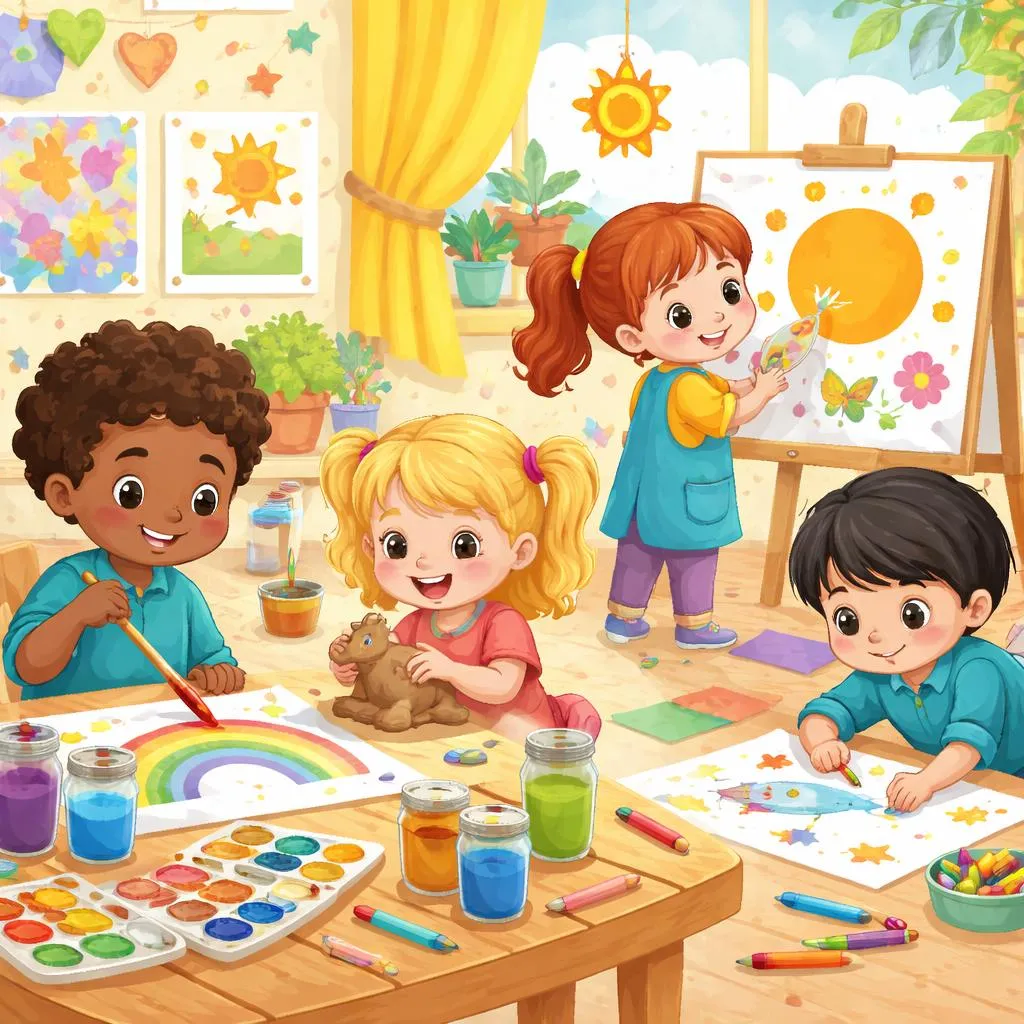

Every child is born with creative potential. Some children show a特别 interest in art from a very young age. These artistic kids love to draw, paint, sculpt, and create. They see the world through creative eyes. Today, we are going to explore how to nurture artistic children and provide them with the tools and encouragement they need to develop their creative abilities.
What Does It Mean to Be an Artistic Child? An artistic child is one who shows a strong interest in creative expression. These children love to make things. They enjoy drawing, painting, coloring, and crafting. They notice colors, shapes, and patterns in the world around them.
Artistic children often spend long periods engaged in creative activities. They may become frustrated when their creations do not match their vision. They have strong feelings about colors and materials. They take pride in their work and want to share it with others.
Being artistic is not just about drawing well. It is about seeing possibilities. It is about expressing feelings and ideas through visual media. It is about experimenting with materials and techniques. All children can benefit from artistic experiences, but some are drawn to them more strongly.
Meaning and Explanation of Artistic Development Artistic development in young children follows predictable stages. Understanding these stages helps us support children appropriately.
The Scribbling Stage (Ages 2-4): Young children begin with random scribbles. These marks are not intended to represent anything. The joy comes from making marks and watching them appear. Over time, scribbles become more controlled. Children name their scribbles after creating them.
The Pre-Schematic Stage (Ages 4-7): Children begin to create recognizable symbols. People appear as circles with lines for arms and legs. Houses have square shapes with triangle roofs. The size of objects shows their importance, not their actual size. A person might be bigger than a house.
The Schematic Stage (Ages 7-9): Children develop consistent symbols for objects. They establish a baseline in drawings. Sky appears at the top, ground at the bottom. Objects have their proper colors. Stories appear in the artwork.
Understanding these stages helps us appreciate each child's work appropriately. We do not expect realistic drawing from young children. We celebrate the thinking and effort behind each creation.
Categories or Lists of Artistic Activities Artistic kids benefit from exposure to many different media and techniques. Here are categories of activities to offer.
Drawing Activities: Crayons, markers, colored pencils, chalk, oil pastels. Different surfaces like paper, cardboard, sandpaper, sidewalks. Different sizes from tiny papers to large murals.
Painting Activities: Finger paints, watercolors, tempera, acrylics. Different tools like brushes, sponges, rollers, feathers, leaves. Different surfaces like paper, fabric, wood, rocks.
Sculpture Activities: Play dough, clay, model magic, papier mâché. Found objects for assemblage. Blocks and construction materials. Wire and foil for shaping.
Collage Activities: Paper scraps, fabric pieces, natural materials, buttons, yarn. Glue sticks, liquid glue, glue guns with supervision. Tearing, cutting, arranging, layering.
Printmaking Activities: Stamp pads and stamps. Found objects for printing. Potato prints, leaf prints, sponge prints. Monoprinting with paint on smooth surfaces.
Textile Activities: Weaving with paper or fabric. Sewing with large needles and burlap. Fabric painting and decorating. Yarn crafts like wrapping and tying.
Daily Life Examples for Artistic Kids Artistic opportunities appear throughout the day. We can create an environment that supports creative expression.
In the morning, children might notice colors in the sky. "Look at the pink and orange in the sunrise. What colors do you see?" This builds observation skills.
During outdoor time, children collect natural materials. Leaves, sticks, stones, flowers become art supplies. "These leaves have beautiful shapes. How could we use them in art?"
During story time, we notice illustrations. "Look how the artist made this picture. What do you see? How do you think they did that?" This builds art appreciation.
During free play, art materials are always available. Children choose to create when they feel inspired. Their artwork reflects their interests and experiences.
Printable Materials for Artistic Kids Printable resources can support artistic development. Here are materials to provide.
Coloring Pages: Simple outlines for children who enjoy coloring. Complex patterns for older children. Pages that connect to current themes or interests.
Drawing Prompts: Papers with partial drawings to complete. "Finish the picture" activities. "Draw what happens next" story starters.
Art Cards: Reproductions of famous artwork. Children can look at them for inspiration. They can talk about what they see and feel.
How-to-Draw Pages: Step-by-step instructions for drawing common objects. Animals, vehicles, people, buildings. Children gain confidence by following directions.
Art Vocabulary Cards: Words like line, shape, color, texture, pattern. Pictures showing examples of each. Children learn to talk about their work.
Learning Activities or Games for Artistic Kids Games and activities can develop artistic skills and concepts.
Color Mixing Exploration: Provide primary colors of paint. Children discover what happens when they mix them. They create secondary colors. They make color charts of their discoveries.
Texture Rubbings: Place paper over different surfaces. Rub with crayons to reveal the texture. Tree bark, coins, leaves, brick walls. This builds observation and technique.
Collaborative Mural: Tape a large paper to the wall. Children work together to create a scene. They negotiate space and ideas. They see their work as part of something bigger.
Art Gallery Walk: Display children's artwork around the room. Children walk through the gallery. They look at each other's work. They give compliments and ask questions.
Shape Hunt: Look for shapes in the environment. Circles in wheels and clocks. Squares in windows and tiles. Triangles in roofs and signs. Children draw what they find.
Pattern Making: Create patterns with objects or stamps. AB patterns: red, blue, red, blue. ABC patterns: circle, square, triangle. Children extend and create patterns.
Setting Up an Art Space A well-organized art space invites creativity. Children can work independently when materials are accessible.
Store materials at child height. Clear containers show what is inside. Labels with pictures help children return things properly.
Include a variety of paper. White, colored, large, small, textured, recycled. Different papers inspire different creations.
Keep basic supplies always available. Crayons, markers, scissors, glue, play dough. Rotate special materials to maintain interest.
Have a display area for finished work. A wall, a clothesline with clips, a shelf. Children feel proud when their work is valued.
Teach cleanup routines. Where things belong. How to wash brushes. How to close markers. Responsibility is part of the creative process.
Supporting Artistic Kids at Home Families play a crucial role in nurturing artistic children. We can share suggestions with parents.
Provide a dedicated art space at home. It does not need to be large. A corner of the kitchen or bedroom works. A washable surface is helpful.
Keep basic supplies accessible. Paper, crayons, markers, scissors, glue, play dough. Children create more when materials are easy to get.
Display children's artwork. On the refrigerator, on walls, in frames. This shows that their work is valued.
Talk about art. "Tell me about your picture." "What was your favorite part to make?" "How did you feel while you were making this?"
Avoid asking "What is it?" Instead, comment on what you see. "I see lots of blue lines. I see a circle here." This validates the process.
Provide exposure to art. Visit museums. Look at art books. Notice art in the community. Talk about what you see together.
Process vs. Product For young children, the process of creating is more important than the final product. We focus on what children learn through making art.
When children mix colors, they learn about cause and effect. When they squeeze glue, they build hand strength. When they arrange shapes, they learn about composition. When they talk about their work, they build language skills.
We avoid judging artwork as "good" or "pretty." We comment on effort and choices. "You worked on this for a long time." "I see you chose bright colors today." "You decided to add many details."
We display all children's work, not just the most realistic. Every child's art has value. Every child deserves to see their work celebrated.
Art and Other Learning Areas Art connects naturally to other subjects. We can integrate art throughout the curriculum.
Art and Literacy: Children illustrate stories they write. They create books with pictures and words. They respond to stories through drawing.
Art and Math: Children explore shapes and patterns. They sort and count art supplies. They measure and compare sizes.
Art and Science: Children observe and draw nature. They mix colors and explore properties. They document scientific observations.
Art and Social Studies: Children create maps of their community. They make pictures of family traditions. They explore art from other cultures.
These connections make learning richer and more meaningful. Artistic kids engage more deeply when art is part of every subject.
Responding to Artistic Frustration Artistic children sometimes become frustrated. Their skills may not match their vision. A drawing does not look like they wanted. A sculpture falls apart.
We acknowledge their feelings. "It is frustrating when things don't work the way we want." We help them problem-solve. "What could we try differently?" We remind them that artists practice and learn from mistakes.
We model our own artistic efforts. "I am learning to draw too. Sometimes my pictures don't look like I planned. But I keep practicing."
We celebrate effort over perfection. "You tried something new today. That takes courage." "Look how much you learned from this attempt."
Celebrating Artistic Growth As we work with artistic kids, we notice their growth over time. Scribbles become shapes. Shapes become recognizable objects. Colors become more intentional. Details increase.
We document this growth. Save samples of artwork with dates. Share observations with families. "Look how Maria's people have grown. She used to draw just circles. Now she adds fingers and clothes."
Children feel proud when they see their own progress. They understand that skills develop with practice. They become more confident in their abilities.
As we nurture artistic kids in our classrooms and homes, we honor their unique way of seeing the world. We provide materials and time for creation. We ask questions that encourage thinking. We celebrate both process and product. We connect art to all areas of learning. Through these efforts, we help artistic children develop not just their creative skills, but their confidence, their voice, and their place in the world. Every scribble, every painting, every sculpture is a step in their artistic journey.