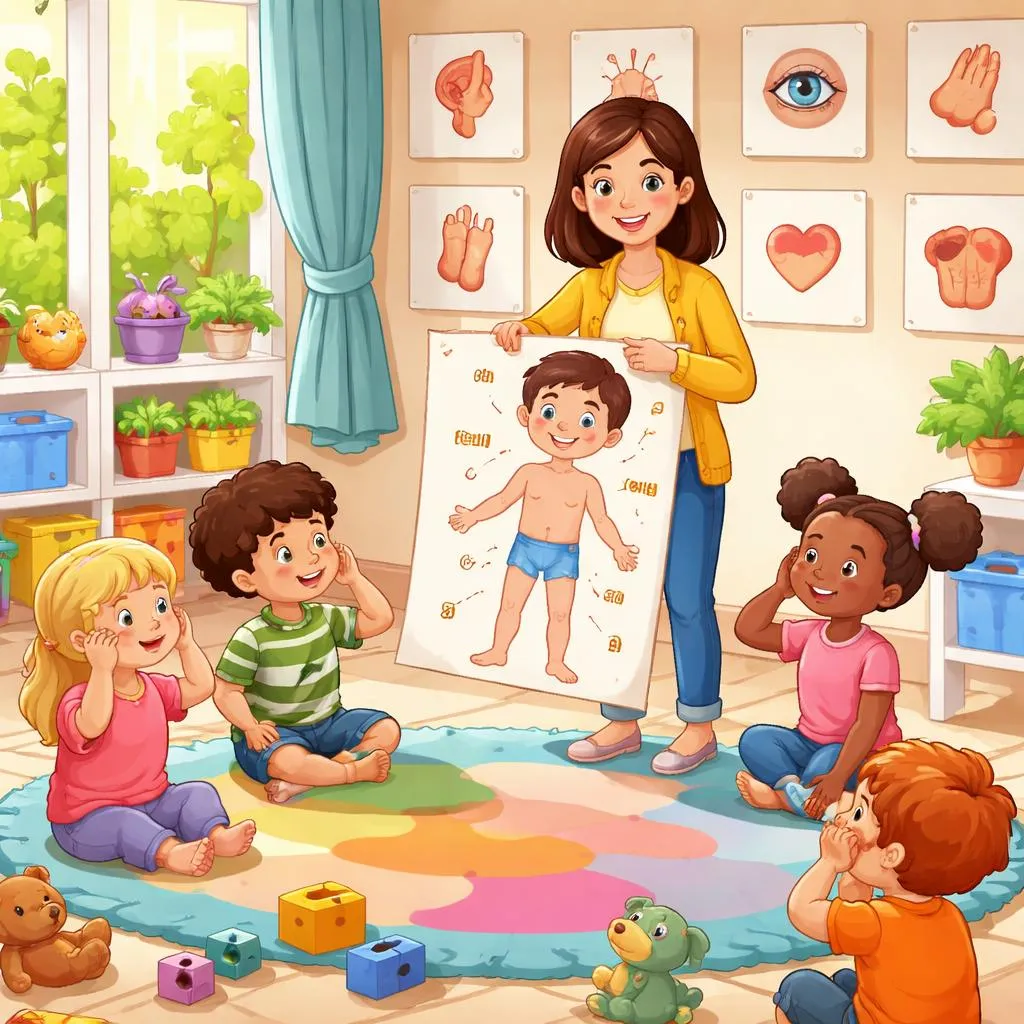

Teaching young learners about themselves is always a wonderful journey. The topic of the human body is especially engaging because the learning materials are always with us. Today, we are going to explore how to introduce body parts for kids in a way that is fun, memorable, and educational. We will use simple language and interactive methods that make each lesson feel like play.
What is Body Parts Learning? When we talk about learning body parts, we are helping children build a fundamental vocabulary. These are the words they need to describe themselves and others. This topic connects language learning with physical awareness. It helps children understand instructions like "touch your nose" or "raise your hand."
Learning body parts is also a key step in developing body autonomy. When children can name their body parts, they can better communicate about their bodies. They can tell us if something hurts or if they need help. It is a practical and essential part of early education.
Meaning and Explanation of Body Parts Let us think about how to explain this concept. Our body is like a wonderful machine. It has many different parts, and each part has a special job. We can start with the parts that children can see easily. We have our head on top. We have our arms that stretch out from our shoulders. We have our legs that help us stand and run.
We can explain that our eyes help us see the world. Our ears help us hear music and voices. Our nose helps us smell flowers and food. Our mouth helps us eat and speak. Each part works together to help us play, learn, and explore. This functional explanation makes the vocabulary meaningful.
Categories or Lists of Body Parts To make learning organized, we can group body parts into categories. This helps children remember them better. We do not need to teach everything at once. We can introduce small groups over several lessons.
Head and Face Parts: This includes hair, eyes, ears, nose, mouth, teeth, and cheeks. These are the parts we use to see, hear, smell, and taste.
Upper Body Parts: Here we have shoulders, arms, elbows, hands, fingers, chest, and back. These parts help us reach, hold, and hug.
Lower Body Parts: This group includes hips, legs, knees, feet, and toes. These parts help us stand, walk, jump, and dance.
Internal Parts (for older kids): We can also introduce heart, lungs, and bones. We explain their jobs in simple terms.
Daily Life Examples of Body Parts The best way to learn body parts is to use them in daily routines. During morning circle time, we can sing a simple song. We can point to each part as we name it. "This is my head. This is my shoulder. This is my hand."
During art time, we can trace the children's bodies on large paper. Then we can label the parts together. "Look, here are your arms. Here are your legs." During snack time, we can talk about the parts we use. "We use our hands to hold the cup. We use our mouth to eat the apple." These connections make the words stick.
Printable Flashcards for Body Parts Flashcards are a reliable tool for vocabulary building. For body parts, we want clear, simple images. Each card should show one body part clearly highlighted. We can have a card for "nose" with just a picture of a nose. A card for "hand" with just a picture of a hand.
We can use these cards in many ways. We can hold up a card and ask the children to point to that part on themselves. We can place the cards around the room and call out a part. The children then run to stand by that card. We can also play memory match with two sets of cards. The visual aid supports recognition and recall.
Learning Activities or Games for Body Parts Games make learning active and joyful. Here are some activities that work well in the classroom or at home.
Simon Says: This classic game is perfect for body parts. We give commands like "Simon says touch your knees" or "Simon says wiggle your fingers." If we do not say "Simon says," the children should not move. This game builds listening skills and body awareness.
Body Part Dance: We play some fun music. When we stop the music, we call out a body part. The children must freeze and point to that part. For example, if we say "elbow," everyone freezes and touches their elbow. This adds a physical response to the vocabulary.
Mr. Potato Head Game: Using a toy like Mr. Potato Head is excellent. We give the children different parts to place on the toy. "Put on the eyes. Put on the ears. Put on the hat." This teaches the names in a playful, hands-on context.
Draw a Friend: Pair up the children. Give each pair a large paper. One child lies down on the paper while the other traces around them. Then they work together to draw in the details. They can add eyes, a nose, a mouth, fingers, and clothes. Then they can label the parts together.
Songs and Rhymes for Body Parts Music is a powerful memory tool. There are many songs that teach body parts for kids. The "Hokey Pokey" is a great example. "You put your right hand in, you put your right hand out." This song teaches right and left along with body parts.
"Head, Shoulders, Knees, and Toes" is another essential song. We sing it slowly at first, then faster and faster. The children touch each part as they sing it. This kinesthetic connection helps cement the words in their memory. We can add verses for other parts like eyes, ears, mouth, and nose.
Using Stories to Teach Body Parts Picture books are wonderful for vocabulary building. Books like "From Head to Toe" by Eric Carle are perfect. In this story, animals do different movements. Children can copy them. "I am a penguin and I turn my head. Can you do it?" The children respond, "I can do it!"
While reading, we can pause and point to the pictures. We can ask simple questions. "Where is the monkey's foot?" "What is the seal doing with its hands?" The story provides a natural context for the words. It connects the vocabulary to actions and emotions.
Building Sentences with Body Parts Once children know the words, we can help them build simple sentences. We start with "I have" sentences. "I have two eyes. I have one nose. I have ten fingers." We can count together and point.
Then we move to describing actions. "I can clap my hands. I can stamp my feet. I can blink my eyes." We do the actions as we say them. This moves the vocabulary from recognition to active use. It builds confidence in speaking.
Making it Personal The most effective learning is personal. We encourage children to look at themselves in a mirror. We ask them to name what they see. "I see my brown eyes. I see my curly hair. I see my small ears." This self-observation makes the learning deeply personal.
We can also create a class book. Each child draws a self-portrait. Underneath, we write a simple sentence they dictate. "This is me. I have blue eyes. I have a big smile." Reading about themselves and their friends is highly motivating for young children.
As we continue to explore body parts for kids, we remember that patience and repetition are key. Children learn at different paces. Some will remember all the parts quickly. Others need more time. We provide a rich environment with songs, games, books, and conversations. The words will come naturally as children grow and play.