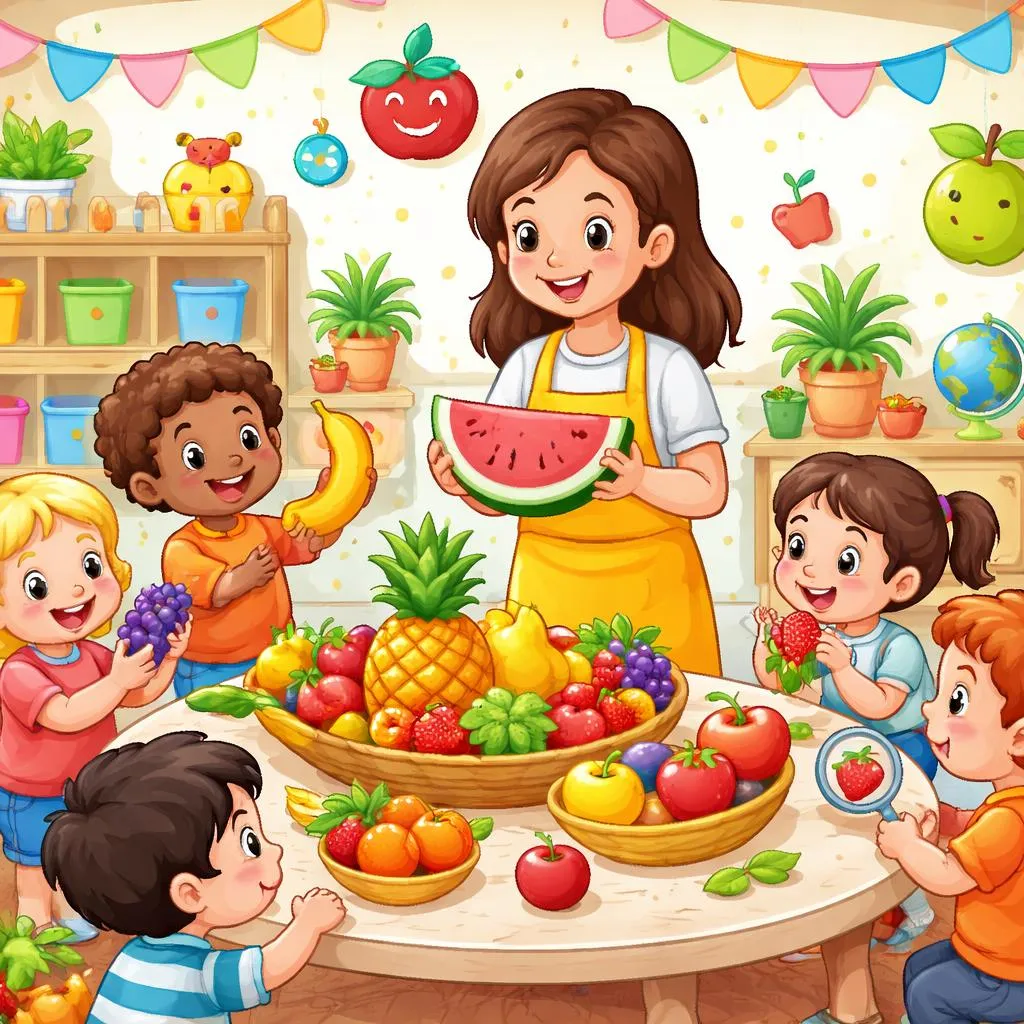

Teaching children about new things requires a patient and creative approach. When we talk about food, we want to build a positive connection. Today, we are going to explore the colorful world of fruits. I will guide you through different methods to make this learning experience effective and enjoyable for your students or children.
What are Fruits for Kids? First, let us understand what we mean by this topic. When we refer to fruits for kids, we are not just talking about food items. We are talking about introducing natural sweets to young learners. Fruits are the sweet and fleshy product of a tree or plant. They contain seeds and are a gift from nature.
For a child, a fruit is often a colorful snack. It can be crunchy or soft. It can be sweet or a little sour. Our job is to show them that these are not just healthy options. They are also fun to look at, touch, and taste. We want to build a positive image around them.
Meaning and Explanation of Fruits Let us explain this to a child in simple words. I often tell my students that fruits are like nature’s candy. They grow on trees, vines, or bushes. The sun and rain help them grow big and sweet. Unlike manufactured sweets, they come in their own natural package.
We can ask the children to think about their favorite color. Is it red? Then we have red apples or strawberries. Is it yellow? Then we have bananas or lemons. This connects the abstract concept of color to a real, tangible item. It makes the meaning clear and personal for them.
Categories or Lists of Common Fruits To make learning organized, we can sort fruits into categories. This helps children process information better. We do not just give them a long list. We group them.
Common Garden Fruits: These are fruits we often see in the local market. Think of apples, bananas, oranges, and grapes.
Tropical Fruits: These grow in warm, sunny places. Mangoes, pineapples, and papayas belong here.
Berry Family: These are usually small and juicy. Strawberries, blueberries, and raspberries are favorites.
Big Fruits: These are large and sometimes need help to cut. Watermelons, melons, and pumpkins (though technically a fruit) fit here.
Using categories helps children build a mental map of the food world. They learn that fruits are diverse.
Daily Life Examples of Fruits We learn best when we connect knowledge to our daily routine. I encourage you to talk about fruits during regular moments. For example, during breakfast, we can point to the banana slices in the cereal. We can say, "Look, we are eating a yellow fruit today."
During lunch, if there is a fruit cup, we can identify each piece. At the grocery store, we can turn it into a small adventure. We can ask, "Can you find the oranges?" or "What color are the grapes today?" These small interactions build strong recognition without pressure.
Printable Flashcards for Learning Flashcards are a fantastic tool for visual learners. They provide a clear image and the word associated with it. You can create or print a set of flashcards with bright, real-life images of fruits.
Here is a teaching tip: hold up the card and show only the picture first. Ask the children if they know the name. Then, reveal the word. You can use these cards for matching games. Print two sets and ask the children to find the matching pairs. This reinforces the image and the name simultaneously. You can laminate them to make them last longer.
Learning Activities or Games with Fruits Now, let us move to the most fun part: games. Activities help solidify knowledge through movement and play.
The Tasting Game: Prepare small, safe pieces of different fruits. Place them on a plate. Ask the children to close their eyes. Give them one piece at a time. Ask them to guess the fruit by taste and texture. This uses a different sense besides sight.
Fruit Basket Role-play: Arrange the chairs in a circle. Give each child a name of a fruit. When you call out "Apple," all the apples must stand up and turn around. When you call out "Fruit Basket," everyone stands up and switches seats. This is great for listening skills.
Sorting Station: Set up two baskets. Label one "Red Fruits" and the other "Yellow Fruits." Provide a mix of toy fruits or real ones. Let the children sort them into the correct baskets. You can change the categories to "Fruits with Seeds" and "Fruits with a Pit" for older kids.
The Importance of Repetition When teaching vocabulary like this, we must remember the power of repetition. Children need to hear and use a word many times before it sticks in their long-term memory. Do not worry if they forget a name. We can gently remind them.
Use the fruit names in different contexts. Talk about the color during art time. Talk about the shape during playtime. The more we weave these words into the day, the more natural they become for the child. It is a gentle process, not a strict test.
Encouraging Healthy Curiosity Finally, our goal is to encourage curiosity. If a child sees a strange fruit at the store, we should explore it together. We can look at its skin. We can wonder if it is sweet or sour. This builds a healthy relationship with food.
Learning about fruits for kids is a wonderful journey. It combines language, science, and healthy habits all in one. By using games, real-life examples, and patient repetition, we help children build a vocabulary that they will use for a lifetime. Keep the atmosphere light and fun, and the learning will follow naturally.