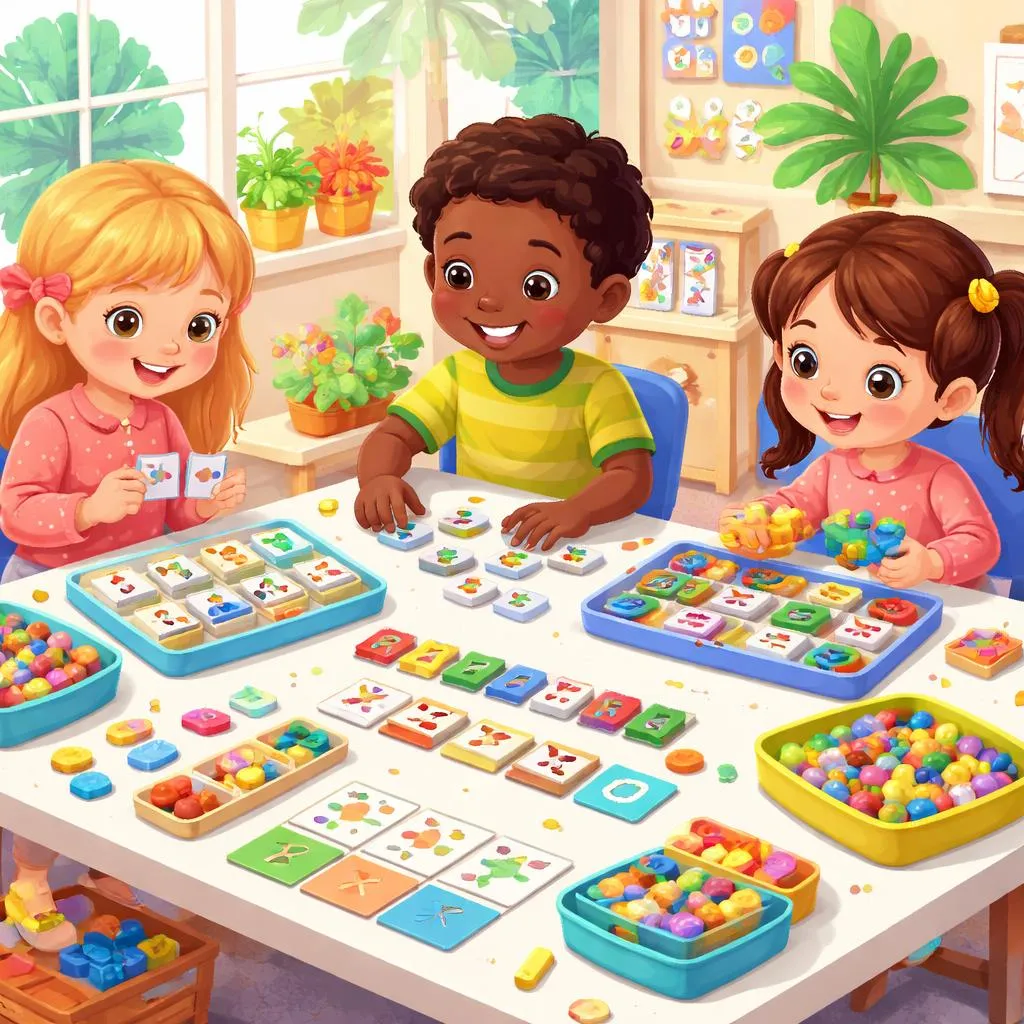

Helping children understand how words work is a key part of early literacy. They need to explore letters, sounds, and spelling patterns. They need hands-on practice. This is where word work activities come in. These are focused, engaging tasks that let students manipulate words. They build phonics skills. They build vocabulary. They build spelling confidence. As teachers, we can use these activities in centers, small groups, or whole class settings. Let's explore how to create a word-rich classroom environment.
What Is Word Work? Word work activities are hands-on learning tasks. They focus on helping students understand how words are constructed. This includes phonics, spelling, vocabulary, and word recognition. The goal is to give students repeated practice with words in meaningful ways.
Word work is different from traditional spelling tests. It is active. It is exploratory. Students might sort words by sound patterns. They might build words with letter tiles. They might hunt for words in books. The key is that students are doing something with words, not just memorizing them. Good word work activities engage multiple senses and learning styles.
Meaning and Explanation: Why Is Word Work Important? Word work builds foundational literacy skills. When students understand how words work, they become better readers and writers.
First, it strengthens phonics knowledge. Students learn to connect letters with sounds. They learn common spelling patterns. This helps them decode new words when reading.
Second, it builds vocabulary. Students learn what words mean. They learn how words change when we add endings like -ed or -ing.
Third, it develops spelling skills. Students learn not just to memorize words, but to understand why they are spelled that way. This understanding transfers to new words they encounter.
Fourth, it increases word recognition. The more students work with words, the faster they recognize them. This fluency leads to better reading comprehension.
Finally, word work activities are engaging. They feel like games. Students want to participate. They want to explore. This motivation is essential for learning.
Categories or Lists: Types of Word Work Activities There are many types of word work activities. We can choose based on our learning goals.
Sorting Activities: Students sort words by patterns. They might sort by beginning sound, ending sound, vowel pattern, or number of syllables. This builds pattern recognition.
Building Activities: Students build words with magnetic letters, letter tiles, or play-doh. They might build sight words. They might build words from a given word family.
Matching Activities: Students match words to pictures. They match rhyming words. They match words with the same beginning sound. This builds vocabulary and phonemic awareness.
Writing Activities: Students write words in sand, shaving cream, or with rainbow colors. They write words on whiteboards. They write sentences using new words.
Hunting Activities: Students hunt for words in books, around the classroom, or on word walls. They become word detectives. This builds word awareness in authentic texts.
Game Activities: Students play bingo, memory, or board games with words. Games make practice fun and social.
Digital Activities: Students use apps or websites for word practice. Technology adds another engaging dimension.
These categories give us a framework for planning word work activities throughout the year.
Daily Life Examples: Word Work in Action Let's look at how word work activities fit into a typical day.
Morning Warm-Up: As students arrive, they find a word work task at their table. Maybe they sort picture cards by beginning sound. This gets them thinking about words right away.
Literacy Centers: During center time, one station is always word work. This week, students are building word family words with letter tiles. "At" words: cat, hat, bat, rat. They build each word and read it aloud.
Small Group Instruction: During guided reading, we do quick word work before reading. We look at a pattern in the book. "This book has lots of words with the 'ight' pattern. Let's brainstorm some: light, night, bright, fight."
Transitions: Between activities, we play quick word games. "If your name starts with the same sound as 'sun,' line up for lunch." This uses word work for classroom management.
Writing Workshop: During writing time, students use word work strategies. They tap out sounds. They think about word patterns. They refer to the word wall. Word work supports their independent writing.
Closing Circle: At the end of the day, we share a word work discovery. "Who found a new word today?" "Who noticed a pattern?" This celebrates their learning.
These examples show how word work activities weave throughout the day, not just in a isolated lesson.
Printable Flashcards: Tools for Word Work Flashcards are versatile tools for word work activities.
Sight Word Cards: We create cards with high-frequency words. Students use them for rapid recognition practice. They play memory games with them. They build sentences with them.
Picture Cards: We create cards with simple pictures. Students match them to word cards. They sort them by beginning sound. They use them for vocabulary building.
Word Family Cards: We create cards for word families. One card shows "at." Students add letters to make new words: c+at, b+at, h+at, r+at, s+at, m+at.
Pattern Cards: We create cards showing spelling patterns. "ight," "tion," "ough." Students hunt for words with these patterns in books.
Blank Cards: We keep blank cards available. Students can write their own words to add to our collections. This builds ownership.
These flashcards become a resource students use independently during word work activities.
Learning Activities or Games: Hands-On Ideas Here are specific word work activities to use in the classroom.
Activity 1: Magnetic Letter Spelling We provide magnetic letters and a word list. Students build each word with letters. They can work with a partner to check each other's work. This kinesthetic activity builds letter-sound connections.
Activity 2: Word Sort Challenge We give each pair of students a set of word cards. They must sort them into categories. The categories can be given or discovered. "Sort these by vowel sound." "Sort these by number of syllables." Students explain their sorting rules to the class.
Activity 3: Rainbow Writing Students choose a word and write it multiple times, each time in a different color. They trace over the word with crayons or markers. This visual and kinesthetic practice helps cement spelling.
Activity 4: Word Hunt Students use highlighters to hunt for specific words in a magazine or book. "Find all the words with the 'sh' sound." "Find all the words that rhyme with 'cake'." This connects word work to real reading.
Activity 5: Play-Doh Words Students roll play-doh into snakes and form letters. They build their spelling words. This is especially engaging for kinesthetic learners.
Activity 6: Word Work Bingo We create bingo cards with words or pictures. We call out words or sounds. Students cover the matching spot. This game builds listening and word recognition.
Activity 7: Build and Write Students use letter tiles to build a word. Then they write the word on a whiteboard. Then they use it in a sentence. This multi-step process deepens learning.
Activity 8: Word Work Journals Students keep a word work journal. Each week, they add new words they have learned. They write sentences. They draw pictures. This creates a record of their growing word knowledge.
By using these strategies, we create a classroom where words are explored and celebrated. Students become active participants in their own literacy development. They learn that words are not just to be memorized, but to be played with, sorted, built, and discovered. Word work activities turn our classroom into a laboratory for language learning.