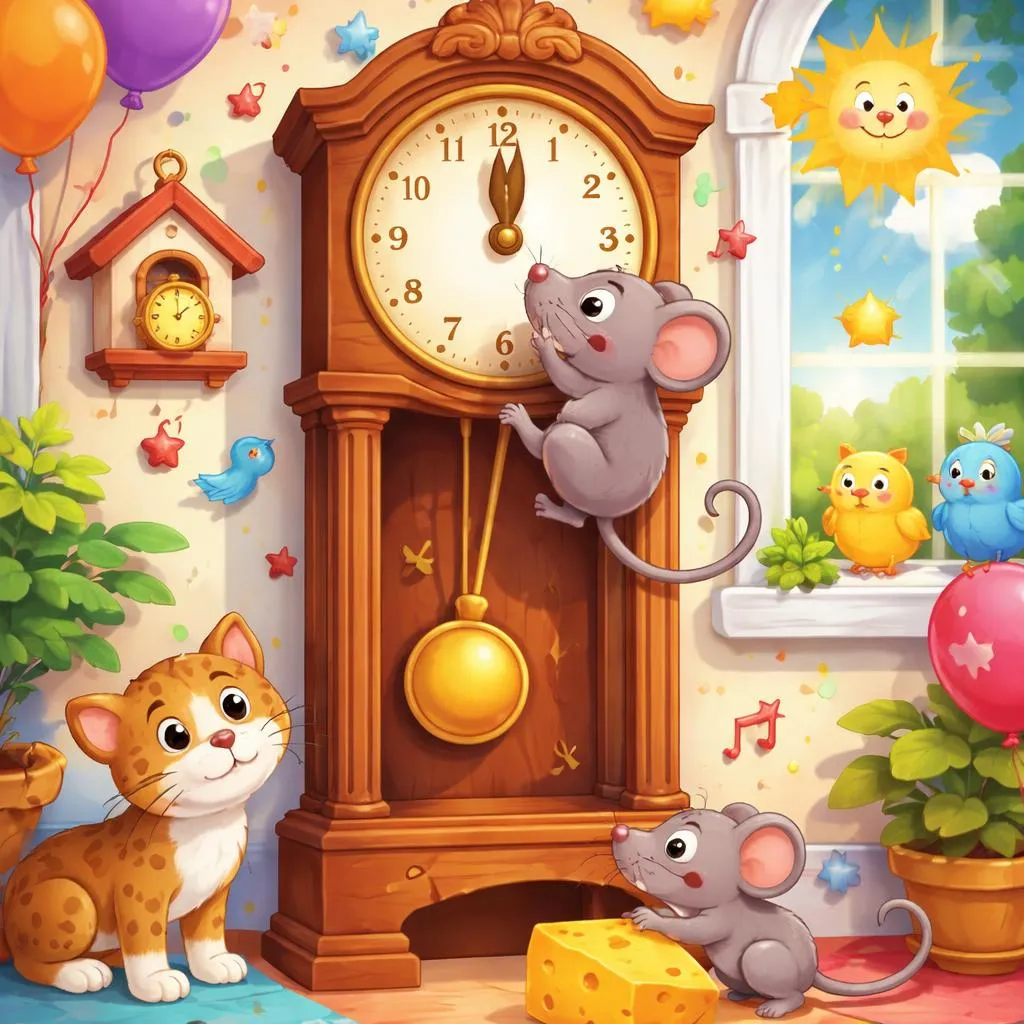

"Hickory Dickory Dock" is one of the most enduring nursery rhymes in the English language. For centuries, children have loved its simple rhythm and playful story. Today, we are going to explore the hickory dickerys dock song lyrics and discover how this classic rhyme can teach language, counting, and beginning time concepts to young learners.
What Is the Hickory Dickory Dock Nursery Rhyme? "Hickory Dickory Dock" is a traditional English nursery rhyme. It first appeared in print around 1744. The rhyme tells the story of a mouse running up a clock. The clock strikes the hour, and the mouse runs down again.
The rhyme has a strong rhythmic pattern. The words "hickory dickory dock" have no real meaning. They are nonsensical sounds that create a rhythm like a ticking clock. This makes the rhyme fun to say and easy to remember.
Over the years, many additional verses have been added. Each verse features a different animal and a different hour. The pattern repeats, making it perfect for teaching numbers and animal names.
The Lyrics of Hickory Dickory Dock Let us look at the standard hickory dickerys dock song lyrics. Here is the most common version:
Hickory dickory dock, The mouse ran up the clock. The clock struck one, The mouse ran down, Hickory dickory dock.
Additional verses include:
Hickory dickory dock, The bird flew up the clock. The clock struck two, The bird flew down, Hickory dickory dock.
Hickory dickory dock, The dog ran up the clock. The clock struck three, The dog ran down, Hickory dickory dock.
The pattern continues with different animals and numbers: Four - cat Five - bee Six - sticks Seven - heaven (or hen) Eight - gate Nine - line Ten - hen again Eleven - heaven Twelve - delve (or shelf)
Some versions use animals that match the rhyming pattern. Others use silly combinations that children enjoy.
Vocabulary Learning from the Song The hickory dickerys dock song lyrics introduce several important vocabulary categories.
Time Words: Clock, struck, one, two, three (through twelve). Children learn about clocks and counting hours.
Animal Words: Mouse, bird, dog, cat, bee, hen. Each verse introduces a new animal. Children learn to identify them.
Action Words: Ran up, ran down, flew up, flew down. These verbs describe movement and direction.
Nonsense Words: Hickory, dickory, dock. These fun sounds have no meaning but create rhythm. Children love saying them.
Rhyming Words: Dock/clock, one/run/down, two/flew, three/flea (in some versions). Children develop phonemic awareness through rhyming.
Phonics Points in the Song We can use this song to practice specific sounds. The repetition helps children hear and produce these sounds correctly.
The /h/ sound appears in "hickory." This is a gentle breath sound. Children put their hands in front of their mouths and feel the air.
The /d/ sound appears in "dickory" and "dock." This voiced sound requires the tongue behind the teeth.
The /k/ sound appears in "clock" and "struck." This voiceless sound comes from the back of the mouth.
The /r/ sound appears in "ran" and "run." This sound can be tricky. Practice slowly: "rrrran."
The /m/ sound appears in "mouse." This nasal sound requires closed lips.
Grammar Patterns in the Lyrics The rhyme contains several important grammar patterns that children absorb naturally.
Past Tense: "Ran" and "struck" are irregular past tense verbs. Children learn these forms through repetition.
Prepositional Phrases: "Up the clock" and "down the clock" teach prepositions of movement. Children understand direction through the story.
Number Words: "Struck one, struck two" teaches number words in sequence. Children learn to count through the verses.
Repetitive Structure: Each verse follows the exact same pattern. This predictability builds confidence and language awareness.
Subject-Verb Agreement: "The mouse ran" shows correct agreement. Children internalize this pattern.
Learning Activities with the Song The song can be the center of many engaging activities. Here are some ways to extend the learning.
Clock Craft: Create simple clocks with paper plates. Add numbers around the edge. Attach movable hands with a brad. Children move the hands to show each hour as they sing.
Mouse Puppet: Create a simple mouse puppet on a craft stick. Children make their mouse run up and down as they sing. The puppet adds visual engagement to the song.
Animal Actions: For each animal verse, children move like that animal. Mouse: small, quick steps. Bird: flapping arms. Dog: trotting. Cat: creeping. This adds physical engagement.
Clock Number Game: Place large number cards around the room. Call out an hour. Children run to stand by that number. This connects the song to number recognition.
Animal Parade: Line up animal toys or pictures in order of the verses. Children place them in sequence as they sing. This builds ordering skills.
Printable Materials for the Song Printable resources can enhance the learning experience. Here are some materials to create.
Clock Face Printable: Create a large clock face with movable hands. Children can cut out and assemble their own clock. Use it while singing each verse.
Animal Cards: Create cards showing each animal from the song. Mouse, bird, dog, cat, bee, hen. Children hold up the correct card when that verse is sung.
Number Cards: Create cards with numbers one through twelve. Children hold up the correct number when that hour is struck.
Mini Song Book: Create a simple foldable book with each animal on a page. Children can "read" their book at home, singing each verse.
Clock Coloring Page: Create a coloring page showing a grandfather clock with a mouse. Children color while listening to the song.
Educational Games with the Song Games make learning even more engaging. Here are some games to try.
What Time Is It? Game: One child is the clock. They choose a number secretly. The class sings the song. When they get to that number, the clock child shouts "Struck [number]!" and everyone freezes.
Animal Match Game: Create pairs of animal cards. Place them face down. Children take turns flipping two to find matches. When they find a match, they sing that animal's verse.
Clock Hop: Place number cards on the floor in a circle like a clock. Children hop from number to number as they sing. When they reach the struck hour, they stop and strike a pose.
Mouse, Mouse, Where Are You? Game: Hide a mouse picture somewhere in the room. Children search while singing softly. As they get closer, sing louder. This builds listening skills.
Animal Sound Guessing: Make an animal sound. Children guess which animal is running up the clock. Then everyone sings that verse.
Teaching Time Concepts The song is perfect for introducing beginning time concepts. Children learn that clocks tell time and that the striking sound marks each hour.
We can explain that long ago, clocks had to be wound up. They made striking sounds to tell people what hour it was. The mouse in the story is surprised by the loud sound.
We can show pictures of grandfather clocks. These tall clocks have pendulums that swing back and forth. The rhythm of the song mimics this swinging motion.
Hickory Dickory Dock Variations Many variations of this rhyme exist. Some versions change the animals to create better rhymes:
The clock struck two, the mouse said "Boo!" The clock struck three, the mouse said "Wheee!" The clock struck four, the mouse said "No more!"
These variations add humor and creativity. Children can invent their own rhyming verses.
Creating New Verses Children love creating new verses for the song. This builds creativity and language skills.
What other animals might run up the clock? A snake would slither. A frog would hop. A rabbit would bounce. What sound would the clock make at their hour?
Children suggest animals and movements. They think about what rhymes with each number. One/sun, two/shoe, three/tree, four/door, five/hive, six/sticks, seven/heaven, eight/gate, nine/line, ten/hen.
Writing new verses together builds confidence. Children see that they can create with language.
Hickory Dickory Dock in Other Cultures The rhyme exists in many cultures with local variations. In some countries, different animals appear. In others, the nonsensical opening words change.
We can share that children all over the world have their own versions of this rhyme. The idea of a mouse on a clock is universal. This builds cultural awareness.
As we explore the hickory dickerys dock song lyrics with young children, we discover a rhyme rich with learning potential. It teaches animal names through its many verses. It introduces number words in sequence. It builds phonemic awareness through rhyming. It creates a foundation for understanding time. Through playful repetition and engaging activities, children internalize these concepts. The mouse continues to run up the clock, generation after generation, bringing joy and learning to children everywhere.