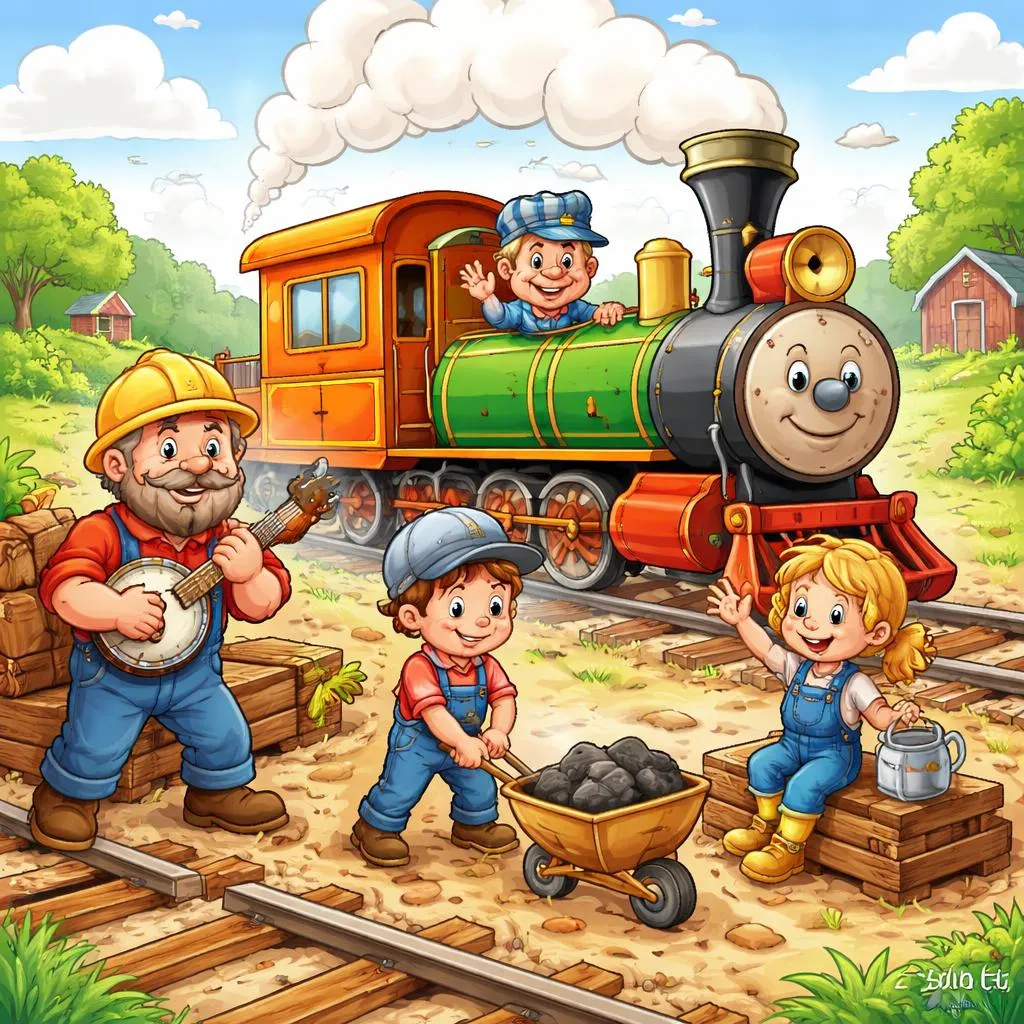

"I've Been Working on the Railroad" is one of the most beloved American folk songs of all time. Children have been singing it for generations. Its catchy tune and fun lyrics make it a classroom favorite. Today, we are going to explore the classic lyrics i ve been working on the railroad and discover how this lively song teaches language, rhythm, and American history.
What Is the I've Been Working on the Railroad Song? "I've Been Working on the Railroad" is a traditional American folk song. It dates back to the late 1800s. The song describes the life of a railroad worker, singing about his work and his love for a woman named Dinah.
The song has a simple, repetitive structure that makes it easy for children to learn. Each verse introduces new elements while repeating familiar lines. The "Dinah" section has a different tune, adding variety to the song.
Over the years, many versions have been recorded. The song appears in countless children's songbooks and recordings. Its enduring popularity comes from its catchy melody and the fun "someone's in the kitchen with Dinah" section.
The Lyrics of I've Been Working on the Railroad Let us look at the standard lyrics i ve been working on the railroad. Here is the most common version:
I've been working on the railroad All the livelong day. I've been working on the railroad Just to pass the time away.
Can't you hear the whistle blowing, Rise up so early in the morn? Can't you hear the captain shouting, "Dinah, blow your horn!"
Dinah, won't you blow, Dinah, won't you blow, Dinah, won't you blow your horn? Dinah, won't you blow, Dinah, won't you blow, Dinah, won't you blow your horn?
Someone's in the kitchen with Dinah, Someone's in the kitchen I know. Someone's in the kitchen with Dinah, Strumming on the old banjo.
And singing, "Fee, fie, fiddly-i-o, Fee, fie, fiddly-i-o, Fee, fie, fiddly-i-o," Strumming on the old banjo.
Some versions include additional verses about working on the railroad and various characters.
Vocabulary Learning from the Song The lyrics i ve been working on the railroad introduce rich vocabulary through a historical context.
Work Words: Working, railroad, labor, job. Children learn about different kinds of work.
Time Words: Livelong day, time, early in the morn. Children learn expressions for describing time.
Railroad Words: Railroad, whistle, captain, horn, train. Children learn vocabulary related to trains and rail travel.
Music Words: Blow, strumming, banjo, singing. Children learn about making music.
Nonsense Words: Fee, fie, fiddly-i-o. These fun sounds have no meaning but add to the song's charm.
Names: Dinah. Children learn that characters in songs have names.
Phonics Points in the Song We can use this song to practice specific sounds. The repetition helps children hear and produce these sounds correctly.
The /r/ sound appears in "railroad" and "rise." This sound can be tricky. Practice slowly: "rrrailroad."
The /w/ sound appears in "working" and "whistle." This sound requires rounded lips.
The /b/ sound appears in "been" and "blow." This voiced sound requires lips together.
The /h/ sound appears in "horn" and "heard." This is a gentle breath sound.
The /l/ sound appears in "livelong" and "blow." This sound requires the tongue on the roof of the mouth.
Grammar Patterns in the Lyrics The song contains several important grammar patterns that children absorb naturally.
Present Perfect Continuous: "I've been working" uses the present perfect continuous tense. Children learn this form for talking about actions that started in the past and continue.
Contractions: "I've" and "can't" teach common contractions. Children learn that these are shortened forms.
Questions: "Can't you hear?" and "Can't you see?" teach question formation.
Imperative Form: "Blow your horn" gives a command. Children learn this form.
Repetitive Structure: The repeated patterns build confidence and language awareness.
Learning Activities with the Song The song can be the center of many engaging activities. Here are some ways to extend the learning.
Train Line-Up: Children line up like a train. They chug around the room while singing. The leader makes train sounds. This adds physical movement to the music.
Dinah Puppet: Create a simple puppet representing Dinah. Children can use it during the "Dinah" section of the song.
Banjo Craft: Create simple banjos from paper plates and rubber bands. Children strum along during the banjo section.
Railroad Art: Children draw pictures of trains and railroad tracks. They can add workers and Dinah in the kitchen.
Sound Effect Orchestra: Add train sound effects with instruments. Whistles for the train, drums for the wheels, bells for signals.
Printable Materials for the Song Printable resources can enhance the learning experience. Here are some materials to create.
Lyrics Poster: Create a colorful poster with the lyrics i ve been working on the railroad. Add pictures next to key words. A train next to "railroad." A whistle next to "whistle." A banjo next to "banjo."
Train Picture Cards: Create cards showing different parts of a train. Engine, cars, caboose, tracks, whistle, horn.
Dinah Puppet Template: Create a simple template for a Dinah puppet on a craft stick.
Mini Song Book: Create a simple foldable book with the song lyrics. Children can "read" their book at home.
Train Coloring Page: Create a coloring page showing a train and workers. Children color while listening to the song.
Educational Games with the Song Games make the song even more engaging. Here are some games to try.
Verse Memory Game: Sing the song but leave out a word. Children guess the missing word. "I've been working on the ___." What word is missing? This builds listening and memory.
Train Freeze Dance: Play the song. Children move like trains. When the music stops, they freeze in a train pose.
Dinah Says: Play a version of Simon Says with Dinah. "Dinah says blow your horn." "Dinah says work on the railroad." This builds listening and following directions.
What's in the Kitchen? Game: During the "someone's in the kitchen" part, children guess who might be there. "Is it the captain?" "Is it the fireman?" This builds imagination and language.
Instrument Match: Show pictures of different instruments. Children identify which one is in the song (banjo).
History and Culture Connection The song offers an opportunity to talk about American history. Railroads were very important in the 1800s. They connected different parts of the country. People could travel farther and faster than ever before.
Railroad workers had hard jobs. They worked long hours laying tracks, fixing trains, and keeping everything running. This song celebrates their work.
We can show pictures of old trains. Compare them to modern trains. Talk about how transportation has changed.
Dinah Mysteries The song leaves many questions unanswered. Who is Dinah? Why is someone in the kitchen with her? Who is playing the banjo?
Children can imagine their own answers. "Dinah is the cook on the train." "The person in the kitchen is the engineer." "They are having a party."
This builds creative thinking and storytelling skills.
Train Sounds Add train sounds to make the song more exciting.
The whistle goes "whoo whoo." The wheels go "clickety clack." The bell goes "ding ding."
Children can make these sounds at the right places in the song. This builds listening and timing skills.
Creating New Verses Children love creating new verses for the song. This builds creativity and language skills.
What else might happen on the railroad? "I've been fixing all the tracks, all the livelong day." "I've been driving the locomotive, just to pass the time away."
Who else might be with Dinah? "Fireman's in the kitchen with Dinah." "Conductor's in the kitchen with Dinah."
What else might they be playing? "Strumming on the old guitar." "Playing on the old fiddle."
Writing new verses together builds confidence. Children see that they can create with language.
Train Books Picture books about trains reinforce railroad vocabulary. Here are some favorites.
"Freight Train" by Donald Crews uses simple words and bold illustrations to show different train cars.
"The Little Engine That Could" by Watty Piper tells the story of a small engine that helps a train over a mountain.
"Train Song" by Diane Siebert is a poetic celebration of trains.
"Steam Train, Dream Train" by Sherri Duskey Rinker combines trains with bedtime.
While reading, connect to the song. "Remember the song about working on the railroad? What do you think these workers do?"
Railroads Today Talk about railroads today. Do we still have trains? What do they carry? Have any children ridden on a train?
Many cities have subways and light rail. Some trains carry passengers across the country. Others carry food and goods.
This connects the historical song to children's modern experiences.
As we explore the lyrics i ve been working on the railroad with young children, we discover a song rich with learning potential. It builds vocabulary through its railroad theme. It teaches grammar through its repetitive structure. It develops phonemic awareness through rhythm and rhyme. It connects children to American folk culture. Most importantly, it brings joy through music and movement. Children sing about working on the railroad, blowing horns, and strumming banjos with delight. This classic folk song will continue to entertain and educate for generations to come.