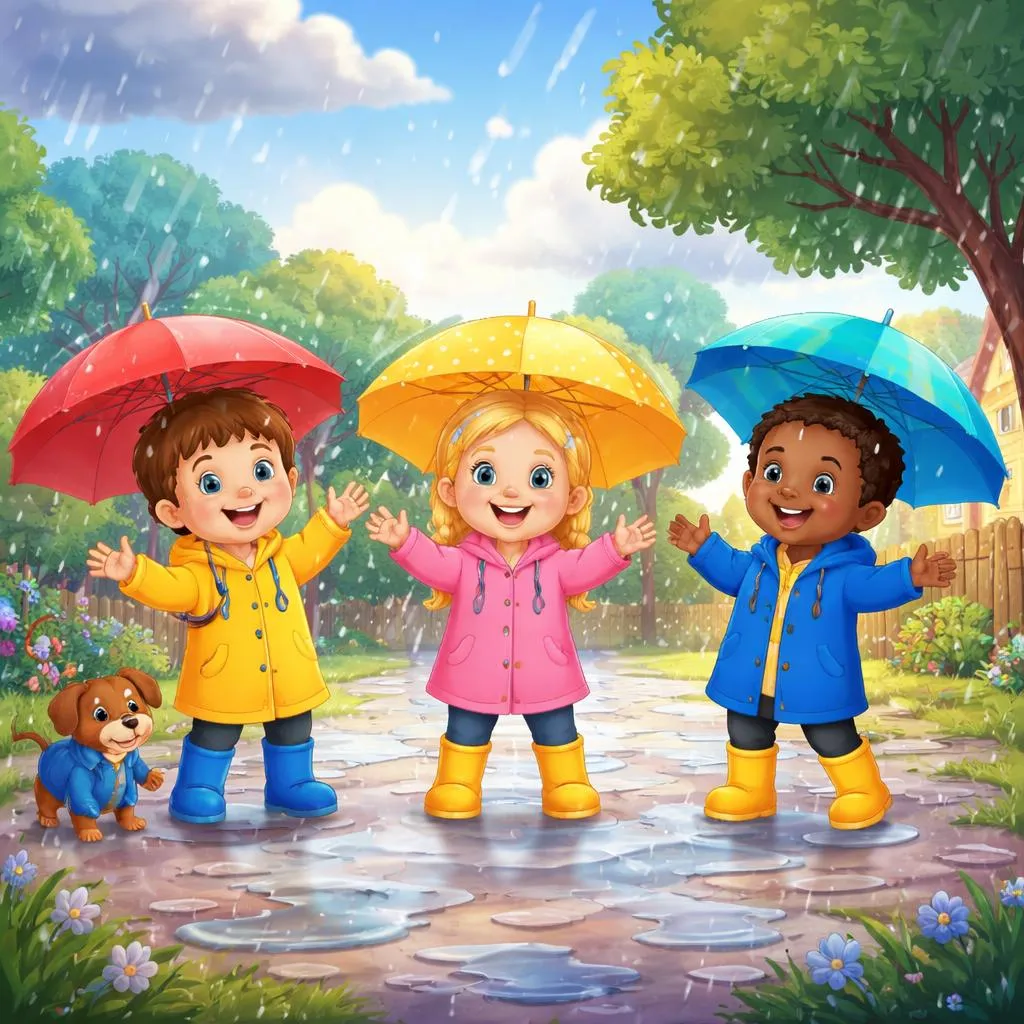

"Rain, Rain, Go Away" is one of the most beloved nursery rhymes in the English language. For generations, children have sung this simple tune on rainy days, hoping to send the clouds away. Today, we are going to explore the classic song rain rain go away lyrics and discover how this charming rhyme teaches language, weather vocabulary, and emotional expression.
What Is the Rain Rain Go Away Song? "Rain, Rain, Go Away" is a traditional English-language nursery rhyme and children's song. It dates back to at least the 17th century. The rhyme expresses a child's wish for the rain to stop so they can go outside and play.
The song is very short and simple, making it perfect for even the youngest children. Its repetitive structure makes it easy to learn. Children can sing it on any rainy day when they are stuck inside.
Over the years, many additional verses have been added. Different versions include different family members or friends who also want the rain to go away. This makes the song adaptable and fun.
The Lyrics of Rain Rain Go Away Let us look at the standard song rain rain go away lyrics. Here is the most common version:
Rain, rain, go away, Come again another day. Little [child's name] wants to play. Rain, rain, go away.
Children insert their own name or a friend's name in the third line. This personalizes the song and makes it more meaningful.
Additional verses can include other family members:
Rain, rain, go away, Come again another day. Little brother wants to play. Rain, rain, go away.
Rain, rain, go away, Come again another day. Little sister wants to play. Rain, rain, go away.
Rain, rain, go away, Come again another day. Mommy and Daddy want to play. Rain, rain, go away.
Some versions include all the children in a class:
Rain, rain, go away, Come again another day. All the children want to play. Rain, rain, go away.
Vocabulary Learning from the Song The song rain rain go away lyrics introduce several important vocabulary words.
Weather Words: Rain, cloudy, storm, weather. Children learn words for describing rainy days.
Action Words: Go away, come again, wants to play. These verbs express the child's wish.
Time Words: Day, another day. Children learn about time concepts.
Family Words: Little, brother, sister, mommy, daddy. Children learn names for family members.
Feeling Words: Wants to play expresses desire. Children learn to express what they want.
Phonics Points in the Song We can use this song to practice specific sounds. The repetition helps children hear and produce these sounds correctly.
The /r/ sound appears in "rain" and "run." This sound can be tricky. Practice slowly: "rrrain."
The /g/ sound appears in "go" and "again." This sound comes from the back of the mouth.
The /k/ sound appears in "come" and "again" (the second sound). This voiceless sound requires the back of the tongue.
The /p/ sound appears in "play." This sound requires lips together.
The /l/ sound appears in "little" and "play." This sound requires the tongue on the roof of the mouth.
Grammar Patterns in the Lyrics The rhyme contains several important grammar patterns that children absorb naturally.
Imperative Form: "Go away" and "come again" are commands. Children learn to use this form to tell someone what to do.
Present Tense: "Wants to play" uses present tense. Children learn to describe desires and actions.
Proper Nouns: Children insert names into the song. They learn that names are special words.
Repetitive Structure: The repeated pattern builds confidence and language awareness.
Prepositional Phrase: "Another day" teaches about future time.
Learning Activities with the Song The song can be the center of many engaging activities. Here are some ways to extend the learning.
Name Practice: Use the song to practice names. Each child gets a turn with their name in the song. "Little Maria wants to play." This builds name recognition and community.
Rainy Day Art: Create rainy day art. Use blue paper and cotton balls for clouds. Draw raindrops falling. Add an umbrella or rain boots.
Weather Chart: Create a daily weather chart. Each day, children observe and record the weather. On rainy days, sing the song together.
Umbrella Dance: Give children paper umbrellas or pretend to hold umbrellas. Dance and sing the song. When the song ends, they freeze under their umbrellas.
Rain Sounds: Make rain sounds with bodies. Rub hands together for light rain. Pat legs for medium rain. Stomp feet for heavy rain. Then reverse for the rain stopping.
Printable Materials for the Song Printable resources can enhance the learning experience. Here are some materials to create.
Name Cards: Create cards with each child's name. Hold up the card when that child's name is used in the song. This builds name recognition.
Song Lyrics Poster: Create a colorful poster with the song rain rain go away lyrics. Add pictures next to key words. A cloud with raindrops next to "rain." Children playing next to "play."
Umbrella Template: Create an umbrella template. Children cut out and decorate umbrellas. They can hold them while singing.
Raindrop Counting: Create raindrop cutouts. Count them as you sing. How many raindrops do we want to go away?
Mini Song Book: Create a simple foldable book with the song lyrics and pictures. Children can "read" their book at home.
Educational Games with the Song Games make the song even more engaging. Here are some games to try.
Rain Freeze Dance: Play the song. Children dance like they are playing in the rain. When the music stops, they freeze like a statue.
What's the Weather? Game: Show pictures of different weather. Sunny, cloudy, rainy, snowy. Children identify the rainy day and sing the song.
Name That Tune: Hum the tune of the song. Children guess which song it is. Then everyone sings together.
Rain, Rain, Who Wants to Play? Sit in a circle with a soft ball. Pass the ball while singing. When the song stops, the child holding the ball says their name and something they like to do in the rain or sunshine.
Weather Dress-Up: Provide clothing for different weather. Rain boots, umbrellas, raincoats for rainy days. Sun hats, sunglasses for sunny days. Children dress appropriately for the weather you call out.
Weather Feelings The song expresses a common childhood feeling. Rain can be disappointing when you want to play outside.
We can talk about feelings about weather. Some people love rainy days. Rain helps flowers grow. Puddles are fun to jump in. Other people prefer sunny days for playing outside.
All feelings are okay. The song gives children words to express their wishes.
Rainy Day Activities When it rains, children can't go outside. The song can lead to discussions about fun indoor activities.
What can we do on rainy days? Read books, do puzzles, build with blocks, do art projects, have dance parties, play board games.
Rainy days can be cozy and fun too. The song helps children express their preference, but we can also help them find joy in indoor play.
Creating New Verses Children love creating new verses for the song. This builds creativity and language skills.
Who else wants the rain to go away? "Little puppy wants to play." "Kitty cat wants to play." "All my friends want to play."
Where do they want to play? "In the park we want to play." "At the beach we want to play." "In the yard we want to play."
What do they want to do? "Ride our bikes and want to play." "Jump in puddles want to play." (Even though puddles come from rain!)
Writing new verses together builds confidence. Children see that they can create with language.
Rain in Different Languages The song can be sung in other languages. This builds cultural awareness.
In Spanish: "Lluvia, lluvia, vete ya, vuelve otro día, por favor. Los niños quieren jugar ya. Lluvia, lluvia, vete ya."
In French: "Pluie, pluie, va-t'en, reviens un autre jour. Les enfants veulent jouer. Pluie, pluie, va-t'en."
Children learn that children everywhere sing about rain.
Rain Science The song can lead to science discussions about rain.
Where does rain come from? Clouds form when water evaporates. When clouds get heavy, rain falls.
Why do we need rain? Plants need water to grow. Animals need water to drink. People need water for many things.
What happens after rain? Sometimes we see rainbows. The sun comes out. Puddles form for jumping.
This connects the song to real-world learning.
Rain Books Picture books about rain reinforce the song's themes. Here are some favorites.
"Rain" by Manya Stojic explores how different animals experience rain.
"Come On, Rain!" by Karen Hesse celebrates the arrival of rain on a hot day.
"Raindrop, Plop!" by Wendy Cheyette Lewison counts raindrops.
"The Rainy Day" by Anna Milbourne shows the fun of a rainy day.
While reading, connect to the song. "Remember our song? What do we want the rain to do?"
As we explore the song rain rain go away lyrics with young children, we discover a simple rhyme with rich learning potential. It teaches weather vocabulary and emotional expression. It builds phonemic awareness through repetition. It connects to children's own experiences of rainy days. Through songs, games, and discussions, children learn that it's okay to wish for sunshine while also finding joy in rainy day activities. This classic nursery rhyme will continue to be sung on rainy days for generations to come.