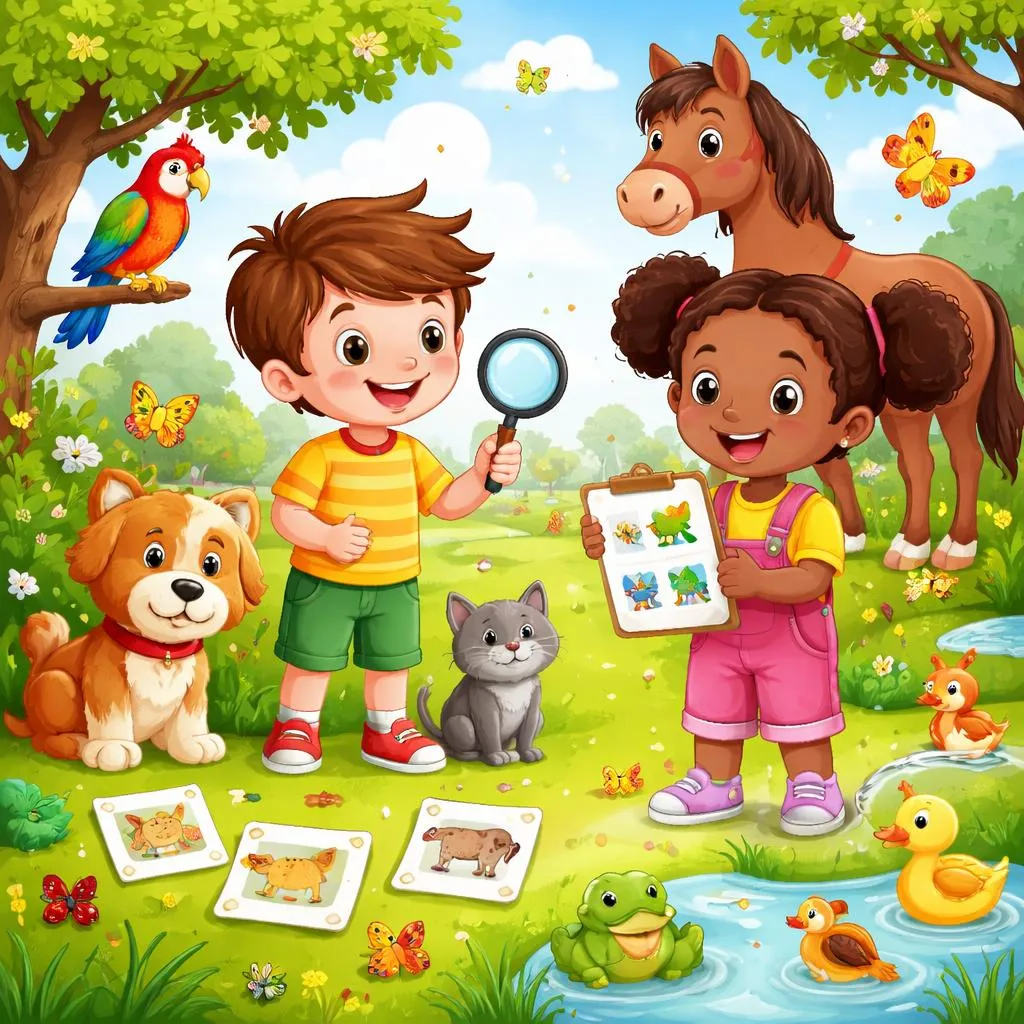

Hello, little explorers and animal lovers. Welcome to a wonderful adventure in the world of words. Today, we are going to learn the english names for animals. Every animal has a name. In English, we call a dog a "dog." We call a cat a "cat." Learning the english names for animals is like getting a magic key. This key opens the door to talking about the amazing creatures around us. Let us start our fun journey to learn these names together.
What is english names for animals?
The english names for animals are the words we use in the English language to talk about animals. These names are important. They help us tell others what animal we see. They help us read stories about animals. They help us learn about nature. The english names for animals are not just sounds. They are labels that everyone agrees on. So, when you say "elephant" in English, people all over the world who speak English know you mean that big, gray animal with a trunk. Learning these names is one of the first and most fun steps in learning English. It builds your vocabulary. It makes you confident.
Meaning and explanation
The meaning of learning the english names for animals is about communication and knowledge. Let us explain. When you know the name, you can share what you see. You can say, "Look, a butterfly!" instead of just pointing. The explanation is that these names help us organize the world. We put animals into groups in our mind. We know a "lion" is a wild animal. We know a "chicken" is a farm animal. The english names for animals also have sounds. The sound of the word often has nothing to do with the animal. The word "dog" does not sound like barking. But we learn it as a symbol. Learning these names helps you understand books, shows, and conversations about the animal kingdom. It is a basic part of growing your English brain.
Categories or lists
We can learn the english names for animals by putting them in groups. This makes it easy. One big group is Pets. These are animals that live with people. Dog, cat, rabbit, hamster, fish, parrot, turtle. Another group is Farm Animals. These animals live on farms. Cow, pig, sheep, goat, horse, chicken, duck, turkey.
A very exciting group is Wild Animals. These animals live in forests, jungles, or grasslands. Lion, tiger, elephant, giraffe, monkey, bear, zebra, kangaroo, wolf, fox. Then we have Sea Animals. They live in the water. Fish, shark, dolphin, whale, octopus, jellyfish, crab, lobster, seahorse, starfish.
Do not forget Birds. They have feathers and most can fly. Eagle, owl, penguin, sparrow, robin, crow, parrot, flamingo. We also have Insects and Bugs. They are small. Bee, butterfly, ant, ladybug, spider, grasshopper, fly, worm. Thinking in these groups helps you remember. If you see a picture of a cow, you think "farm animal." This system turns a long list of english names for animals into friendly families.
Daily life examples
You can use the english names for animals every day. Here are some scenes. First, a trip to the zoo or a farm. This is the perfect place. You see real animals. Point to them and say their names. "Look at the tall giraffe." "The monkey is swinging." "I see a black and white zebra." You can talk to your family. "My favorite animal here is the elephant." Using the names right when you see the animals helps you remember.
Second, at home with a pet or looking outside. If you have a pet, you say its name all the time. "My dog wants to play." "I need to feed my goldfish." Look out the window. "I see a little bird on the tree." "A squirrel is running on the fence." Use the english names for animals in your normal talk. It makes your sentences interesting.
Third, when you are reading a book or watching a cartoon. Stories are full of animals. Read a book about farm animals. Say the names on each page. "Cow. Horse. Sheep." Watch a cartoon about sea creatures. "There is a dolphin. There is a shark." You can even play pretend. "I am a roaring lion." "I am a buzzing bee." Daily life gives you many chances to practice the english names for animals. The more you use them, the more they become your words.
Printable flashcards
Printable flashcards are a super tool for learning the english names for animals. How to make them. You can print pictures of animals. On one side, have a clear photo of a tiger. On the other side, write the word "TIGER" in big, bold letters. You can also add a fun fact. "Tigers have stripes." Do this for many animals. You can make sets by category. A pet set. A wild animal set.
How to use the cards. Play matching games. Print two sets. Turn all cards picture-side down. Flip two cards. Try to find a matching pair of lions. Play "Go Fish" with animal cards. "Do you have a card with a horse?" You can also play sorting games. Dump all the cards on the table. Sort them into piles. Put all the farm animals here. Put all the jungle animals there. This teaches categories.
For older kids, make sentence cards. One card has a picture of a cat. The other card has the sentence "The ___ is soft." The child picks the adjective card "fluffy" to complete it. "The cat is fluffy." This combines the english names for animals with descriptive words. Printable flashcards make learning hands-on. You can hold a picture of a dolphin. You can match a penguin with its name. It is powerful and fun.
Learning activities or games
Learning the english names for animals should be a joyful game. Let us play some. First, "Animal Sounds Guessing Game." This is a classic. One person makes an animal sound. "Moo." The others guess the animal. "Cow!" You can do it in English. "What animal says 'oink-oink'?" "A pig!" This game is hilarious and teaches the sounds along with the names.
Second, play "Animal Charades." Write animal names on small papers. Put them in a bowl. Players take turns picking a paper and acting out the animal. No sounds. Just actions. Others must guess. Is it a slithering snake. Is it a hopping kangaroo. This gets everyone moving and laughing. It helps with understanding how animals move.
Third, try the "Habitat Sorting Game." Draw or print pictures of four habitats. A farm, a jungle, the ocean, and a house. Have a big pile of animal picture cards. The child's job is to place each animal in its correct home. The cow goes on the farm. The shark goes in the ocean. The dog goes in the house. This teaches where animals live. It connects the english names for animals to their world.
For a craft, make "Animal Masks." Use paper plates, paint, and string. Make a lion mask with a yarn mane. Make a rabbit mask with long paper ears. Wear the masks and have a pretend animal parade. Say "I am a lion. Roar!" This is creative and builds confidence in speaking. For a quiet game, play "Animal Memory." Use your printable flashcards. Turn them over and play the classic memory matching game. This sharpens the mind. All these games make the world of english names for animals come alive. You are not just learning words. You are playing, creating, and exploring. That is the best way to learn.