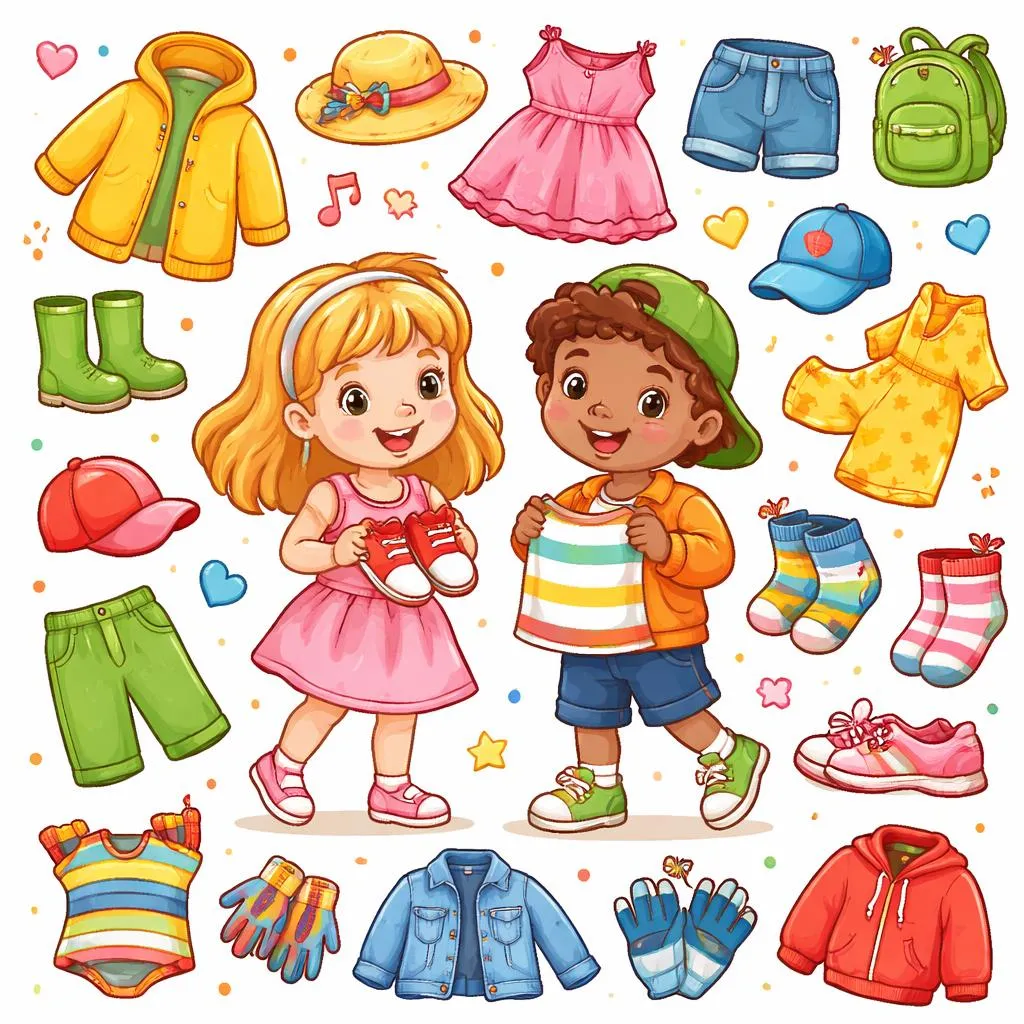

Hello, wonderful learners and educators! Today, we are going on a fantastic fashion adventure. We will explore the wonderful world of wardrobe words. Knowing the names of clothes helps us describe what we wear every day. It makes getting dressed fun and helps us talk about weather, seasons, and activities. Let’s open the closet and discover these important words together!
What is "Names of Clothes"? The names of clothes are the special words we use for different items we wear. We wear a shirt on our upper body. We wear pants or a skirt on our lower body. These names help us identify each piece. We use these words when we shop, get dressed, or pack a suitcase. Learning these names builds a strong foundation for everyday conversations. It is a practical and fun part of learning English.
Meaning and Explanation Understanding clothing names goes beyond just a list. Each name tells us about the item’s purpose, where we wear it, and sometimes even the season. For example, a "coat" is usually heavy and for cold weather. A "t-shirt" is light and for warm days. Some clothes are for specific events. We wear a "swimsuit" for swimming. We wear "pajamas" for sleeping. Learning these words helps us make smart choices about what to wear. It connects language to our daily routines and needs.
We also learn about parts of clothing. A "sleeve" is the part that covers your arm. A "collar" goes around the neck. "Pockets" are for holding small things. Knowing these parts makes descriptions more detailed. You can say, "My red sweater has long sleeves." This is much clearer than just saying, "I have a sweater."
Categories or Lists We can organize clothing into friendly categories. This makes them easier to remember.
Clothes for the Top: These items cover our upper body. Common examples are a shirt, t-shirt, sweater, jacket, coat, and dress. A blouse is often a nicer shirt. A hoodie has a hood attached.
Clothes for the Bottom: These items cover our lower body. We have pants, jeans, shorts, skirt, and leggings. Trousers is another word for pants. Shorts are like short pants for hot weather.
Clothes for Feet and Legs: We wear these on our feet and legs. Key words are socks, shoes, boots, sandals, and sneakers. Slippers are soft shoes for inside the house.
Clothes for the Head and Hands: These accessories keep us warm or stylish. Think of a hat, cap, gloves, and scarf. A beanie is a warm, close-fitting hat.
Underwear and Sleepwear: These are clothes we wear under others or for bed. They include underwear, vest, pajamas, and socks. A robe is a loose piece of clothing we wear over pajamas.
Special Occasion Clothes: Sometimes we wear special items. A uniform is for school or work. A costume is for play or parties. A suit is formal clothing.
Daily Life Examples Let’s see these clothing names in action throughout the day. In the morning, we choose our outfit. "Today, I will wear a blue t-shirt and black shorts." If it is raining, we add "a yellow raincoat and boots."
At school, you might see friends in different clothes. "Sarah has a pink dress." "Tom is wearing a green sweater and brown pants." In sports class, everyone changes into a t-shirt, shorts, and sneakers.
When we help with laundry, we sort the clothes. We put the socks together. We hang the shirts on hangers. We fold the pants. Going shopping is also a great practice. "I need new pajamas." "Let's look for warm gloves." Using these words in real situations makes them stick.
Printable Flashcards Flashcards are a brilliant way to master the names of clothes. Create a set with clear, colorful pictures. On one side, show a photo or drawing of a "jacket." On the back, write the word "JACKET" in big letters. Underneath, write a simple sentence: "I wear a jacket when it is cold."
You can make thematic sets. One set for "Summer Clothes" with swimsuit, sandals, and hat. Another for "Winter Clothes" with coat, scarf, gloves, and boots. Use these cards for sorting games. Sort clothes by season or by body part. Play a memory game by turning pairs of cards face down. Finding matching picture-and-word pairs is fun and educational.
Learning Activities or Games Games make vocabulary practice an exciting adventure. Here are some activities to try in class or at home.
-
Dress-Up Weather Game: Prepare cards with weather conditions (sunny, rainy, snowy) and clothing items. Ask learners to match the weather with the correct clothes. For "snowy," they should choose a coat, scarf, and boots. This teaches both vocabulary and practical life skills.
-
Clothing Bingo: Create bingo cards with pictures of different clothes. Call out the names. "Sweater!" "Socks!" Players mark the picture on their card. The first to get a line shouts "Bingo!" This is excellent for listening and word recognition.
-
What Am I Wearing?: This is a guessing game. One person secretly chooses a clothing item. Others ask yes/no questions to guess. "Do you wear it on your feet?" "Is it for cold weather?" This encourages full sentence questions and critical thinking.
-
Laundry Day Sorting: Use real clothes or picture cut-outs. Set up baskets labeled "Tops," "Bottoms," "Socks," and "Accessories." Have learners sort the clothing into the correct baskets. This is a hands-on sorting activity that reinforces categories.
Try using these new words as often as you can. When you open your drawer, name the clothes you see. Describe what your family or friends are wearing. Sing songs about getting dressed. Each time you use a word, you make it your own. Your vocabulary closet is getting fuller every day, ready for any conversation about the wonderful world of fashion.