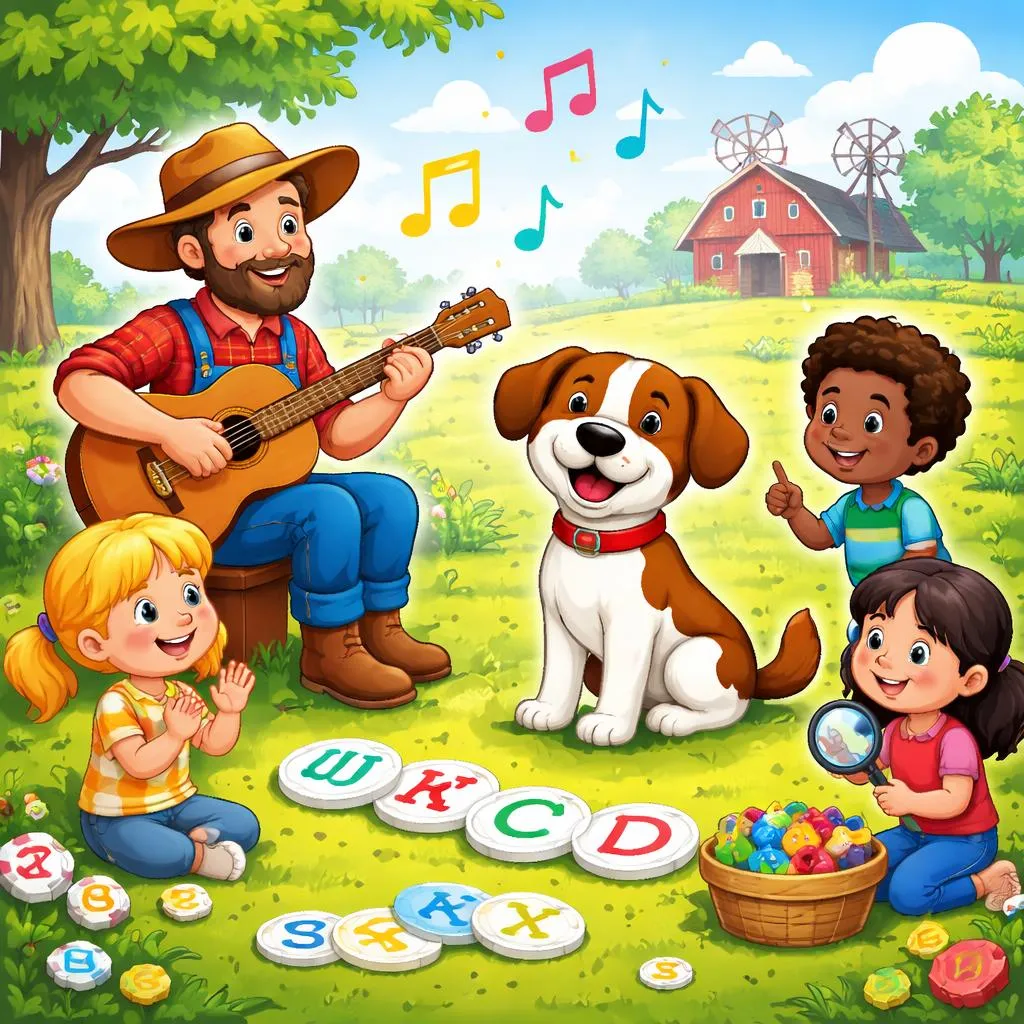

Welcome, everyone! Today, we will explore a classic song that is a treasure for teaching English. We are talking about the beloved farm song about a dog. Many know the tune, but let us examine the exact lyrics to Bingo was his name together. We can use this song for so much more than just singing. It is a powerful tool for teaching spelling, rhythm, and early phonics. Let us discover how these simple lyrics can build strong language skills.
What is the rhyme? This is a cumulative folk song and clapping game. The song tells a short story about a farmer and his dog. The dog's name is Bingo. With each verse, we replace a letter in Bingo's name with a clap. This creates a fun and engaging challenge. The song encourages memory, coordination, and active listening. Its repetitive structure makes it perfect for young learners to join in and feel successful quickly.
The lyrics of nursery rhymes Let us write out the full, traditional lyrics to Bingo was his name. Knowing the precise words helps us teach them effectively. Here is the complete standard version:
There was a farmer who had a dog, And Bingo was his name-o. B-I-N-G-O B-I-N-G-O B-I-N-G-O And Bingo was his name-o!
Then, with each following verse, we clap in place of one letter. The second verse goes:
There was a farmer who had a dog, And Bingo was his name-o. (Clap)-I-N-G-O (Clap)-I-N-G-O (Clap)-I-N-G-O And Bingo was his name-o!
We continue this pattern until the final verse uses five claps. This clear, predictable pattern is the song's greatest teaching strength. Everyone can follow along once they understand the rule.
Vocabulary learning The lyrics to Bingo was his name introduce some wonderful foundational words. The key nouns are "farmer," "dog," and "name." We can use pictures or gestures to ensure understanding of these terms. The song also features the past tense verb "was." We can gently note that "was" tells us this story happened before.
We can easily expand vocabulary from this base. After singing about the farmer, we might discuss other animals on a farm. We can ask, "What other animals might the farmer have?" This leads to learning words like "cow," "pig," and "sheep." The song provides a friendly context for building a broader thematic word bank.
Phonics points This song is excellent for letter sound recognition. We sing the names of the letters in "B-I-N-G-O." This helps learners connect the letter shape with its name. We can take a pause after singing and ask, "What sound does the letter B make?" This connects letter names to their primary sounds.
The song naturally emphasizes the long O sound at the end of "Bingo" and in "no." We can highlight this vowel sound. We also hear clear consonant sounds. The /b/, /n/, and /g/ sounds are pronounced distinctly each time we spell the name. Singing slowly allows learners to hear and practice each individual phoneme.
Grammar patterns The lyrics to Bingo was his name show a simple but important grammar structure. The phrase "There was..." introduces the story. This is a common way to begin a tale or describe something in the past. We can practice this by making our own sentences: "There was a teacher who had a book."
We also see the possessive form "his name-o." The word "his" tells us the name belongs to the dog. We can compare this to "her name" or "my name" in other contexts. The consistent use of the past tense "was" sets the entire song in a storytelling frame. This exposes learners to narrative tense in a very natural and repetitive way.
Learning activities A clapping game is the most iconic activity. We practice clapping in rhythm to replace the letters. This develops motor skills and a sense of beat. We start slowly, clapping on the first letter only. We gradually increase the challenge with each verse. This builds confidence step-by-step.
We can create a letter sequencing activity. Provide large, scrambled cards with the letters B, I, N, G, O. As the song spells the name, learners must point to the correct letter in order. This builds letter recognition and order. Another fun idea is a "name substitution" game. We choose a different five-letter name, perhaps a learner's name. We then adapt the lyrics to Bingo was his name to spell the new name, following the same clapping pattern.
Printable materials Printable resources make the learning tactile. A letter tracking sheet is very helpful. Create a sheet with the letters B-I-N-G-O in bold. Include a column of blank boxes next to each letter. Learners can place a sticker or draw a clap hand in the box for each verse as letters get replaced.
We can offer a story sequence worksheet. Provide four pictures: a farmer, a dog, the letters BINGO, and clapping hands. Ask learners to cut and paste them in the order the song describes. This reinforces comprehension. Simple coloring pages featuring the farmer and his dog, with the name Bingo clearly written, also help connect the song to visual memory.
Educational games "Letter Freeze Dance" is an energetic game. Play the song and have learners dance. Pause the music and hold up a letter card (B, I, N, G, or O). The first learner to shout out the correct sound that letter makes gets a point. This links the letters from the lyrics to Bingo was his name with phonics.
A "Build-a-Name" spelling game works well. Use letter tiles or magnets. Sing the song slowly. As each letter is sung, the learner must find that tile and place it in order. For a group challenge, try a "Human BINGO" game. Give five learners large cards, each with one letter. They must line up in the correct order when the spelling part of the song plays. This encourages teamwork and active listening.
The joy of this song comes from participation. The lyrics to Bingo was his name give learners a clear role, whether clapping, spelling, or singing. This inclusive structure builds community in the classroom. When we see learners mastering the sequence, calling out letters, and keeping the beat, we see foundational literacy and cognitive skills growing. So let's gather around, find our rhythm, and enjoy making language learning a lively, musical, and collaborative experience. Ready to spell? Let's begin.