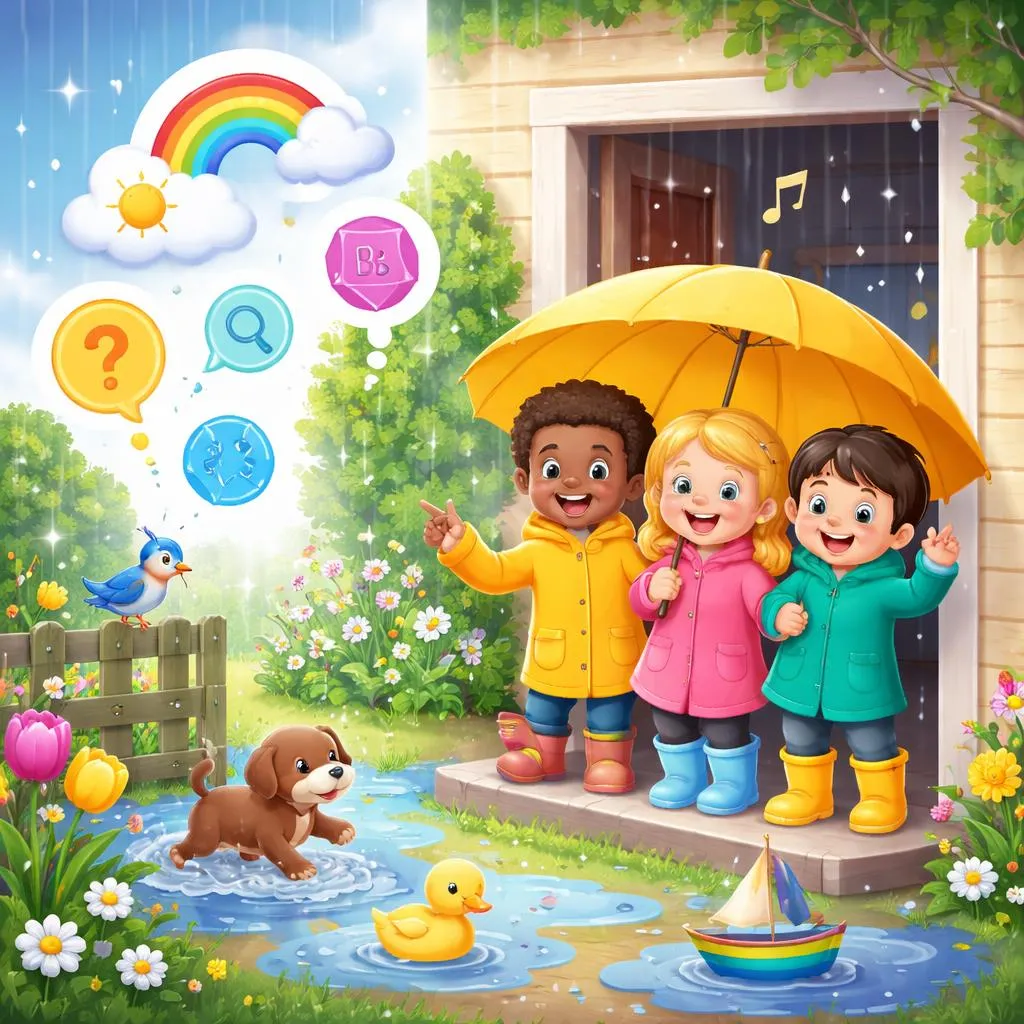

Welcome, everyone, to a lesson filled with rhythm and rhyme! Today, we are going to learn a classic song for a rainy day. We will explore the "lyrics for rain rain go away". This is more than just a song; it is a fun way to learn about weather, family, and making polite requests in English. Let’s listen to the gentle patter of the rain and start our lesson.
What is the rhyme? The rhyme we are learning is one of the oldest and most beloved English nursery rhymes. It is a simple, repetitive plea to the rain to stop so that the children can go outside and play. The song is often sung by children looking out at rainy weather. Its origins are centuries old, and it reflects a universal wish for sunny playtimes. The melody is simple and easy to remember, making it perfect for young voices to sing along. It is a wonderful example of how children use song to express their feelings about the world around them.
The lyrics of nursery rhymes The traditional lyrics are short and repetitive, which helps with memory and participation.
Rain, rain, go away, Come again another day. Little [child's name] wants to play; Rain, rain, go away.
Often, the verse is repeated, inserting the names of different family members. For example: Rain, rain, go away, Come again another day. All the family wants to play; Rain, rain, go away.
Some versions list family members: "Little Johnny...", "Mother...", "Father..." and so on. The core message is always the same: a hopeful request for the rain to stop.
Vocabulary learning This short song packs in useful, everyday English vocabulary.
The key noun is rain. We learn to name this type of weather.
We learn the action verb phrase go away, which is a common way to ask something to leave.
The phrase come again is a useful invitation for a return visit.
We see the future time phrase another day.
The line "wants to play" teaches the verb want followed by an infinitive (to play), a key grammar structure. It also introduces the word play, a central activity for children.
Family vocabulary can be easily integrated: mother (mommy), father (daddy), brother, sister, baby, family.
Phonics points This rhyme is excellent for practicing long vowel sounds and clear word endings.
The long /eɪ/ sound is featured in "rain," "away," "again," "day," and "play." This repetition is perfect for mastering this common sound.
The /ə/ schwa sound, the most common vowel sound in English, appears in "away" (a-way) and "another" (a-nother).
The rhyme highlights the /ɡ/ sound in "go" and "again." The clear, slow pace of the song allows children to articulate the final /n/ sound in "rain," "again," and "rain."
Grammar patterns The song beautifully demonstrates the imperative mood for making polite requests or commands.
The main line, "Rain, rain, go away," is a direct command to the rain. It shows how English uses the base form of the verb for commands.
It pairs this with a softer, hopeful suggestion: "Come again another day." This teaches how to soften a command into a request.
The structure "[Someone] wants to play" is a fundamental sentence pattern. It uses the third person singular present tense verb "wants" and introduces the infinitive "to play."
The song also practices the simple future idea with "another day," implying a future time.
Learning activities We can extend the rainy-day theme into many engaging activities.
-
"Family Wants to Play" Drawing: Give each child a house-shaped piece of paper. They draw their family looking out the window at the rain. They label it: "My family wants to play." They can then sing the song using their own family members' names.
-
Weather Chart Integration: Use this song as part of a daily weather routine. If the day is rainy, sing the song. If it's sunny, sing a different weather song. This connects the vocabulary to real-world observation.
-
"Polite Request" Practice: Use the song's structure to practice other polite requests. Change the words: "Toy, toy, go on the shelf, come again when I'm done myself." This creative exercise reinforces the imperative and infinitive pattern.
-
Rainy Day vs. Sunny Day Sorting: Create two collages or sorting bins. One for "Rainy Day" items (umbrella, raincoat, boots) and one for "Sunny Day" items (sunglasses, ball, sun hat). Sort pictures or toys while talking about what we do on each type of day.
Printable materials Printable resources can make this song a hands-on learning experience.
Create a "My Rainy Day Book" mini-book. Pages include: "Rain, rain, go away." (to trace), "I see rain." (drawing), "I want to play." (drawing a favorite outdoor activity).
Design family member puppets. Provide templates for different family members. Children color, cut, and glue them to popsicle sticks. They can hold up the correct puppet when their name is sung in the verse.
A "Wants to" sentence builder worksheet is helpful. It has columns: [Family Member] + wants to + [Action]. Children can mix and match to create sentences: "Brother wants to read." "Sister wants to sing."
Provide a lyrics sheet with blanks for the child's name and family members' names, encouraging personalization and writing practice.
Educational games Turn the song's theme into structured, educational play.
-
"Raindrop Phonics": Cut out large blue raindrop shapes. Write letters or simple word families (e.g., -ay as in day, play, away) on them. Children match raindrops to a puddle labeled with the correct sound, practicing phonics as they "make it rain words."
-
"Go Away!" Command Game: This game practices listening to verbs. The teacher or a student gives simple, safe commands using "go": "Go to the blue chair." "Go and touch something red." After several commands, everyone sings, "Rain, rain, go away!" This links the game action to the song's grammar.
-
Weather Charades with a Song: One child acts out a type of weather (rain, sun, wind, snow). The others guess. When they guess correctly (e.g., "It's rainy!"), the whole group sings the corresponding verse of the song. This combines vocabulary, drama, and music.
Singing the "lyrics for rain rain go away" does more than pass the time on a wet day. It teaches children to use English to express a wish, to name family members, and to use simple but powerful grammar structures. It connects language to emotion and observation. Next time the clouds gather, try singing it together. You'll be practicing English in a way that is meaningful, memorable, and full of hopeful charm.