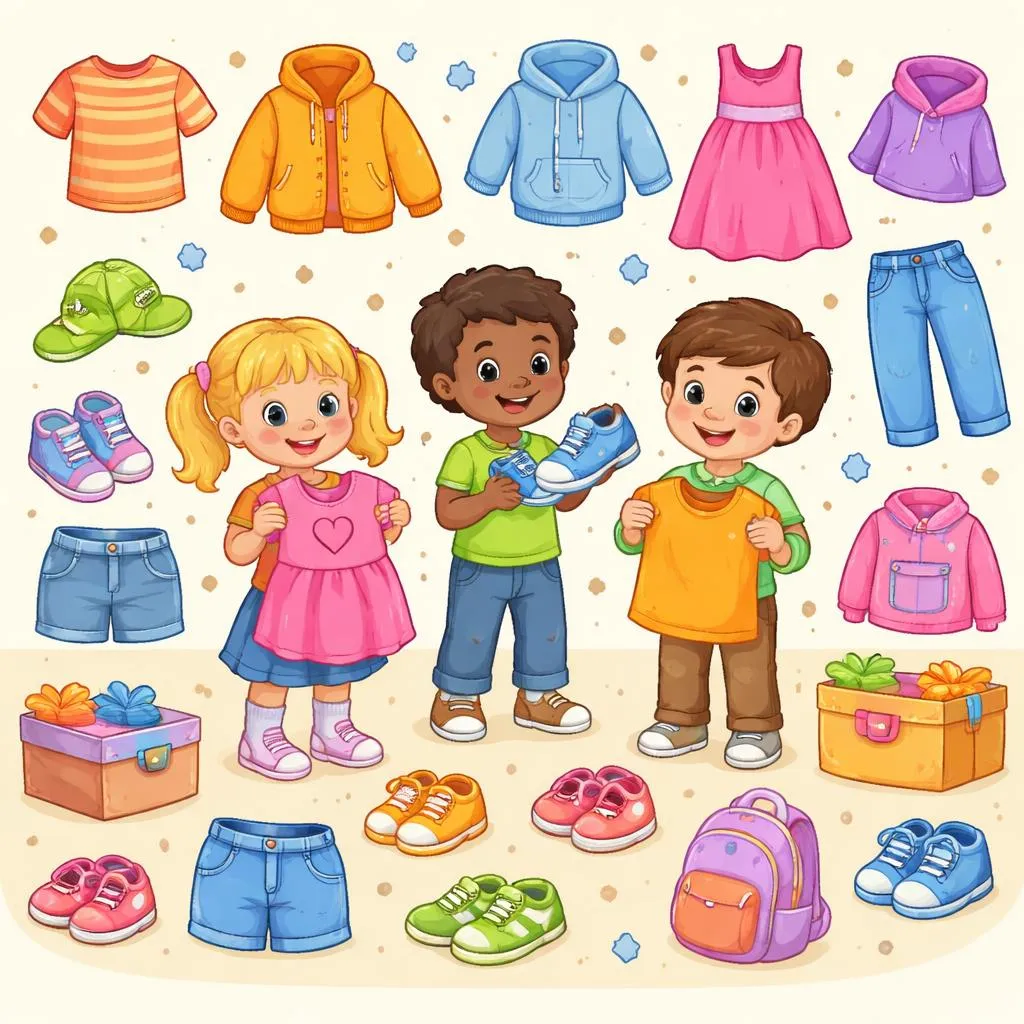

Hello, young fashion explorers and wonderful teachers! Today we dress up our vocabulary with wonderful new words. Clothing is something children wear every day. They put on shirts and pants in the morning. They wear coats when it is cold. They put on pajamas at bedtime. Learning english clothing names helps children talk about what they wear. It builds vocabulary for daily routines. It helps them describe what they like. Let us discover the wonderful world of clothing together. Let us learn names for everything we wear from head to toe.
What Are Clothing Names? Clothing names are the words we use for the items we wear on our bodies. People wear different clothes for different reasons. Some clothes keep us warm. Some clothes keep us cool. Some clothes are for special occasions. Some clothes are for playing and sleeping.
Clothing vocabulary helps children in many situations. They can tell you what they want to wear. They can describe what someone is wearing. They can talk about their favorite outfits. They can understand when you tell them what to put on.
Learning clothing names also teaches children about weather and seasons. They learn that we wear warm clothes in winter and cool clothes in summer. This connects vocabulary to real-world concepts.
Meaning and Explanation of Clothing Categories Organizing clothing into categories helps children learn. Each category has common characteristics.
Clothes for the top half are worn on the upper body. Shirts, t-shirts, blouses, sweaters, jackets, and coats. These cover the chest, arms, and back. They come in many styles for different weather.
Clothes for the bottom half are worn on the lower body. Pants, jeans, shorts, skirts, and leggings. These cover the legs and hips. Some are long, some are short.
Clothes for feet are worn on the feet. Socks, shoes, boots, sandals, and slippers. These protect our feet and keep them warm or cool.
Clothes for hands are worn on the hands. Gloves and mittens. These keep hands warm in cold weather.
Clothes for head are worn on the head. Hats, caps, beanies, and headbands. These can keep us warm, protect us from sun, or just look nice.
Underwear is worn under other clothes. Underpants, undershirts, bras, and thermal underwear. These are close to the skin.
Sleepwear is worn for sleeping. Pajamas, nightgowns, and robes. These are soft and comfortable.
Special occasion clothes are for fancy events. Dresses, suits, ties, bow ties, and fancy shoes. People wear these to parties, weddings, and celebrations.
Accessories are extra items we wear. Belts, scarves, jewelry, watches, glasses, and hair clips. These add style or serve a purpose.
Categories or Lists of English Clothing Names Here is a comprehensive list of english clothing names organized by category.
Top Half Clothing: Shirt, t-shirt, blouse, sweater, hoodie, jacket, coat, vest, tank top, polo shirt, button-down shirt, long-sleeve shirt, short-sleeve shirt, turtleneck, cardigan, pullover, windbreaker, raincoat, winter coat, leather jacket, denim jacket
Bottom Half Clothing: Pants, jeans, shorts, skirt, leggings, sweatpants, cargo pants, dress pants, capris, cargo shorts, gym shorts, denim shorts, mini skirt, maxi skirt, A-line skirt
Footwear: Shoes, sneakers, boots, sandals, slippers, flip-flops, high heels, loafers, dress shoes, rain boots, winter boots, hiking boots, ballet flats, clogs, moccasins
Headwear: Hat, cap, baseball cap, beanie, sun hat, winter hat, hood, headband, visor, helmet, hard hat, cowboy hat, top hat, beret
Handwear: Gloves, mittens, fingerless gloves, winter gloves, work gloves, oven mitts
Underwear and Sleepwear: Underpants, underwear, undershirt, bra, boxers, briefs, panties, thermal underwear, long johns, pajamas, PJs, nightgown, robe, bathrobe, slippers
Accessories: Belt, scarf, tie, bow tie, watch, glasses, sunglasses, jewelry, necklace, bracelet, earrings, ring, hair clip, hair band, backpack, purse, wallet, handkerchief
Special Occasion Clothing: Dress, suit, tuxedo, gown, evening gown, wedding dress, bridesmaid dress, vest, cummerbund, cufflinks
Seasonal and Weather Clothing: Swimsuit, bathing suit, swim trunks, bikini, one-piece, wetsuit, snowsuit, parka, raincoat, umbrella, mittens, earmuffs
Daily Life Examples of Clothing Names Clothing words appear throughout daily routines. Pointing them out helps children learn naturally.
In the morning while getting dressed, name each item. "First we put on your shirt. Now your pants. Don't forget your socks and shoes!" This constant naming builds vocabulary.
When doing laundry, talk about the clothes. "These are Daddy's shirts. These are your pajamas. This is a sock. Where is the other sock?" This makes learning part of daily tasks.
When shopping for clothes, use their names. "Do you want to look at the t-shirts? These jeans are blue. Try on this jacket." Children hear the words in a real context.
When talking about weather, connect it to clothing. "It's cold outside. We need to wear our coats and hats." "It's sunny. Put on your sun hat and sunglasses." This builds understanding of why we wear different clothes.
Printable Flashcards for Clothing Names Flashcards help children learn clothing vocabulary visually. They provide clear images with words.
Top Clothing Flashcards: Create cards showing different tops. Shirt, t-shirt, sweater, jacket, coat. Each card has a clear picture and the word.
Bottom Clothing Flashcards: Create cards for bottoms. Pants, jeans, shorts, skirt, leggings. Use bright, appealing pictures.
Footwear Flashcards: Create cards for shoes. Sneakers, boots, sandals, slippers, flip-flops. Children learn to name what they wear on their feet.
Headwear Flashcards: Create cards for things worn on the head. Hat, cap, beanie, headband. These are fun for children.
Accessories Flashcards: Create cards for accessories. Belt, scarf, gloves, watch, glasses.
Use the cards for games. Hold up a card and name the item. Ask children to point to that item on themselves or a friend. Play memory match with two sets.
Learning Activities or Games for Clothing Names Games make learning clothing vocabulary active and fun.
Dress the Doll Game: Provide paper dolls or drawings of people. Have separate paper clothing items. Children choose what to put on the doll and name each item. "I put the red shirt on the doll." This builds vocabulary and creativity.
What Am I Wearing?: Describe what someone is wearing without naming them. "This person is wearing a blue shirt, brown pants, and white sneakers. Who is it?" Children guess who in the room matches the description. This builds observation and listening.
Clothing Bingo: Create bingo cards with clothing pictures. Call out clothing names. Children cover the matching picture. When someone gets BINGO, they name all the clothing items in their winning row.
Clothing Sort: Gather clothing picture cards. Have children sort them into categories. Things worn on top in one group. Things worn on feet in another. Accessories in another. This builds classification skills.
Getting Dressed Relay: Set up stations with different clothing items. Children race to put on certain items. "Put on the hat!" "Put on the scarf!" This combines movement with vocabulary.
Printable Materials for Clothing Names Printable resources support learning about clothing. They provide structure for activities.
Clothing Coloring Pages: Create coloring pages for different clothing items. Children color them and practice saying the names. This reinforces vocabulary quietly.
Clothing Matching Worksheets: Create pages where children match the clothing picture to its name. Draw a line from the shirt to the word "shirt."
My Favorite Outfit Drawing Page: Create a page where children draw their favorite outfit. They label each item. "This is my red shirt. These are my blue jeans."
Clothing for Weather Sorting: Create pages showing different weather. Sunny, rainy, snowy. Children cut out clothing pictures and place them with the correct weather.
Educational Games for Clothing Names Games extend clothing vocabulary learning in joyful ways.
Clothing Memory Game: Place clothing picture cards face down. Children flip two trying to find matches. When they find a match, they name the clothing item.
Clothing Scavenger Hunt: Give children a list of clothing items to find in the room or on classmates. "Find someone wearing a hat." "Find a blue shirt." Children search and report back.
What's Missing?: Place several clothing cards in a row. Children close their eyes. Remove one card. They open their eyes and guess which clothing item is missing.
Clothing Charades: Act out putting on a clothing item without speaking. Pretend to put on a hat. Pretend to tie shoes. Others guess what clothing item it is.
Clothing Store Pretend Play: Set up a pretend clothing store. Children take turns being shopkeeper and customer. "How much is this shirt?" "I want to buy these socks." This builds conversation skills.
Weather Dress Up Game: Call out different weather. "It's snowing!" Children pretend to put on appropriate clothing. "I'm putting on my coat, hat, and mittens." This connects clothing to weather concepts.
Through learning english clothing names, children gain vocabulary for daily life. They can talk about what they wear. They can follow dressing instructions. They can describe outfits. Every day brings new opportunities to practice these words. Getting dressed becomes a language lesson. Shopping becomes vocabulary practice. Clothing words become part of their everyday conversation.