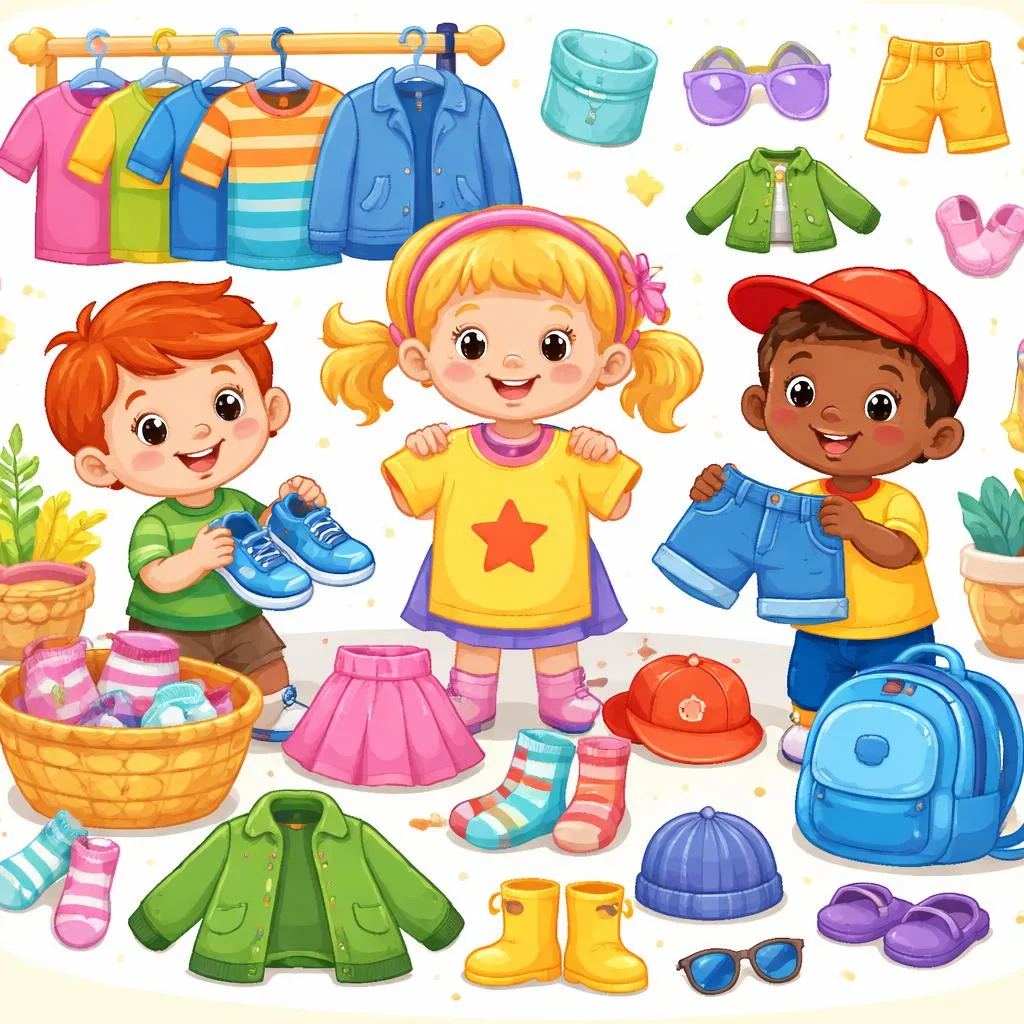

Clothing is a central part of every child's daily life. They get dressed every morning. They have favorite shirts and special occasion outfits. This makes clothing the perfect subject for vocabulary building. Today, we are going to explore different english words for clothes and discover how teaching about clothing builds language skills and helps children talk about their world.
What Are English Words for Clothes? English words for clothes are the names we use for the items we wear. They include everything from socks to hats, from pajamas to party dresses. Learning clothing vocabulary helps children communicate about what they want to wear and what they need.
Clothing vocabulary is practical and personal. Children use these words every day when getting dressed. They ask for specific items. They talk about favorite clothes. They learn about clothes for different weather and activities.
Clothing words also connect to other learning areas. We can sort clothes by type, color, or season. We can count items of clothing. We can learn about where clothes come from and how they are made.
Meaning and Explanation of Clothing Categories To help children learn clothing vocabulary, we organize clothes into categories. This makes the vocabulary manageable and helps children understand relationships between different items.
Tops are clothes we wear on the upper body. Shirts, t-shirts, blouses, sweaters, and jackets belong here.
Bottoms are clothes we wear on the lower body. Pants, jeans, shorts, skirts, and leggings are in this category.
Underwear is worn under other clothes. Undershirts, underpants, and socks are foundation garments.
Outerwear is worn over other clothes for warmth or protection. Coats, jackets, raincoats, and vests go here.
Footwear is worn on feet. Shoes, sneakers, boots, sandals, and slippers belong in this category.
Headwear is worn on the head. Hats, caps, beanies, and headbands are headwear.
Accessories add style or function. Belts, scarves, gloves, mittens, and jewelry are accessories.
Sleepwear is worn for sleeping. Pajamas, nightgowns, and robes are sleepwear.
Special Occasion Clothes are for specific events. Party dresses, suits, costumes, and uniforms belong here.
Categories or Lists of English Words for Clothes Let us explore different categories of clothing words in more detail.
Tops: Shirt, t-shirt, blouse, sweater, hoodie, sweatshirt, tank top, polo shirt, button-down shirt, turtleneck, cardigan, vest.
Bottoms: Pants, jeans, shorts, skirt, leggings, sweatpants, cargo pants, dress pants, capris, culottes, overalls.
Underwear: Underpants, undershirt, bra, socks, stockings, tights, boxers, briefs, slip, camisole.
Outerwear: Coat, jacket, raincoat, winter coat, parka, windbreaker, bomber jacket, denim jacket, leather jacket, puffer coat.
Footwear: Shoes, sneakers, boots, sandals, slippers, flip-flops, loafers, dress shoes, rain boots, snow boots, high heels, flats.
Headwear: Hat, cap, beanie, sun hat, winter hat, baseball cap, visor, headband, bandana, hood.
Accessories: Belt, scarf, gloves, mittens, necklace, bracelet, earrings, watch, glasses, sunglasses, tie, bow tie, pocket square.
Sleepwear: Pajamas, PJs, nightgown, nightie, robe, bathrobe, slippers.
Special Occasion: Party dress, wedding dress, suit, tuxedo, costume, uniform, school uniform, sports uniform.
Daily Life Examples of Clothing Words The best way to learn clothing words is to use them during daily routines.
During dressing in the morning, name each item. "Let's put on your shirt. Now your pants. Don't forget your socks and shoes."
During laundry, talk about clothes. "These are Daddy's socks. This is your sister's shirt. These towels go in the closet."
During shopping for clothes, name items. "We need to buy new pajamas for you. Do you like this blue sweater or this red one?"
During changing seasons, talk about appropriate clothes. "It's cold outside. We need to wear our coats and hats today."
During dress-up play, name costume pieces. "You are wearing a princess dress and a crown. You have magic shoes on."
Printable Flashcards for English Words for Clothes Flashcards help children learn clothing names and recognize what different items look like. Each card should show a clear picture of the clothing item and its name.
Create cards for each category:
Tops: shirt, t-shirt, sweater, jacket
Bottoms: pants, jeans, shorts, skirt
Underwear: socks, underpants
Footwear: shoes, boots, sandals, slippers
Headwear: hat, cap, beanie
Accessories: belt, scarf, gloves
Sleepwear: pajamas, robe
Special: dress, costume, uniform
On the back of each card, include a simple sentence. "A shirt goes on your top." "Socks go on your feet."
Learning Activities or Games for Clothing Words Games make learning about clothing active and engaging. Here are activities that work well in the classroom.
Dress the Bear: Provide a bear cutout and paper clothing items. Children dress the bear for different weather or activities. "Dress the bear for a rainy day." "Dress the bear for bed." This builds vocabulary and decision-making.
Clothing Sort: Provide a collection of clothing pictures or real clothing items. Children sort them into categories. Tops go together. Bottoms go together. Footwear goes together. This builds classification skills.
What's Missing? Game: Lay out several clothing items. Children look at them. Remove one item while they close their eyes. They guess which item is missing. This builds observation and memory.
Clothing Bingo: Create bingo cards with pictures of different clothing items. Call out clothing names. Children cover the matching picture. This builds listening and vocabulary.
Dress for the Weather: Describe different weather conditions. "It's raining outside." Children choose appropriate clothing. "It's snowing." Children choose warm clothes. This builds reasoning skills.
Laundry Sort: Provide a basket of mixed clothing (real or paper). Children sort them into piles. Shirts here, pants there, socks together. This builds classification.
Clothing Memory Game: Create pairs of clothing cards. Place them face down. Children take turns flipping two to find matches. When they find a match, they name the item.
Clothing Songs Music helps children remember clothing names. Here are some simple songs to sing.
Getting Dressed Song (to the tune of "Here We Go Round the Mulberry Bush"):
This is the way we put on our shirt, Put on our shirt, put on our shirt. This is the way we put on our shirt, So early in the morning.
Additional verses for pants, socks, shoes, coat, hat.
I'm Wearing (original chant):
I'm wearing a shirt, I'm wearing a shirt, Look at me, look at me, I'm wearing a shirt. I'm wearing pants, I'm wearing pants, Look at me, look at me, I'm wearing pants.
Children can add their own verses for what they are wearing.
Put Your Clothes Away (clean-up song):
Put your shirt away, put your shirt away, In the drawer, in the drawer. Put your pants away, put your pants away, Hang them up, hang them up.
Clothing Books Picture books about clothing reinforce vocabulary and build interest.
"Froggy Gets Dressed" by Jonathan London shows Froggy trying to get dressed for snow. He keeps forgetting items.
"Ella Sarah Gets Dressed" by Margaret Chodos-Irvine is about a girl who wants to choose her own outfit.
"Animals Should Definitely Not Wear Clothing" by Judi Barrett shows why clothes don't work for animals.
"Pete the Cat: I Love My White Shoes" by Eric Litwin follows Pete and his shoes through messy adventures.
While reading, point out the clothing words. Name each item. Talk about why characters wear what they do.
Dressing for the Weather Learning clothing words naturally connects to learning about weather and seasons.
In summer, we wear light clothes. T-shirts, shorts, sandals, sun hats.
In winter, we wear warm clothes. Coats, sweaters, boots, hats, gloves, scarves.
In spring and fall, we wear layers. A shirt with a jacket that can come off.
Rainy weather calls for raincoats, rain boots, and umbrellas.
Snowy weather calls for snow pants, snow boots, and warm mittens.
This helps children understand why we choose different clothes at different times.
Getting Dressed Independently Learning clothing words supports children in becoming more independent dressers.
They learn the names of items so they can ask for help. "I can't find my sock." "This shirt is too small."
They learn the order of dressing. Underwear first, then shirt and pants, then socks, then shoes.
They learn to check if they have everything. "Do I have my coat? My hat? My mittens?"
This builds confidence and self-help skills.
Clothing Around the World Clothing looks different in different cultures. Sharing this builds cultural awareness.
In some places, people wear saris. In others, they wear kimonos. In some cultures, people wear turbans or hijabs.
Children learn that clothing can show cultural identity. It can also be practical for different climates.
We can show pictures of traditional clothing from around the world. This expands vocabulary and understanding.
Creating a Clothing Book A wonderful project is creating a class book about clothing. Each child contributes a page about their favorite outfit.
Page one: "My favorite shirt is blue with a dinosaur on it." Page two: "I love my red shoes. They make me run fast." Page three: "My pajamas have stars and moons on them." Page four: "I wear my superhero costume for dress-up."
Children draw pictures and dictate or write their sentences. The book becomes a class treasure.
Dress-Up Center A dress-up center in the classroom provides endless opportunities for clothing vocabulary.
Provide a variety of clothes for different occasions. Hats, scarves, vests, dresses, jackets, shoes, bags.
Add props for different roles. A chef's hat, a doctor's coat, a firefighter's helmet.
Children naturally talk about what they are wearing as they play. "I am wearing a princess dress." "I have a firefighter hat."
This builds vocabulary through meaningful, playful contexts.
As we explore english words for clothes with young children, we build vocabulary they use every day. They learn to name what they wear and express preferences. They discover that clothes serve different purposes for different weather and activities. Through games, songs, and hands-on activities, clothing vocabulary becomes a natural part of their language. This foundation will serve them as they grow and become more independent in choosing and caring for their clothes.