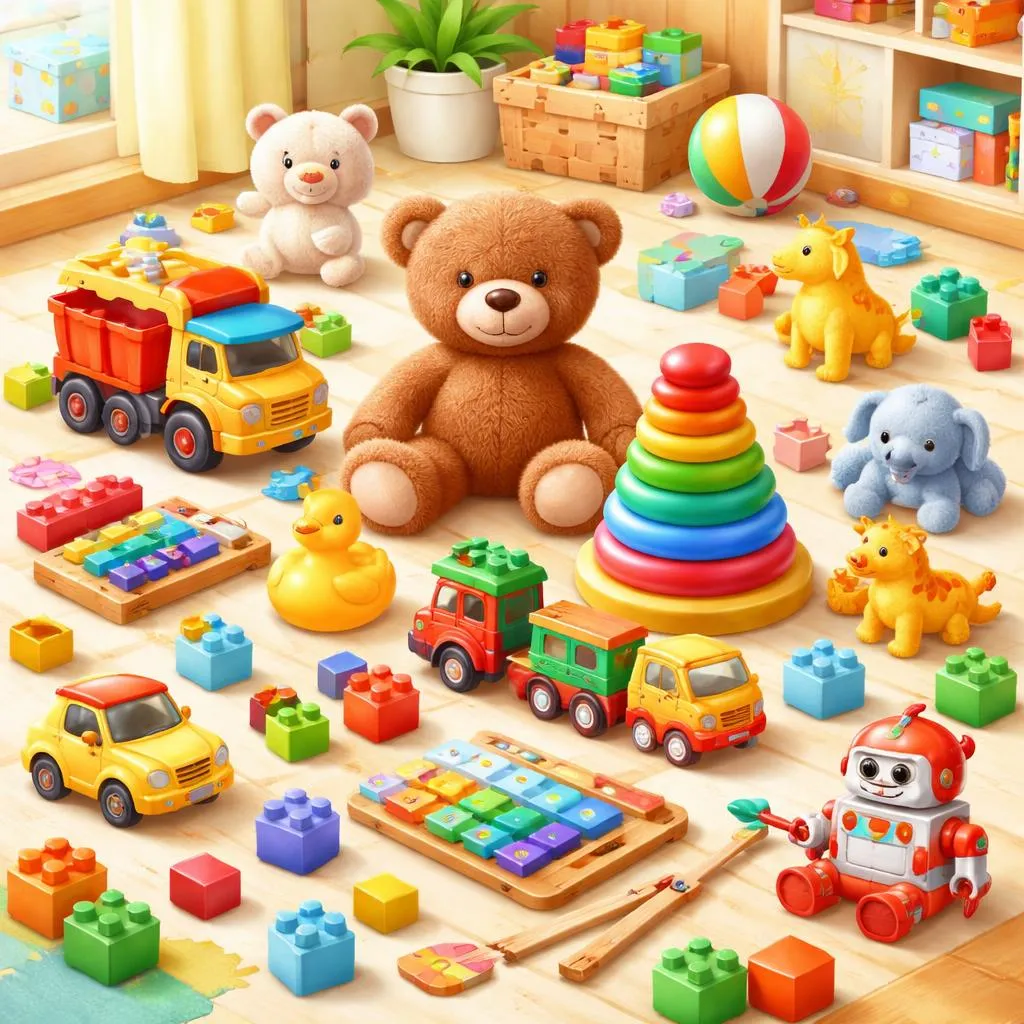

Toys are a central part of every child's world. They play with them, talk about them, and have strong favorites. This makes toys the perfect subject for vocabulary building. Today, we are going to explore different names of toys and discover how teaching about toys builds language skills, categorization abilities, and social connections through play.
What Are Names of Toys? Names of toys are the words we use to identify the objects children play with. They include everything from balls to bicycles, from dolls to dinosaurs. Learning toy names helps children communicate about what they want to play with and what they enjoy.
Toy vocabulary is practical and motivating. Children use these words every day during play. They ask for specific toys. They talk about what they are doing. They learn about new toys they might want to try.
Toy names also connect to other learning areas. We can sort toys by type, color, or size. We can count toys for math. We can learn about how toys work for science. Toy vocabulary builds a foundation for many subjects.
Meaning and Explanation of Toy Categories To help children learn toy names, we organize toys into categories. This makes the vocabulary manageable and helps children understand relationships between different playthings.
Dolls and Figures represent people or characters. Dolls, action figures, puppets, and stuffed animals are in this category. Children use them for imaginative play.
Vehicles are toys that move. Cars, trucks, trains, planes, and boats belong here. Children love making them go.
Building Toys are used to construct things. Blocks, LEGO, magnetic tiles, and construction sets help children create.
Games and Puzzles challenge the mind. Board games, card games, puzzles, and memory games develop thinking skills.
Outdoor Toys are for playing outside. Balls, bicycles, scooters, swings, and sand toys encourage physical activity.
Art Toys are for creating. Crayons, markers, play dough, and craft supplies let children express themselves.
Musical Toys make sounds. Drums, xylophones, maracas, and toy pianos introduce music.
Categories or Lists of Names of Toys Let us explore different categories of toy names in more detail.
Dolls and Figures: Doll, baby doll, action figure, stuffed animal, teddy bear, puppet, dollhouse, doll clothes, superhero figure, princess doll, animal figure, dinosaur toy.
Vehicles: Car, truck, train, airplane, helicopter, boat, ship, fire truck, police car, ambulance, tractor, dump truck, race car, motorcycle, bus, school bus, garbage truck, tow truck.
Building Toys: Blocks, LEGO bricks, magnetic tiles, wooden blocks, construction set, building sticks, marble run, train tracks, gear set, foam blocks.
Games and Puzzles: Board game, card game, puzzle, memory game, matching game, dominoes, checkers, chess, dice game, spinning game, bingo.
Outdoor Toys: Ball, bicycle, tricycle, scooter, swing, slide, sandbox, sand toys, pail and shovel, water table, bubble wand, jump rope, hula hoop, kite, frisbee, sidewalk chalk.
Art Toys: Crayons, markers, colored pencils, paint, paintbrush, play dough, clay, modeling clay, stickers, stamps, glue, scissors, paper, coloring book.
Musical Toys: Drum, xylophone, maracas, tambourine, bell, triangle, recorder, toy piano, guitar, harmonica, shaker, rhythm sticks.
Pretend Play Toys: Play kitchen, food toys, tea set, doctor kit, tool set, cash register, dress-up clothes, costume, mask, puppet theater, grocery cart.
Daily Life Examples of Toy Names The best way to learn toy names is to use them during play. Every play session offers opportunities to name toys.
During free play, we name what children are using. "You are playing with the blue car." "You are building a tower with blocks." "Your doll is drinking from a cup."
During clean-up time, we name toys as we put them away. "The puzzles go on this shelf." "The crayons go in the art box." "The balls go in the basket."
During show and tell, children bring toys from home. They name their toy and tell about it. "This is my teddy bear. His name is Brownie."
During transitions, we talk about what we will play with next. "After snack, we can play with play dough." "Tomorrow we can play with the train set."
Printable Flashcards for Names of Toys Flashcards help children learn toy names and recognize what different toys look like. Each card should show a clear picture of the toy and its name.
Create cards for each category:
Dolls: doll, teddy bear, action figure
Vehicles: car, truck, train, airplane
Building: blocks, LEGO, magnetic tiles
Games: puzzle, board game, memory game
Outdoor: ball, bicycle, scooter, swing
Art: crayons, play dough, paintbrush
Musical: drum, xylophone, maracas
On the back of each card, include a simple sentence. "A doll is for hugging and playing." "Blocks are for building towers."
Learning Activities or Games for Names of Toys Games make learning about toys active and engaging. Here are activities that work well in the classroom.
Toy Sort: Provide a collection of toy pictures or actual toys. Children sort them into categories. Dolls go together. Vehicles go together. Building toys go together. This builds classification skills.
What's Missing? Game: Place several toys on a tray. Children look at them. Remove one toy while they close their eyes. They guess which toy is missing. This builds observation and memory.
Toy Bingo: Create bingo cards with pictures of different toys. Call out toy names. Children cover the matching picture. This builds listening and vocabulary.
I Spy with Toys: Play I Spy with toys in the classroom. "I spy something we use to build." Children guess "blocks!" "I spy something with wheels." Children guess "car!"
Toy Memory Game: Create pairs of toy cards. Place them face down. Children take turns flipping two to find matches. When they find a match, they name the toy.
Toy Store Dramatic Play: Set up a pretend toy store. Children shop for toys and name them as they play. "I want to buy this doll." "How much is this truck?"
Toy Songs Music helps children remember toy names. Here are some simple songs to sing.
The Toys on the Shelf (to the tune of "Wheels on the Bus"):
The dolls on the shelf go hug, hug, hug... The cars on the shelf go vroom, vroom, vroom... The blocks on the shelf go build, build, build... The balls on the shelf go bounce, bounce, bounce...
I Have a Little Teddy (to the tune of "I Have a Little Dreidel"):
I have a little teddy, I hold him in my arms. He keeps me safe and cozy, And protects me from all harms.
My Favorite Toy (original chant):
My favorite toy is my red ball, I bounce it, bounce it, watch it fall. I kick it, throw it, have such fun, Playing with my ball in the sun.
Toy Books Picture books about toys reinforce vocabulary and build interest.
"Corduroy" by Don Freeman tells the story of a teddy bear waiting for a home. Children connect to the stuffed animal character.
"The Velveteen Rabbit" by Margery Williams is about a stuffed rabbit who becomes real through love.
"Knuffle Bunny" by Mo Willems is about a child's beloved stuffed bunny and a trip to the laundromat.
"Where Do Balloons Go?" by Jamie Lee Curtis wonders about balloons that float away.
While reading, point out the toys. Name them. Talk about how the characters play with them.
Toy Art Projects Art activities help children express their learning about toys creatively.
Draw Your Favorite Toy: Children draw pictures of their favorite toy from home. They share their drawing and tell about the toy.
Toy Collage: Cut toy pictures from catalogs and magazines. Children arrange and glue them to create a toy collage. They name each toy as they work.
Build a Toy: Use play dough, clay, or craft materials to create toys. Children make pretend dolls, cars, or blocks. They name what they made.
Toy Box Craft: Create a paper toy box. Children draw toys inside. They can open the box and see all the toys they drew.
Taking Turns with Toys Learning toy names naturally connects to social skills. Children learn to share toys and take turns.
We can practice turn-taking language. "Can I have a turn with the red car?" "You can play with the doll when Maria is done."
We can talk about sharing. "When we share toys, everyone gets to play." "Toys are more fun when we play together."
Caring for Toys Learning about toys includes learning how to care for them. Toys last longer when we treat them well.
We put toys away when we are done. This keeps them safe and easy to find next time.
We do not throw or break toys. We use them the right way.
We can fix toys that break with help from grown-ups. This teaches responsibility.
Creating a Toy Museum A wonderful culminating project is creating a classroom toy museum. Children bring a favorite toy from home (with permission) or draw a picture of it.
Set up displays with each toy. Add labels with the toy name and a sentence about it. "This is my teddy bear. I have had him since I was a baby."
Invite another class to visit. Children explain their toys and answer questions. This builds confidence and communication skills.
As we explore different names of toys with young children, we build vocabulary they use every day. They learn to name what they play with and express preferences. They discover that toys come in many categories for different kinds of play. Through games, songs, and hands-on activities, toy vocabulary becomes a natural part of their language. This foundation will serve them as they grow and their play becomes more complex.