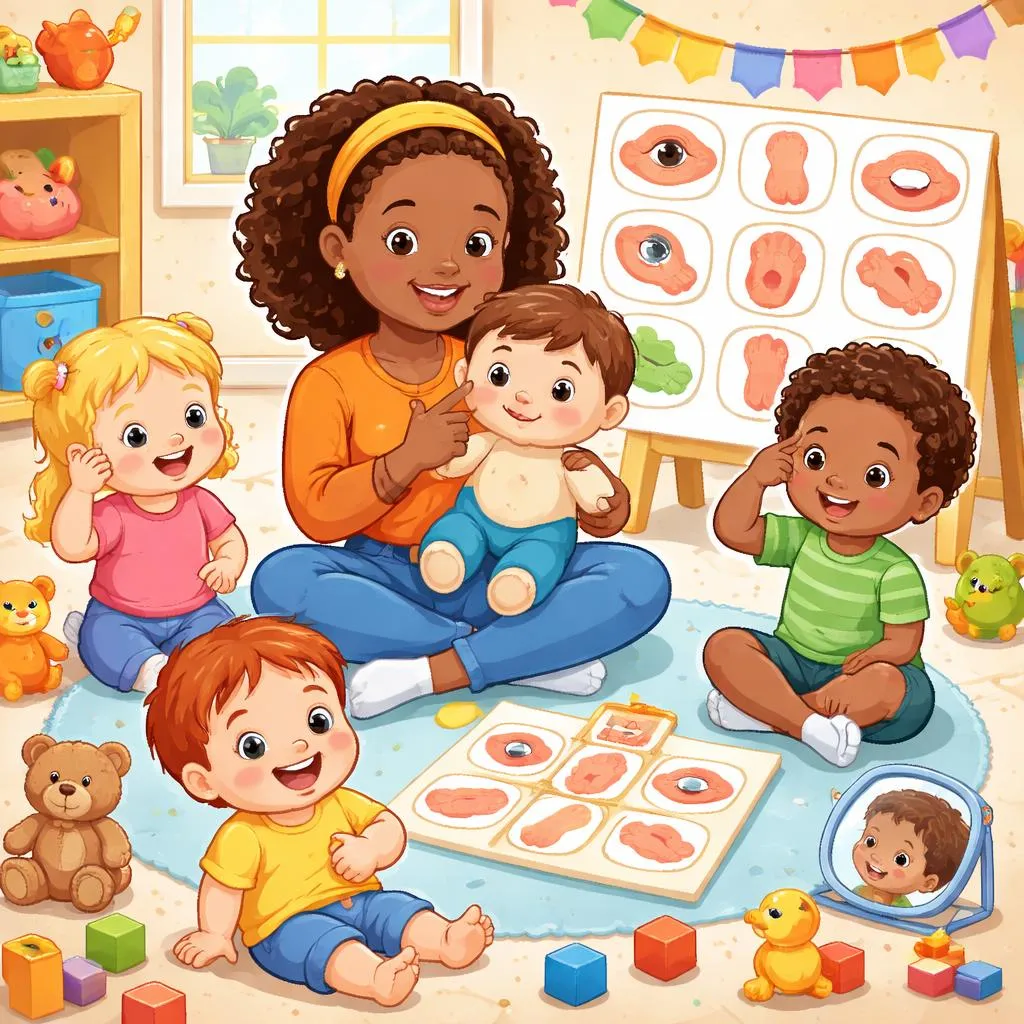

Teaching young children about their bodies is a foundational step in early education. The topic is naturally engaging because it is personal. Every child has a body. Every child can see and touch their own parts. This makes body parts learning a perfect starting point for language development. As teachers, we can use songs, games, and movement to make this vocabulary stick. Let's explore how to guide students through this essential and exciting topic.
What Is Body Parts Learning? Body parts learning is the process of teaching children the names of different parts of the human body. This includes major parts like head, arms, and legs. It also includes smaller parts like fingers, toes, and elbows. The goal is to help children identify and name these parts on themselves and others.
This type of learning is important for several reasons. It builds vocabulary. It helps children understand their own bodies. It supports physical development. It also lays the foundation for future topics like health, hygiene, and even science. When we plan body parts learning activities, we are addressing multiple areas of development at once.
Meaning and Explanation: Why Learn Body Parts? We start by helping children understand why knowing body parts matters. This gives the vocabulary deeper meaning.
Our bodies are amazing machines. Each part has a special job.
Our head holds our brain, which helps us think.
Our eyes help us see the world.
Our ears help us hear sounds.
Our nose helps us smell.
Our mouth helps us eat and speak.
Our shoulders help us carry things.
Our arms help us reach and hug.
Our hands help us hold and touch.
Our fingers help us pick up small things.
Our legs help us stand and walk.
Our knees help us bend.
Our feet help us stand and move.
Our toes help us balance.
When children understand the function of each part, the names become more meaningful. Body parts learning becomes about understanding the amazing bodies we have.
Categories or Lists: Organizing Body Parts We can group body parts in different ways to help with memory and understanding.
By Location on the Body:
Head: head, hair, face, eyes, ears, nose, mouth, teeth, tongue, chin, cheeks, forehead
Upper Body: neck, shoulders, arms, elbows, wrists, hands, fingers, chest, back
Lower Body: hips, legs, knees, ankles, feet, toes
By Pairs and Singles:
Things we have one of: head, nose, mouth, chin, forehead, neck, chest, back
Things we have two of: eyes, ears, arms, hands, legs, feet, knees, shoulders, elbows, ankles
By Function:
Senses: eyes (sight), ears (hearing), nose (smell), tongue (taste), skin (touch)
Movement: legs, feet, arms, hands, fingers, toes
Communication: mouth, tongue, lips, hands (for signing)
These categories help students see relationships between different parts. It turns a simple list into an organized system for body parts learning.
Daily Life Examples: Talking About Bodies All Day We can point out body parts throughout the daily routine. This constant reinforcement helps the words stick.
During Morning Greeting: "Good morning! Let's wave our hands. Let's point to our noses. Let's tap our heads."
During Songs: Songs like "Head, Shoulders, Knees, and Toes" are perfect for body parts learning. We sing and point to each part.
During Movement Activities: "Stretch your arms up high. Wiggle your fingers. Tap your feet."
During Art: When drawing self-portraits, we name each part as we draw. "First we draw the head. Now we add the eyes. Now the nose and mouth."
During Getting Dressed: "Put your arm through this sleeve. Now your other arm. Pull your pants up over your legs."
During Bathroom and Hand Washing: "Wash your hands. Dry your fingers. Don't forget your wrists."
During Story Time: "Look at the character in this book. Point to his nose. Point to her feet."
By weaving the vocabulary into everyday conversation, we make it natural. Students stop thinking of body parts learning as a lesson. It becomes part of normal language.
Printable Flashcards: Visual Tools for Learning Flashcards are essential for introducing and reviewing body parts learning.
Basic Body Part Cards: We create cards with clear pictures. One card shows an eye. One card shows a nose. One card shows a hand. On the back, we write the word. We use these for quick recognition games.
Full Body Cards: We create cards showing the whole body with arrows pointing to different parts. Children can name the part the arrow points to.
Function Cards: We create another set of cards showing actions. A picture of someone smelling a flower. A picture of someone clapping hands. Students match the action card to the correct body part card.
Label Cards: We create cards with just the words. Students can place these word cards next to the correct picture on a large body diagram. This builds reading skills alongside vocabulary.
These flashcards support any body parts learning lesson and provide hands-on practice.
Learning Activities or Games: Hands-On Exploration Games and activities make body parts learning come alive.
Activity 1: Simon Says with Body Parts This classic game is perfect for body parts. "Simon says touch your nose." "Simon says wiggle your fingers." "Touch your knees" (without Simon says) means students should not move. This builds listening comprehension and quick recognition.
Activity 2: Body Part Song and Dance We sing "Head, Shoulders, Knees, and Toes" at different speeds. Slow at first, then faster. Students touch each part as they sing. This kinesthetic activity reinforces the vocabulary through movement.
Activity 3: Partner Point Students work in pairs. One student names a body part. The other student points to that part on their own body. Then they switch. This builds both speaking and listening skills.
Activity 4: Body Part Drawing We provide large outlines of a body on paper. Students draw in the features. They add eyes, nose, mouth, hair, fingers, and toes. They can label the parts with help.
Activity 5: Mirror Play We give each student a small mirror. They look at their own face. They point to their eyes, nose, mouth, ears, and hair. This connects the vocabulary to their own unique features.
Activity 6: Body Part Bingo We create bingo cards with body part pictures. We call out the names. Students cover the matching picture. This game builds listening and recognition.
Activity 7: Hokey Pokey The Hokey Pokey song is perfect for body parts learning. "You put your right hand in. You put your left hand in. You put your right foot in." This teaches body parts and left/right discrimination.
Activity 8: Life-Size Body Trace We trace around one student on a large piece of paper. Then the class works together to label the parts. They write "head" near the head, "arm" near the arm, and so on. This collaborative activity creates a lasting visual reference.
Activity 9: Body Part Freeze Dance We play music. Students dance. When the music stops, we call out a body part. Students freeze and point to that part on themselves.
Activity 10: Doctor Play In dramatic play, we set up a doctor's office. Students examine each other with stethoscopes and check "patients." They naturally use body part vocabulary. "Let me listen to your heart. Open your mouth. Show me your arm."
By using these activities, we ensure that every student can name and identify body parts with confidence. The learning is active, social, and connected to their own bodies. They leave the lesson not just knowing words, but understanding the amazing body they see in the mirror every day.